



Why Rapid Manufacturing Outperforms Traditional Methods: Key Benefits Explained
When it comes to mass production, traditional manufacturing methods still reign supreme over other production techniques. However, rapid manufacturing and prototyping has become an integral piece of the design and production process, helping businesses actualize their concepts in a quick and cost-efficient manner.
Rapid manufacturing is usually centered around additive manufacturing (more popularly known as 3D printing), vacuum casting, CNC machining and rapid tooling, and is praised for its ability to quickly fabricate a physical part or product from a 3D CAD model.
In the past, rapid manufacturing has primarily been reserved for prototyping and testing, as the various technologies were incapable of producing large volumes in a cost efficient way. But recent advancements in materials, tolerances, pricing and speed has made it a more viable manufacturing option.
At 3ERP, we offer multiple rapid manufacturing and prototyping services that will help you to manufacture your products or parts as quickly as possible. By doing so, you can get your project to the market as soon as possible, which in turn will result in less overhead cost and greater profits.
When compared to traditional manufacturing, rapid manufacturing has proven to be the more feasible option for many designers, engineers and businesses. Additionally, using a mixture of both techniques is can offer the most practical path to conceptualizing your designs into reality.
But there are still a number of advantages that rapid manufacturing holds over traditional manufacturing (and vice versa), and knowing them will allow you navigate through the product development process without breaking the bank or wasting too much time.
Let’s take a look at the various advantages that rapid manufacturing holds over traditional techniques, and also when you should integrate these technologies into your own workflow.
Advantages of Rapid Manufacturing: Additive Manufacturing
Perhaps the most popular and widely recognized form of rapid manufacturing, additive manufacturing (or 3D printing) includes a number of different technologies. However, the basis of this process is that it builds up a CAD design layer-by-layer. 3ERP offers a wide range of additive manufacturing services, including FDM, SLA, SLS and SLM technologies.
- Proof of concept – Prior to the recent boom of rapid manufacturing methods, many designers and engineers had to rely on digital analysis and virtual simulations to verify the viability of product design. But with 3D printing, functional prototypes can be quickly produced at a low cost and tested in real-world situations. On top of that, this quick turnaround enables designers to repair, optimize and reproduce their concepts at a low cost, ensuring that everything is mechanically sound by the time it’s shipped off for mass production.
- Fast turnaround time – It isn’t called rapid manufacturing and prototyping for no reason… That’s because one of the primary advantages of 3D printing technology is the exceptionally swift turnaround time that it offers. If you want to have your design prototyped in the quickest way possible, you’ll be hard-pressed to find a better option than additive manufacturing. And the faster you’re able to physically manifest your design, the more money you will ultimately save on labor and production costs in the future.
- Ability to manufacture complex parts – Rapid manufacturing technologies like 3D printing are capable of producing complex parts without the need for tooling or other costly apparatus. With traditional manufacturing, implementing complex shapes or cavities into your design usually requires the addition of tooling, which can easily run up your production costs. But rapid manufacturing can conquer these complexities with ease, allowing designers and engineers to optimize them for traditional manufacturing.
- Reduces material waste and cost – One of the most understated benefits of additive manufacturing is the reduction of material waste. Unlike subtractive manufacturing processes like CNC machining, 3D printing technology only uses as much material as the part requires, building it up layer-by-layer. Since rapid manufacturing eliminates unnecessary material waste, it ends up saving you on material costs as well.
- Customization – If you’re using mass production techniques like injection molding, the product or part that is being manufactured will remain unchanged. But sometimes a company wants to add some personalization into their design, and rapid manufacturing is the most viable option for customized production. Although 3D printing is not yet formidable enough to match the large volume capabilities of more traditional methods, many businesses are opting for rapid manufacturing to perform small-run productions of custom-designed products or parts.
- Identifying design flaws – When using rapid manufacturing methods to produce prototypes, designers and engineers are able to identify any potential flaws or weak points in the physical model before sending it off for mass production. Since additive manufacturing services like 3ERP’s offer quick turnaround and affordable prices, you’ll be able to verify your designs in a fast and cost-efficient way. Additionally, being able to locate any design flaws before sending your product or part off for mass production will save you an incalculable amount of money in the long run.
Advantages of Rapid Manufacturing: CNC Machining
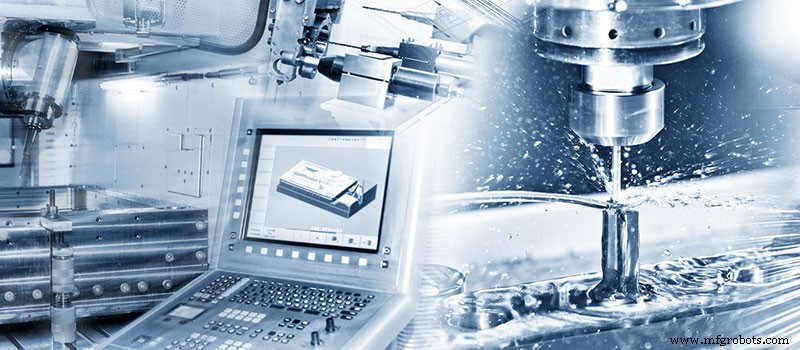
CNC machining is a rapid manufacturing process that utilizes a milling head to cut out a specified design from a solid brick of material. Unlike additive manufacturing, CNC is considered to be a form of subtractive manufacturing, and although both can be classified as rapid manufacturing processes, each offers very different advantages.
- Replicate products thousands of times – One primary advantage of CNC machining is its ability to achieve high production volumes of the same part. Therefore, if you have a design that you need to replicate thousands of time, and also require a high degree of repeatability, this rapid manufacturing technique is the best suited for your needs.
- Increased production flexibility – By using CNC machining services offered by 3ERP, you will have much higher production flexibility compared to using old style machines. On top of that, using the technology for rapid manufacturing will constantly ensure high precision and consistency when producing the same model over and over.
- Skip the prototyping phase – If you’re eager to skip prototyping and get your project on the market as soon as possible, CNC machining software is able to handle the testing and quality assurance checks for your part or product. This way, you can design complex objects that would be difficult and timely to prototype, and run them through CNC software simulations before bringing it to mass production.
- Cut labor costs and production time – Another advantage of CNC machining is that the technology requires little human supervision, which means it can technically be running up to 24 hours a day. This means that you can save on labor costs and reduce product turnaround.
Advantages of Rapid Manufacturing: Vacuum Casting and Rapid Tooling
3ERP also offers rapid manufacturing services via vacuum casting and rapid tooling, both of which are ideal to briskly iterate molds are a cheaper price than injection molding. The vacuum casting process consists of a two-piece mold that is placed in a vacuum chamber, where it then draws molten metal into the mold and is solidified in an oven. With rapid tooling, you are able to develop a building core and cavity insert to create a functional end-use product.
- Relatively quick turnaround time – When utilizing 3ERP’s rapid manufacturing services for vacuum casting, we can ensure a quick turnaround time of around two weeks, helping you get your product to the market no matter how complex the design is. The same goes for rapid tooling, as we are able to produce high quality aluminum prototype tooling, hardened steel tooling or plastic injection molding in a variety of colors and finishes. Rapid tooling is an optimal choice for both low volume and full scale production.
- Low cost molds and tooling – Using vacuum casting as a rapid manufacturing tool can lead to low-cost patterns and molds made from inexpensive materials like foams or epoxy. 3ERP’s vacuum casting service creates silicone molds that can be used up to 20 parts, which will ultimately reduce your overall cost as well. Similarly, using rapid tooling is a cost efficient way to reach extremely large production volumes in a fast manner. For instance, 3ERP’s rapid manufacturing with aluminum prototype mold tooling can save 15 to 25 percent on tooling cost, while also reducing cycle times by 40 percent.
- High repeatability – With 3ERP’s vacuum casting service, you can use your mold to create up to 25 copies of your design, offering high repeatability for production purposes. But rapid tooling offers the highest rate of repeatability, using injection molds to manufacture 100,000 to millions of the same design
Choosing the Best Rapid Manufacturing Processes for Your Projects
Not all rapid manufacturing services are the same. Here are the most common types and their benefits.
Computer-Aided Manufacturing (CAM)
Rapid prototyping has become an inexpensive way to boost the production of everything from wood furniture to aircraft components. It has become so affordable that even small companies can invest in rapid manufacturing, or Computer Aided Manufacturing (CAM), from prototype to final product development. Additive manufacturing comes in a few basic forms, all of which expend fewer waste materials than traditional subtractive manufacturing processes. With the use of specialized modeling software, technicians can program a machine to produce a physical model that is an accurate rendering of the visual model on a computer screen.
Stereolithography (SLA)
Stereolithography (SLA) is one of the fastest and most affordable rapid product prototyping methods. Simple parts can be printed within hours. A liquid polymer is shaped by a laser beam, which traces the prototype’s design layer by layer. Each subsequent layer adheres to the one formed before it, forming a three-dimensional object. The models created by this photopolymerization process can be used to test the form and function of the design. First patented in 1984, stereolithography is used in general prototyping and anatomical modeling for medical applications (human body parts can be recreated using MRI and CT scans).
Fused Deposition Modeling (FDM)
Fused Deposition Modeling (FDM) is used to form prototype parts made of waxes and polycarbonates but often doesn’t yield as much detail as SLA. A continuous filament of molten thermoplastic material is fed from a coil through a printer extruder head and forced out of a nozzle onto a flatbed. Controlled by a computer, the machine head moves in two dimensions to form each layer of the part. Hobbyists often use FDM, but manufacturers also use it for creating parts that are heat resistant and withstand intense functional testing.
Selective Laser Sintering (SLS)
Selective Laser Sintering (SLS) is an additive process like SLA but instead fuses particles together. Prototypes made of metal, plastic, or ceramic powder can be made cheaply. The drawback is that the process is a bit slower, although it’s often used for CNC machining, 3D printing and scanning, injection molding, and other manufacturing capabilities in aerospace, industrial, medical, and defense applications. SLS can be used to develop consumer products as well.
Electron Beam Melting (EBM)
Electron Beam Melting (EBM) forms metal parts by melting a powder, layer by layer, to form strong, solid components. No additional heat treatment is required, and parts typically have a highly desirable surface finish. Component size is limited because the EBM process must occur within a vacuum. On the other hand, paper can be used as a base material if you choose Laminated Object Manufacturing (LOM). Paper layers are formed similarly to how photopolymers are during SLA production. Users of LOM can expect a little less dimensional accuracy, but prototypes can be formed inexpensively with an easy-to-obtain material.
These are some of the rapid manufacturing processes you can use to create prototypes and even finished products. Each has its advantages and drawbacks. With the right process or service for the application, the design, testing, and production process can be expedited with little guesswork as to how the final product will look and function.
Rapid Manufacturing Beats Typical Industrial Wait Periods
EXCERPT
Do you want to be the first to market for your products? Of course you do, because then you will lead the industry. Learn how rapid manufacturing beats typical industrial wait periods.
ARTICLE
Speed kills. Global manufacturing continues to advance and if you are slow to the party, you will fall behind. Learn how rapid prototyping and low volume manufacturing can beat typical industrial wait periods. You will be faster to market and gain a competitive advantage.
Rapid Manufacturing Improves Life Cycle
When you are first out of the gate, you obviously have an advantage. You become the industry leader. Other companies can’t even offer what you have. You have a higher success rate. You increase your sales and earn a better ROI. We have experience in the optical, automotive, medical devices and aerospace industries. No matter how complicated your project may be, we have the ability to make it successful. We create flexible design options for all your products. We understand that projects might have a tight turnaround time. We are agile, so you can respond to your customer needs in real-time. When you start fast, you can gain market share. This can extend the product life cycle due to its popularity.
Rapid Manufacturing & Traditional Manufacturing Can Also Exist in Harmony
There’s no denying that both rapid manufacturing and other traditional production methods are vastly different, and each offers distinct benefits over the other. However, at the end of the day, a best decision a business can make is to utilize both to their full potential. Rapid manufacturing is ideal for prototyping, small-run productions or customizable components. By iterating designs with rapid manufacturing, you can save money and time, which in turn will create a faster and more affordable path to mass production.
At the moment, traditional manufacturing is still advantageous when it comes to iterating the same design at a large volume. However, with technological advancements taking place throughout the additive manufacturing, CNC machining, vacuum casting and rapid tooling on a consistent basis, the divide between rapid manufacturing and traditional methods is closing quickly.
To put it simply, rapid manufacturing is currently ideal for prototyping and short-run productions, but vacuum casting and rapid tooling are proving to be viable options for mass production of large volumes.
If you want to learn more about whether or not you should utilize rapid manufacturing over traditional manufacturing, you can contact 3ERP’s expert team here.
CNC Machine
- Why CNC Machining Outshines Traditional Methods: 6 Key Advantages
- Unlocking Innovation: The Key Advantages of 3D Printing in Modern Manufacturing
- How Rapid Prototyping & 3D Printing Accelerate Manufacturing Success
- Rapid Manufacturing: A Key Weapon in Combating COVID-19
- Why Rapid Machining Drives Efficiency in Modern Manufacturing
- CNC Machining vs 3D Printing: Why CNC Leads in Precision, Cost, and Surface Quality
- Agile Manufacturing: Key Benefits and How to Overcome Common Challenges
- Fastest On‑Demand Manufacturing Methods: Accelerate Production, Cut Costs, & Minimize Waste
- How Rapid Prototyping Transforms Design: Benefits and Real-World Uses
- Cobots vs. Traditional Robots: Choosing the Best Automation Solution for Manufacturing