



Key Distinctions Between Engravers and Marking Cutters for Machinists
While similar on the surface, Half-round Engraving Cutters and Marking Cutters are actually very different. Both tools are unique in the geometries they possess, the benefits they offer, and the specific purposes they’re used for. Below are the key differences that all machinists must know, as the engraving on a part is often a critical step in the machining process.
Engravers & Marking Cutters Serve Different Purposes
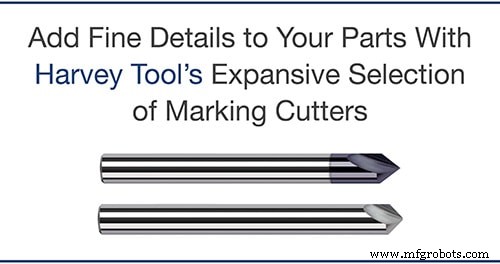
All Marking Cutters are Engraving Cutters, but not all Engraving Cutters are Marking Cutters. This is because Marking Cutters are a “type” of engraving tool. By virtue of their sturdier geometry, these tools are suited for applications requiring repetition such as the engraving of serial numbers onto parts. Harvey Tool has been able to customize specific tool geometries for ferrous and non-ferrous applications, offering Marking Cutters for material specific purposes.

Engraving Cutters, on the other hand, are meant for finer detailed applications that require intricate designs such as engraving a wedding band or a complex brand design.

These Tools Have Unique Geometry Features
Historically, Engraving Cutters have been made as a half round style tool. This tool allows for a true point, which is better for fine detail, but can easily break if not run correctly. Because of this, these tools have performed well in softer materials such as aluminum and wood, especially for jobs that require an artistic engraving with fine detail.
Marking cutters are not as widely seen throughout the industry, however. These tools hold up in harder-to-machine materials exceedingly well. Marking Cutters are a form of Engraving Cutter that contain 2 flutes and a web at the tip, meaning that the tool has a stronger tip and is less susceptible to breakage.
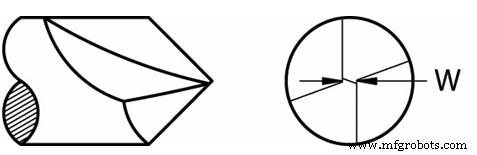
While these tools do not contain a true point (due to their web), they do feature shear flutes for better cutting action and the ability to evacuate chips easier when compared to a half-round engraver.
Harvey Tool Product Offering
Harvey Tool offers a wide variety of both Engraving Cutters and Marking Cutters. Choose from a selection of pointed, double-ended, tip radius, and tipped-off Engraving Cutter styles in 15 included angles ranging from 10° to 120°.
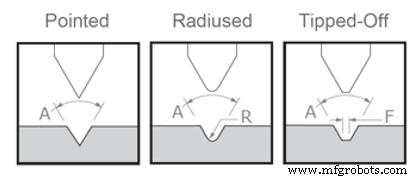
Marking Cutters are fully stocked in tip radius or tipped-off options, and are designed specifically for either ferrous or non-ferrous materials. They are are offered in included angles from 20° to 120°.
While Engraving Cutters are offered uncoated or in AlTiN, AlTiN Nano, or Amorphous Diamond coatings, Marking Cutters are fully stocked in uncoated, AlTiN, or TiB2 coated styles.
Marking Cutters & Engravers Summarized
While both Engraving Cutters and Marking Cutters can accomplish similar tasks, each tool has its own advantages and purpose. Selecting the correct tool is based largely on preference and applicability to the job at hand. Factors that could impact your selection would be final Depth of Cut, Width of Cut, the angle needing to be achieved, and the desired detail of the engraving.
CNC Machine
- Carbon Steel vs Stainless Steel: Key Differences & Choosing the Right Material
- Java vs. C#: 10 Key Differences Explained
- Laser Engraving vs Etching vs Marking: Which Machine Is Best for Your Applications
- MOPA vs. Q‑Switch Laser Marking: Choosing the Best System for Precision & Efficiency
- CAT40 vs BT40 Tool Holders: 3 Key Differences Explained
- 3‑Axis vs 5‑Axis Machining: What You Need to Know
- Alloy Steel vs. Carbon Steel: Key Differences Explained for Optimal Material Selection
- Understanding G‑Code vs M‑Code: Key Differences for CNC Operators
- CNC Machining vs 3D Printing: Key Material and Process Differences Explained
- Hot‑Rolled vs Cold‑Rolled Steel: Key Differences Explained