



Essential Factors for Custom Aluminum Parts
There are many reasons for the deformation of aluminum parts during the processing period of CNC aluminum, which is related to materials, part shapes, production conditions, and so on. There are mainly the following aspects: deformation caused by internal stress of the blank, by cutting force, cutting heat, also by clamping force. Aluminum CNC processing has a great impact on dealing with the aluminum CNC parts, especially when with custom aluminum parts, the main process should be paid more attention to seriously.
Process Measures to Reduce Processing Deformation
1. Reducing Internal Stress of the Blank
The natural stress of the blank can be partially eliminated by natural or artificial aging and vibration treatment. Pre-processing is also an effective process. For the blank of the big head of the fat head, due to the large margin, the deformation after processing is also large. If the excess part of the blank is processed in advance and the remaining amount of each part is reduced, not only the processing deformation of the subsequent process can be reduced, but also a part of internal stress can be released after being pre-processed and placed for a certain period of time.
2. Improving Cutting Ability of the Tool
The material and geometric parameters of the tool have an important influence on the cutting force and the cutting heat. The correct selection of the tool is essential for reducing the deformation of the part.
2.1 Reasonable Selection of Tool Geometry Parameters
Front angle: Under the condition of maintaining the strength of the cutting edge, the front angle is appropriately selected. On the one hand, the sharp cutting edge can be ground, and the cutting deformation can be reduced to make the chip removal smooth, thereby reducing the cutting force and the cutting temperature. Never use a negative rake cutter.
Back angle: The size of the back angle has a direct influence on the flank wear and the quality of the machined surface. Cutting thickness is a serious condition for selecting the back angle. In roughing, due to the large feed rate, heavy cutting load, large heat generation, and good heat dissipation conditions of the tool, the back angle should be smaller. When finishing milling, the edge is required to be sharp, the friction between the flank and the machined surface is reduced, and the elastic deformation is reduced. Therefore, the relief angle should be selected to be larger.
Helix angle: In order to make the milling smooth and reduce the milling force, the helix angle should be as large as possible.
Lead angle: Properly reducing the lead angle can improve the heat dissipation condition and reduce the average temperature of the processing area.
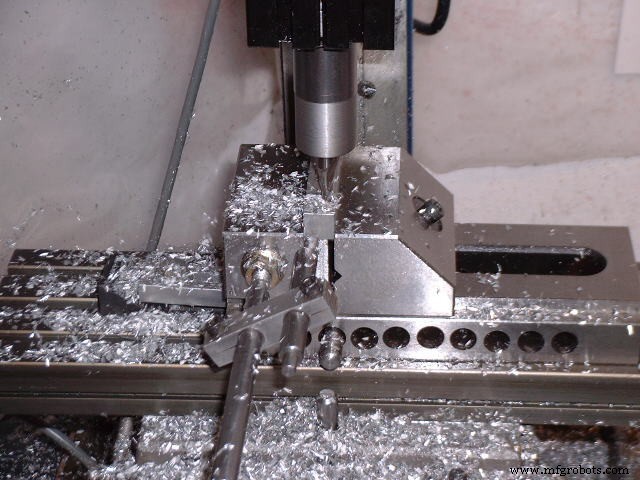
2.2 Tool Structure Improvement
- Reduce the number of milling cutter teeth and increase the chip space. Due to the large plasticity of the aluminum material, the cutting deformation during processing is large, and a large space for chipping is required. Therefore, the bottom radius of the chip groove should be large, and the number of teeth of the milling cutter is small.
- Use fine grinding teeth. The roughness value of the cutting edge of the cutter is less than Ra = 0.4 um. Before using a new knife, you should use a fine stone to grind gently in front of and behind the teeth to eliminate burrs and slight zigzag remaining when sharpening the teeth. In this way, not only the cutting heat can be reduced but also the cutting deformation is relatively small.
- Control the wear standard of the tool strictly. After the tool wears, the surface roughness of workpiece increases, cutting temperature increases, workpiece deformation increases as well. Therefore, in addition to the selection of high-abrasion tool materials, the tool wear standard should not be more than 0.2mm, otherwise, it will easily lead to a built-up edge. When cutting, the temperature of the workpiece should not exceed 100 °C to prevent deformation.
2.3 Workpiece clamping method Improvement
For thin-walled aluminum workpieces with poor rigidity, the following clamping methods can be used to reduce distortion,
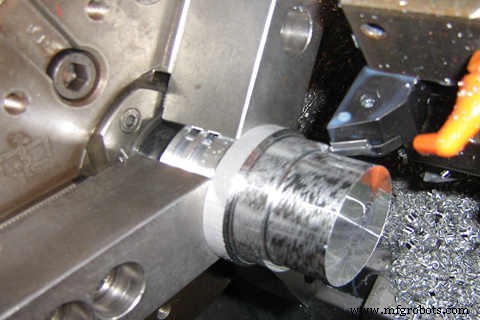
- For thin-walled bushing parts, if the three-claw self-centering chuck or the collet chuck is used to clamp from the radial direction, once the workpiece is loosened after machining, the workpiece is inevitably deformed. At this time, a method of pressing the axial end face with good rigidity should be utilized. To position the inner hole of the part, a threaded threading mandrel is made and inserted into the inner hole of the part, and a cover plate is pressed against the end surface and then tightened with a nut. When the outer circle is machined, the clamping deformation can be avoided, and satisfactory machining accuracy can be obtained.
- When processing thin-walled and thin-plate workpieces, it is best to use vacuum suction cups to obtain a uniform distribution of clamping force, and then process with a small amount of cutting, which can prevent deformation of the workpiece well.
- In addition, a packing method can also be used. In order to increase the process rigidity of the thin-walled workpiece, the medium can be filled with inside the workpiece to reduce deformation of the workpiece during clamping and cutting process. For example, a urea melt containing 3% to 6% of potassium nitrate is poured into the workpiece, and after processing, the workpiece is immersed in water or alcohol, and the filler can be dissolved and poured out.
2.4 Reasonable arrangement of procedures
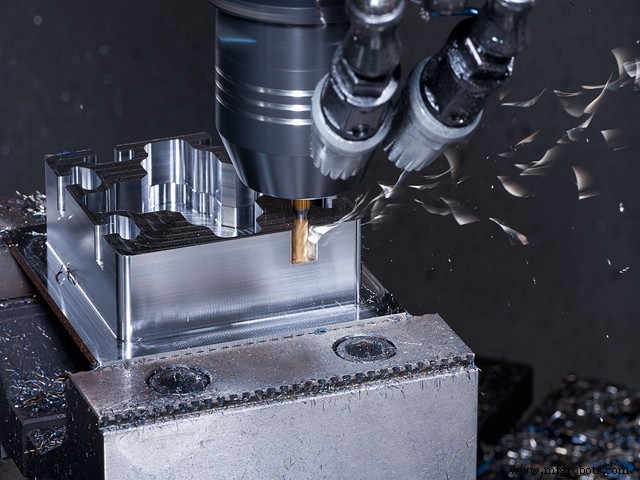
During high-speed cutting, due to large machining allowances and intermittent cutting, the milling process often produces vibrations that affect machining accuracy and surface roughness. Therefore, the numerical control high-speed machining process can be generally divided into roughing- semi-finishing – clearing-finishing – finishing. For parts with high precision requirements, it is sometimes necessary to perform secondary semi-finishing before all finishing.
After roughing, the parts can be naturally cooled, eliminating internal stresses caused by roughing and reducing distortion. The margin-left after roughing should be greater than the amount of deformation, typically 1 to 2 mm. When finishing, the finished surface of the part should maintain a uniform machining allowance, generally 0.2~0.5mm, so that the tool is in a stable state during the machining process, which can greatly reduce the cutting deformation and obtain good surface processing quality and product accuracy.
Reducing Processing Skills of Processing Deformation
Parts of the aluminum material are deformed during processing. In addition to the above reasons, the operation method is also very important in actual operation.
- For parts with large machining allowance, in order to make them have better heat dissipation conditions during processing, avoid heat concentration, and symmetrical processing should be used during processing. If a piece of 90mm thick material needs to be machined to 60mm, if the other side is milled, the other side will be milled, and the flatness will be 5mm once. If it is processed by repeated infeed, each side will be processed twice. The final size guarantees a flatness of 0.3mm.
- If there are multiple cavities on the plate parts, it is not advisable to use a cavity and a cavity ordering method during processing, which is easy to cause deformation of the parts due to uneven force. Multi-layer processing is used, each layer is processed into all the cavities at the same time, and then the next layer is processed to make the parts evenly stressed, and then reduce deformation.
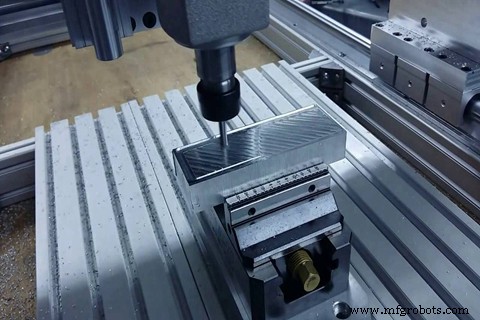
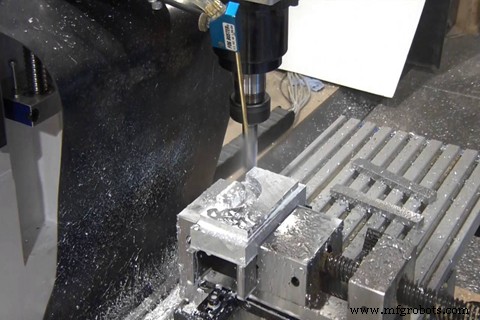
- Reduce the cutting force and cutting heat by changing the amount of cutting. Among the three factors of cutting amount, the amount of backing knife has a great influence on the cutting force. If the machining allowance is too large, the cutting force of one pass will be too large, which will not only deform the parts, but also affect the rigidity of the machine spindle and reduce the durability of the tool. If you reduce the number of back-to-back knives, it will greatly reduce production efficiency. However, high-speed milling in CNC machining can overcome this problem. While reducing the amount of back-feeding, as long as the feed is increased accordingly and the speed of the machine tool is increased, the cutting force can be reduced and the machining efficiency can be ensured.
- The order of the knife also should be paid attention to. Roughing emphasizes the improvement of processing efficiency and the pursuit of resection rate per unit time. Generally, up-cut milling can be used. That is to remove the excess material on the surface of the blank at the fastest speed and the shortest time, basically forming the geometric contour required for finishing. The finishing work emphasizes high precision and high quality, and it is recommended to use down milling. Because the cutting thickness of the cutters gradually decreases from the maximum to zero during the milling, the degree of work hardening is greatly reduced, and the degree of deformation of the parts is alleviated.
- Thin-walled workpieces are deformed due to clamping during processing, even if finishing is difficult to avoid. In order to minimize the deformation of the workpiece, the pressing piece can be loosened before the finishing is reached to the final size, so that the workpiece can be freely restored to its original shape, and then slightly pressed, just to clamp the workpiece.
According to the feel, this can achieve the desired processing results. In short, the point of application of the clamping force is preferably on the bearing surface, and the clamping force should be applied to the direction of the rigidity of the workpiece. Under the premise of ensuring that the workpiece is not loose, the clamping force is as small as possible.
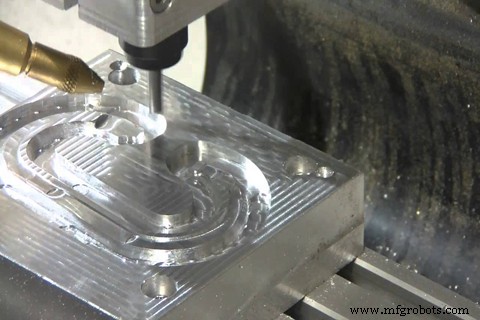
- When processing the cavity parts, try not to let the milling cutter directly into the parts like a drill bit when machining the cavity, which results in insufficient space for the milling cutter and the chip removal is not smooth, resulting in overheating, expansion and collapse of the parts, unfavorable phenomena, such as knives and broken knives. First, drill the hole with a drill of the same size or larger size as the milling cutter, and then mill with a milling cutter. Alternatively, the CAM software can be used to produce a spiral undercut program.
The main factor affecting the machining accuracy and surface quality of aluminum parts is that they are prone to deformation during the processing of such parts, which requires the operator to have certain operational experience and skills.
CNC Machine
- Shearing: A Fast, Clean, and Versatile Metal Cutting Solution
- High-Speed Cutting Explained: Boosting Manufacturing Efficiency and Precision
- 7 Proven Strategies to Prevent Aluminum Deformation in CNC Machining
- Precision CNC Machining for Custom Parts – Fast, Accurate, Tailored Solutions
- Proven Technological and Operational Strategies to Minimize Aluminum Deformation
- Preventing Deformation of Aluminum CNC Parts: Proven Strategies
- How to Minimize Aluminum Part Deformation: Proven Techniques & Operation Tips
- Critical Issues to Address in CNC Milling
- Essential Factors for Precision Aluminum CNC Machining
- Choosing the Right Hydraulic Hose Cutting Blades: Precision, Safety, and Reliability