



Boring Bar Diameter‑to‑Length Ratio Guidelines for CNC Machinists
When doing any operation on a lathe, all parameters are critical and should not be overlooked. There are industry standards and recommendations for SFM, feedrates, insert geometry, workholding, etc., that should be followed.
A common problem in boring applications is that the boring bar is extended further than recommended, or the diameter to length ratio is exceeded for that particular bar.
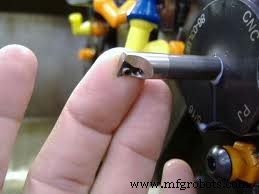
Boring Bar Diameter to Length Ratio Recommendations for CNC Machinists
Boring bars are made of different materials, and they all have different diameter to length ratios. Where one boring bar will work, another may not.
In boring applications, the diameter to length ratio is the biggest contributor to vibration
The most common materials for boring bars and their diameter to length ratios are:
Boring Bar Materials Diameter to Length Ratio or D to L Ratio
Steel                          4:1
Heavy Metal                    4:1 to 6:1
Steel Devibrator               6:1
Tungsten Carbide               6:1
Carbide Devibrator             8:1
Standard Tunable               6:1 to 10:1
Special Carbide Devibrator     over 10:1
Special Tunable                10:1 to …
When choosing a boring bar, look at the diameter and length of the hole to be bored. Then choose the proper boring bar based on the diameter to length ratio that will work best for the application.
CNC Machine
- CNC Machinist Safety: Essential Workplace Guidelines
- CNC Machinist Safety: Best Practices for a Secure Workshop
- Top 5 Safety Practices Every CNC Machinist Must Follow
- Precision Torque Screwdrivers for CNC Machinists: Achieve Consistent Tightening & Extended Tool Life
- ITA Iscar Tool Advisor: Smart Web-Based Tool Selection for CNC Machinists
- Master CNC Lathe Programming: A Guide for Machinists
- Master CNC Subprograms: Essential Guide for Machinists
- Hex Keys & Allen Wrenches: Essential Tools for CNC Machinists
- Precise Inch to Millimeter Conversion Chart for CNC Machinists
- Test Your CNC Programming Skills: Fill-in-the-Blank Challenge for Machinists