



Design for Manufacturing: Turning Concepts into Millable Reality
Can You Make It?
Designing a component is just the first step—making it a reality is the true test of engineering excellence. Design for manufacturing (DFM) evaluates whether a part can be produced efficiently, safely, and cost‑effectively with existing technology and processes.
Take a “Death Star” blueprint: while visionary, it’s beyond today’s fabrication capabilities. Even if the materials and power were available, the sheer scale and precision required would make production prohibitively long and expensive.
Sometimes a design is manufacturable, but the production route renders it impractical. Consider building an automobile from Amazon‑shipped parts versus a traditional assembly line: the former is technically possible but astronomically costlier and less reliable. DFM encourages re‑thinking the design so that it aligns with a feasible manufacturing strategy.
Material choice is equally critical. A plastic part with a sharp corner is more difficult to mold than one with a gentle fillet. Small fillets—often less than 1 mm—reduce the risk of flow blockage and improve surface finish, making the part easier to produce.
Can You Mill This?
In the CNC machining arena, DFM ensures that a part’s geometry fits the capabilities of the machine and tooling. Overly complex features can lead to increased costs, longer cycle times, or outright impossibility.
- Will the part fit within the machine’s work envelope?
- Does it require excessively long or thin tools?
- Are there interference issues between the tool, spindle, or fixture and the part?
- Can all critical features be accessed by the chosen tooling?
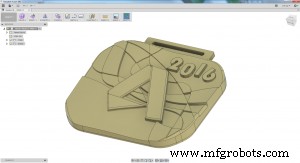
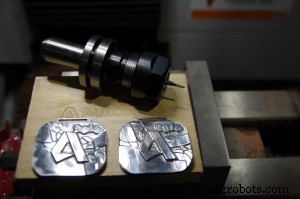
During the 2016 Olympics, a team wanted to create a custom medal using Autodesk HSM CAM. The resulting design looked impressive but posed significant machining challenges: shallow 3D contours, tight corners, and intricate text. Millers had to use progressively smaller cutters—from a 1/16″ ball nose to a 1/32″ end mill—to capture fine detail. Each reduction in tool diameter added cost through higher tooling wear, slower feed rates, and increased machining time.
In practice, finishing a medal that size with a 1/32″ tool could double or triple the cycle time. The decision then hinges on whether the customer values the extra detail enough to justify the cost increase.
Images from a Tormach 440 illustrate the progression from design to final part:
How Small Can You Go?
When millable limits are reached, alternative processes can bridge the gap. 3D printing, precision casting, or powdered metal fabrication can deliver fine detail that conventional milling cannot. For example, mint dies for coins routinely use CNC mills with tool diameters as small as 0.006″ (about the width of six human hairs). Achieving this level of detail may require two days of machining and highly accurate equipment; otherwise, the final product will lack the intended fidelity.
In summary, effective DFM considers tool size, machine capacity, material behavior, and cost implications from the outset. By aligning design intent with manufacturing realities, you ensure that your part is not only conceptually sound but also practically producible.
Explore DFM and Manufacturing Together
Autodesk University, held November 15‑17 in Las Vegas, showcases the latest in design and manufacturing integration. Register before October 10 for early‑bird pricing.
CNC Machine
- Madagascar Customer Praises Our Nesting CNC Machine and Service Quality
- Set the Workpiece Zero Point in Mach3 CNC Control – Step‑by‑Step Guide
- 3-Axis, 4-Axis, and 5-Axis CNC Machining: Key Differences Explained
- The Importance of Honesty with Customers: Building Trust and Success
- How to Use a Tool Sensor on Your Wood CNC Router
- Master Laser Cutting: A Comprehensive Beginner's Guide
- 2024 Advanced Auto-Loading/Unloading Fiber Laser Cutting Machine – Integrated Half-Enclosure for Sheet & Tube
- Customer Review: ELECNC 1530-4A Praised by Kazakh Cabinet Maker
- Mastering CNC Fanuc G76 Threading Cycle: Comprehensive Guide
- 19 Essential Laser Engraving Machine Issues & How to Resolve Them