



Choosing the Right CNC Router: From 3‑Axis to 5‑Axis Solutions
Choosing the right CNC router can make or break your business’s efficiency and profitability. Whether you’re buying your first machine or upgrading your fleet, understanding the key differences between 3‑axis, 4‑axis, and 5‑axis routers—and how they align with your production goals—is essential.
Common CNC Router Configurations
3‑Axis CNC Routers move the cutting tool in X, Y, and Z directions (up/down, left/right, forward/back). They’re the most widely used and cost‑effective option for many manufacturers, delivering excellent value when you need to automate routine tasks, bring production in‑house, and minimize waste.
4‑Axis CNC Routers add a rotary or drill head axis, enabling side‑drilling, pod, or rail systems. This extra axis expands your machining envelope, allowing you to tackle complex profiles and multi‑angle cuts that would otherwise require separate tooling.
5‑Axis CNC Routers provide two additional rotational axes (A and B), granting the tool multi‑directional movement across A, X, Y, B, and sometimes C. While more expensive, 5‑axis machines excel at producing highly detailed, intricate components—ideal for aerospace parts, high‑end furniture, and precision prototypes.
High‑End CNC Machining Centres combine advanced metalworking capabilities with large‑scale woodworking features. These workhorses are used in both the metal processing and industrial woodworking sectors, making them suitable for furniture manufacturing, metal component milling, and large‑format signage.
How to Decide Which Router Fits Your Needs
- Assess Your Production Volume – High‑volume operations may justify a 4‑ or 5‑axis system, whereas small‑batch production can thrive on a 3‑axis router.
- Consider Material Types – Wood, composites, plastics, and metals each have different cutting requirements. Multi‑axis routers handle a broader range of materials more efficiently.
- Analyze Work‑Piece Geometry – Complex curves, deep pockets, or side‑drill features typically benefit from additional axes.
- Budget & ROI – Balance upfront cost against long‑term savings from reduced setup times, fewer re‑works, and lower material waste.
Choosing the wrong machine can result in wasted capital and missed opportunities. Speak with a qualified industry specialist to align your machine choice with your specific business requirements.
Our CNC Router Offerings
At Mantech, we provide reliable 3‑axis and 4‑axis CNC routers tailored to a diverse range of applications:
- Woodworkers & signmakers
- Prototypers & engineers
- Fabricators & van conversion firms
- Aerospace part manufacturers
- Boat interior designers
- Makers, crafters, and educational institutions
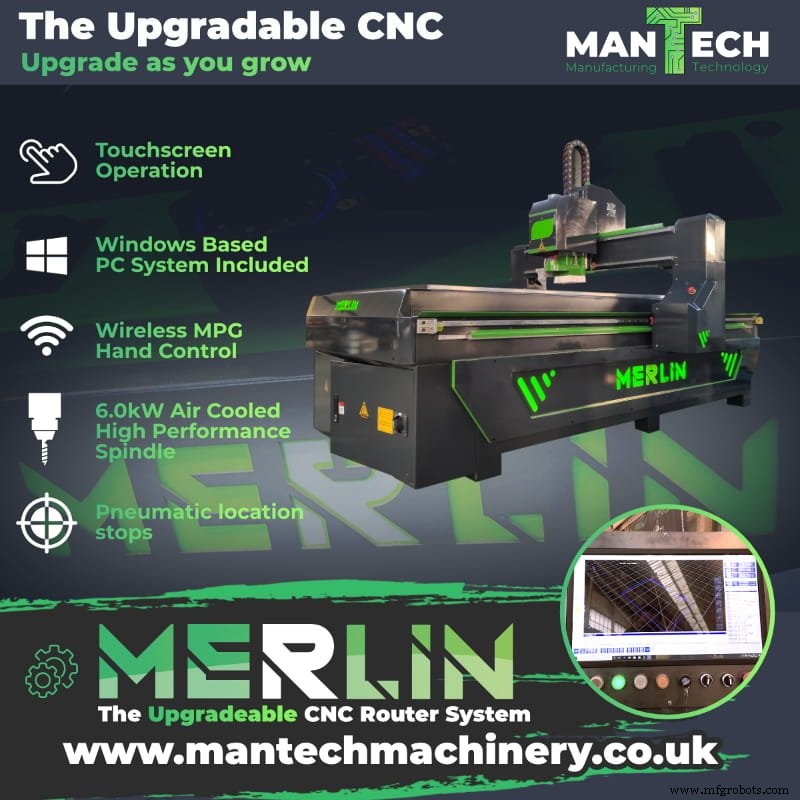
Mantech has been delivering top‑quality machinery and turnkey solutions for over 21 years, earning a reputation for excellence and customer satisfaction across our product range.
CNC Machine
- CNC Router Business Ideas: From Custom Furniture to Campervan Interiors
- Comparing 3D Printers and 3D CNC Routers: Which Is Best for Your Project?
- CNC Routers: Applications, Benefits, and Industry Uses
- Choosing the Right CNC Router: 3‑Axis vs 4‑Axis vs 5‑Axis Explained
- What Is CNC? – Understanding Computer Numerical Control for Modern Manufacturing
- Key Benefits of Foam CNC Routers in Mold Manufacturing
- Choosing the Right CNC Router: 3‑Axis vs 4‑Axis Machines
- Understanding CNC Turning: Precision Material Removal for Manufacturing
- Understanding Dashpots: Controlling Movement in Mechanical Systems
- Understanding CNC Routers: Function, Uses, and Benefits