



Advanced Forging & Pressing Machines for Precision Metal Fabrication
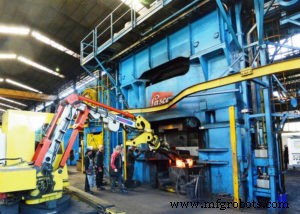 Forging and stamping is one of the most common metal processing technologies. The process of converting a semi-finished product (billet) into a final product can be carried out manually and mechanically. In the first case, forging hammers or sledge hammers of different weights are used. Despite the experience of the master, the volume of forged products, their mass and the complexity of the configuration are limited by the human factor. Most often, they are hand-made in comparison with ordinary copies under the order (lattices, furniture elements, fences, decor). In the industry, forge-and-press equipment is widely used, with the help of which it is possible to arrange the serial production of forged products of higher volume and almost any level of complexity. Such machines us used sheet metal brake allow processing of metal without cones and hot stamping.
Used forging hammers
Sheet metal machine classification
Among all the variety of mechanisms and machines for forging, there are several criteria according to which the classification of forging and pressing equipment is conducted:
- by the type of energy transfer from the engine to the actuator;
- by the type of the final element of the impact on the workpiece;
- on technological possibilities.
Metalworking and forging and pressing equipment consists of two main units: a motor with transmission (drive) and an actuating element. To understand some of the constructive nuances, it is worthwhile to consider the main varieties of such units in more detail.
By the principle of energy transfer
This is one of the fundamental criteria in the classification of this type of equipment. Distinguish the following varieties:
- hydraulic presses and hammers;
- rotary scissors and machines;
- rotary plants, aggregates and machines;
- presses, scissors and other crank-type machines;
- forging and pressing machines that use gas or liquid media;
- backlash or cable press machines;
- impulse presses.
By type of actuator
This classification is more simplistic, and in many sources it can be seen as a universal gradation. Equipment for the press-forging department can be divided into three main categories according to the type of the executive element:
- Forging hammers. Heavy metal construction, which is used on the workpiece with the use of force, forcing the metal to take the necessary shape. There are several types of hammers – high-speed, steam-air, hydraulic and drive;
- Forging press. With the help of its mass, the press helps to take the preform shape. Most often they are used in the manufacture of bulk products from standard sheet metal. There are several main types of presses – mechanical (screw or crank) and hydraulic. Between them they differ in overall dimensions and power characteristics;
- Rotary machines. A special technology, based on rotation and force, makes it possible to manufacture finite products from metal of varying degrees of complexity. There are rotational-crimping and rotational-forging installations.
A wide choice of variants of executive elements and variants of designs allows the customer to pick up the equipment according to the requirements (type of made products, size of production and other characteristics).
Forging hammers and presses characteristics
All forge-and-press machines and mechanisms fall into three main categories according to the universal rules adapted in sheet metal sector:
- General purpose. Such equipment is suitable for the manufacture of most products by forging or stamping, the overwhelming majority of typical processes are performed on them;
- Special purpose. Metal machines of this category specialize in certain technological processes. They are often used for serial production of the same type of products; Equipment of this type is selected not only based on processes that can be performed on them, but also taking into account specific final products.
Regardless of the type of construction, overall dimensions and specificity, the installation of forging and pressing equipment should be carried out exclusively by specialists in the field. This guarantees a long and uninterrupted operation of the units and the correct performance of production tasks.
Industrial equipment
- Why Every Business Should Invest in Print & Apply Machines: 5 Key Benefits
- Forging Explained: Process, Types, and Materials
- Understanding Foundries: The Backbone of Modern Manufacturing
- Fast Prototyping with 3D Printing: Revolutionizing Foundry Processes
- Trumpf’s Cutting‑Edge Laser Welding Machines: Revolutionizing Sheet Metal Fabrication
- Professional Plasma Cutting Machines for Precision Metal Fabrication
- Advanced Press Brakes & Sheet Metal Machinery – Precision CNC Solutions
- Understanding Forging: Definition, Process, and Types
- Understanding Foundries: Where Metal Becomes the Building Blocks of Modern Industry
- Mastering CNC Machines: Essential Do's & Don'ts