



Are 5-Axis Waterjets Truly All-Wet? Insights into Cutting Performance
Since the conception of Abrasive Waterjet Cutting the process of material cutting has been utilized not only in 2D (Flat Sheet) applications but also in 3D (5-Axis) applications. In the past 15 years the application of 5-Axis has devolved back into the flat sheet cutting realm of waterjets where enterprising companies promised it would provide better speeds and higher tolerances in flat parts. In this exclusive article we use our experience and our users experiences to delve into the different forms of 5-Axis waterjet cutting, what it all means, where it applies, where it doesn't and how you can determine if 5-Axis Cutting is right for you.
What is 5-Axis Waterjet
Customers and Sales professionals alike have lumped many different categories of waterjet cutting into the designation of “5-Axis” waterjet. Let’s break this category of designs down for the user into 4 basic categories of machine designs:
- Robotic controlled
- Bridge Type / Large Format
- Flat Sheet Cutting with 5-Axis capability Added on
- Flat Sheet Cutting with Taper Compensating Tilting Heads Added On
The first 2 types of “5-Axis Waterjets” are application driven and typically will be designed or configured to meet the customers specific requirements. The later 2 are by far the more common and popular options and are merely adaptations on an existing machine design offering to improve or enhance performance and capabilities of an otherwise typical flat sheet cutting machine.
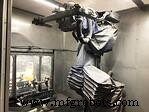 Robotic Controlled:
While all systems are theoretically “Robotic (CNC) Controlled” there are several manufacturers that have taken an “Off-the-Shelf” Robotic Manipulator/Arm and attached a waterjet cutting head to it. Although these waterjet systems are merely a Robotic Arm with the waterjet cutting head attached they can be very useful given the right application as they are very adept and capable given the flexibility of the robotic arms motion capabilities. In difficult to reach and cumbersome applications the robotic arm can be a great benefit. However there are some major drawbacks to this approach.
These systems are typically a “Teach’ type robotic motion system that require much more setup time then a typical flat sheet cutting system and although these very flexible systems that can cut flat sheets of material, their main purpose are cutting unique contours and shapes in 3 dimensions most of the time. Their setup, safety considerations, fixturing and programming can be difficult and cumbersome, however that is easily made up with their unique flexibility and abilities if your applications are large and complex 3D shapes 90-100% of the cutting time. For most shops cutting shapes out of flat sheets, these type of 5-Axis Waterjet systems are unwieldy, unsafe and difficult to operate.
These systems are generally found in cutting applications such as architectural, artwork, high production of difficult to machine components and extreme environments such as nuclear applications.
Bridge Type:
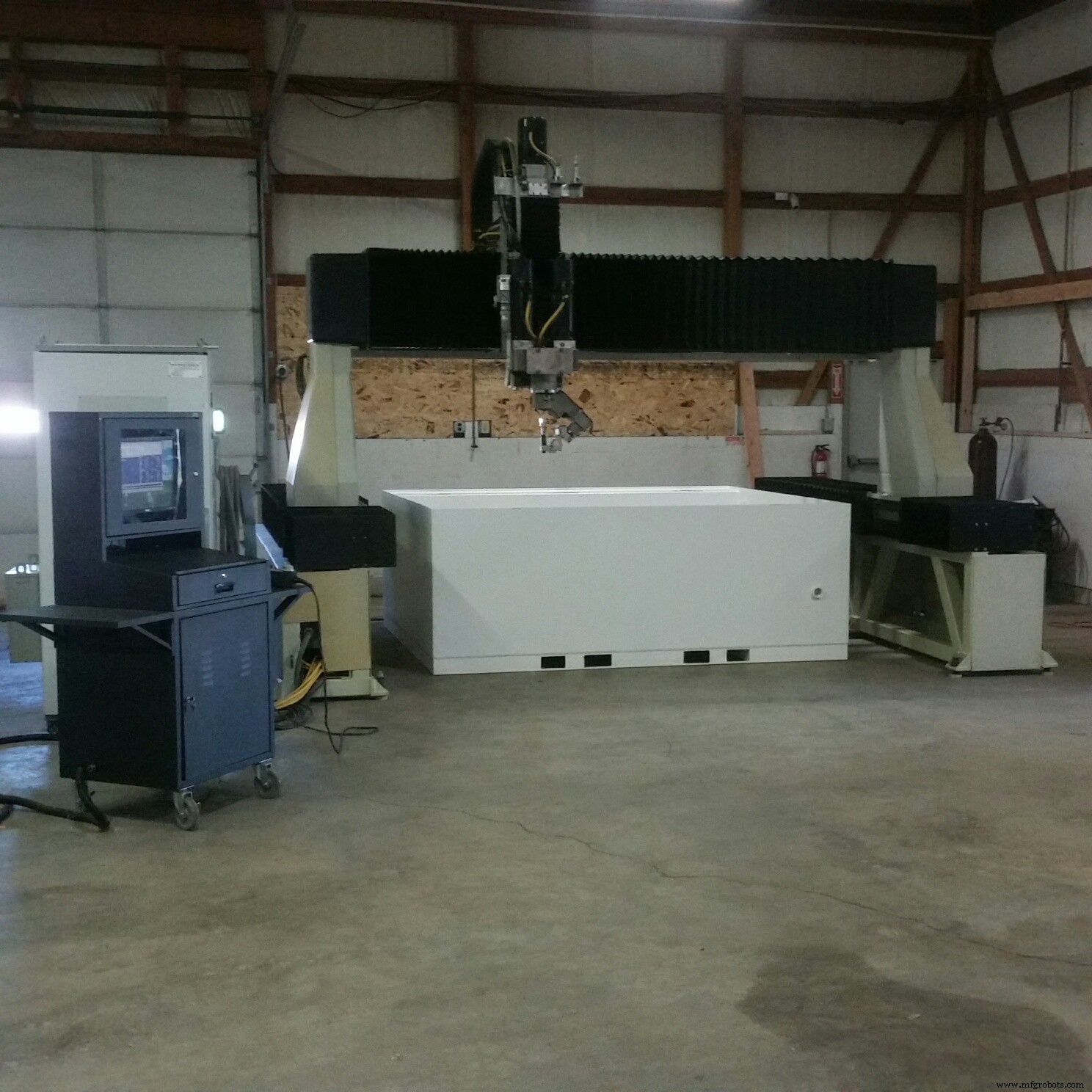 Bridge Type 5 Axis Waterjet Cutting Systems are typically machinery with an articulating nozzle capable of 180+/- degrees of motion in an A/B axis configuration mounted on a machine with a large travel Z-Axis allowing for generous reach and capabilities. These systems also require a great deal of part fixturing, setup and programming skills and generally do not lend well to simple 2D Flat sheet cutting, although that is a possible application within its range of capabilities.
These systems are most utilized in applications such as Aerospace, Marine and Prototype Shops.
The most common types of 5-Axis Waterjets found will be Waterjet Flat Sheet Cutting Systems fitted with an optional 5-Axis Head and the more common, albeit limited version, the Taper Compensating head.
Taper Compensating Head
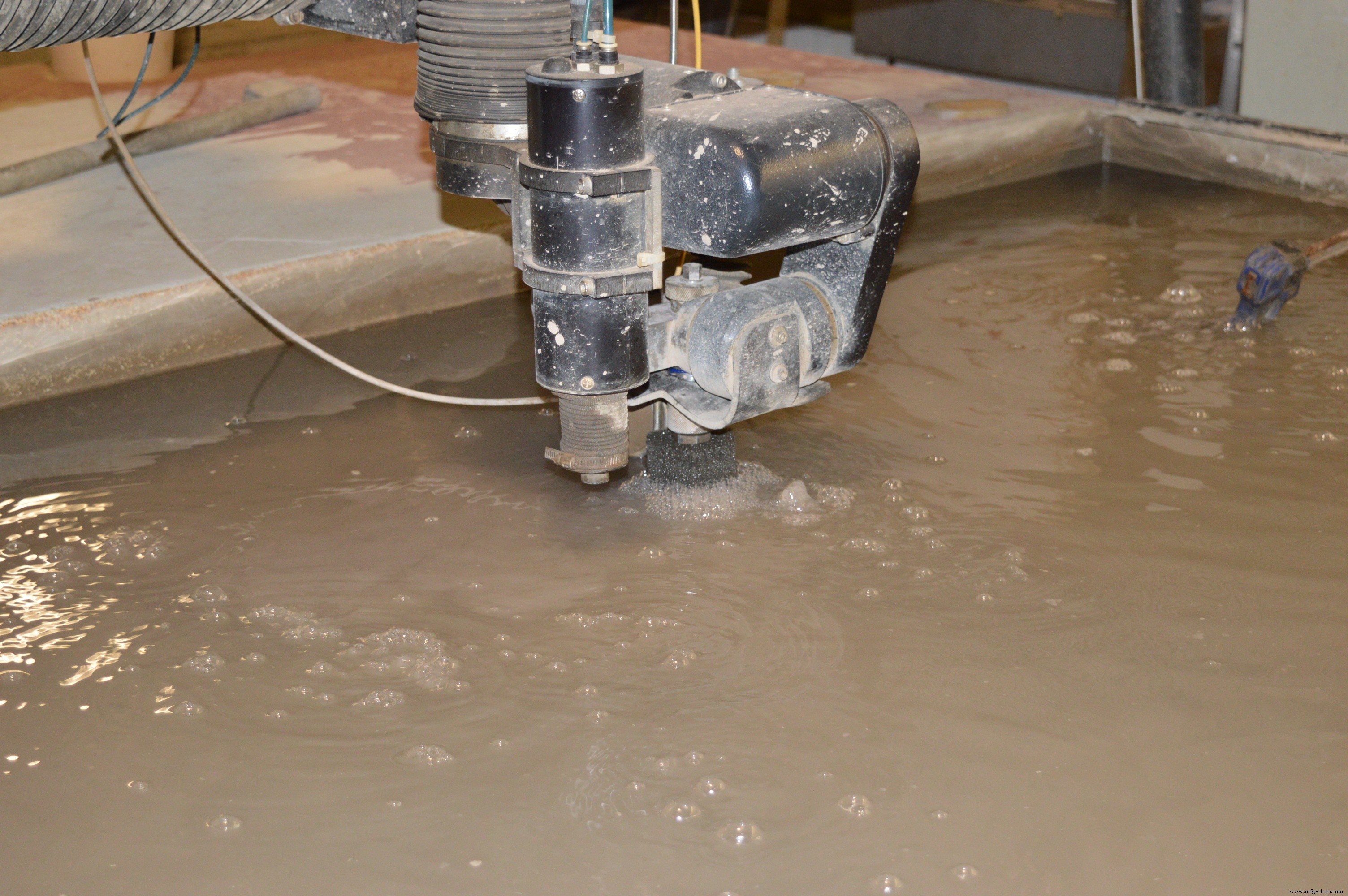 Taper compensation has been the offered under the trade names of of Tilt-A-Jet (Omax Corp) and Dynamic Waterjet (Flow Corp). These cutting heads offer a limited angle of motion and are designed to enhance flat sheet cutting speeds. As the waterjet stream naturally “trails” behind the position of the nozzle as the jetstream grinds its way through the material, these heads
 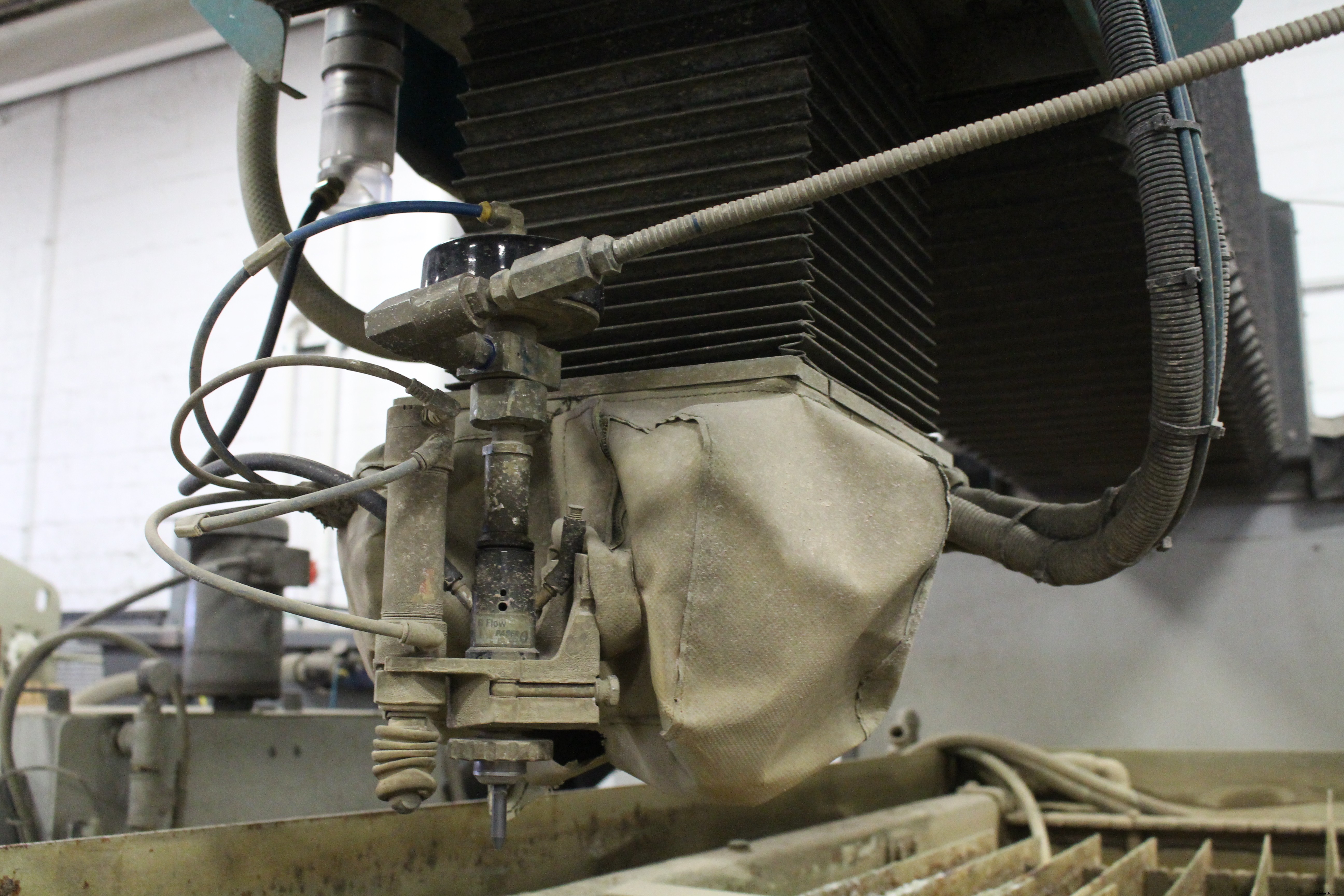 allow for the nozzle to tilt just a few degrees to compensate for the naturally occurring angle created during the waterjet process at higher speeds. These attachments also allow for the nozzle to preposition the jetstream for an upcoming corner and thereby compensate for the stream lagging behind at the corners in order to prevent corner washout, again at higher waterjet cutting speeds.
One major effect of the process of Waterjet Cutting needs to be taken into consideration when choosing these type of 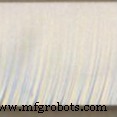 compensating heads. Although the waterjet can compensate geometrically for the naturally occurring taper and jet stream lag in higher speed cutting, these tilting technologies cannot change the natural effect of ribbing in the material caused by moving too quickly through the material. These “Striations” (See Photo to Right) as they are called, can only be eliminated by slowing the cutting process down to an acceptable finish level, whereas you may find that the part straightness AND finish required eliminate or greatly reduce the need for these attachments. Also quality 2 Axis cutting systems will have very developed Accel and Decel controls for corners allowing the lagging jetstream to catch up in corners thereby eliminating corner washout, although at a slightly slower feedrate.
Benefits:
-
Reduces or Eliminates Taper in Waterjet Cut Parts
-
Increased Speed While Maintaining Geometrical Accuracy
Disadvantages
-
Complexity of Design
-
Increased Setup Time Required for Part Probing
-
Increased Maintenance and Repair
-
Sheet Flatness a Requirement.
-
Exact Nozzle Offset (distance of nozzle to material) a Requirement.
-
Does Not Eliminate “Striations” Occuring at High Speed.
-
Probing Material Surface Required
5-Axis Head
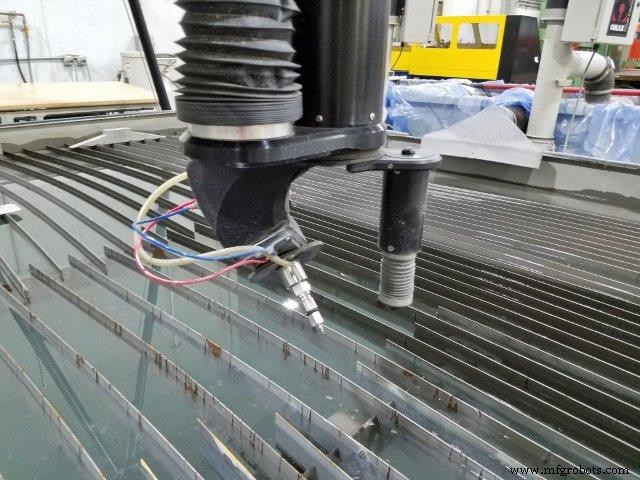 The optional 5-Axis heads allow for additional cutting capabilities on a standard flat sheet Waterjet system. These typically have all the benefits of the Taper Compensating heads described above but also add the ability to cut complex tapers. While these attachments increase the machines capability, they come at a price, and not just the purchase price. 5-Axis cutting requires the control know the exact dimensions between the nozzle tip and the materials surface, just like it’s cousin the Taper Compensating Head this is done via a probing cycle which adds complexity to the machine and time to the cycle.
Buyers have considered 5-Axis capabilities in the past for many of the wrong reasons. Although these systems provide you the abilities to cut features such as chamfers and straight bevels you should never justify your purchase, or use your machine to these, or any feature that can easily be done on an outside operation, and here is why; Your waterjet operates at a cost of about $30-$35 p/hour - That's just the amount that it takes to feed the “beast” (garnet, consumables etc.). If you can chamfer a hole on a drill press in 30 seconds your cost will be much cheaper then having the waterjet head articulate that angle over several minutes, likewise for weld prep bevels etc. The general rule is: If You Can Cut It Off The Jet, Do It! It's Just Cheaper.
Pros of 5-Axis
-
Ability to Cut Acute Angles of 45 Degrees or More
-
Can Provide Same Additional Benefits of Taper Compensating Head
Cons of 5-Axis
-
Complexity of design
-
Increased Setup Time Required for Part probing
-
Increased Maintenance and repair costs
-
Sheet Flatness a requirement.
-
Exact Nozzle offset (distance of nozzle to material) a requirement.
-
Does not eliminate “striations” occurring at high speed.
So the original question was; Is 5-Axis Waterjet All Wet?
If you have the right application, 5-Axis waterjet cutting can be extremely profitable. Whether it’s a Robotic Arm, Gantry Type or even the 5-Axis Cutting Head attachment, these applications can be real money-makers for a waterjet cutting system and a waterjet job shop. However, the Taper Compensating type heads require a deeper and more thorough review, as typically, where you need straight and good geometry, you also need a smooth and precision finish and the only way to accomplish that is to just slow the feed rate down, which in kind produces straight and clean edges, thereby making the argument for these type heads considerably less valid.
If you would like to discuss with one of our experts how a 5-Axis Waterjet Cutting System can work for your application, or if you would like to discuss adding the capability to your next machine just contact the experts at Southern Fabricating Machinery Sales today! Call us directly at 813-444-4555 or visit us on the web at WWW.SOUTHERNFABSALES.COM
Shopping for a Waterjet now? Check out our selection of 2,3 and 5-Axis Waterjet Cutting Systems HERE
Visit our Waterjet Technical Reference Section HERE and sign up to get articles just like this emailed to you when published.
Like this post? You’ll also enjoy:
Waterjets 101: Abrasive Waterjet Machining
How to Choose the Right Waterjet Cutting Machine
Garnet Removal Options for Water Jet Operators
Industrial equipment
- Tracing the Evolution of Waterjet Cutting: From Ancient Roman Engineering to Modern Precision Technology
- Industrial Applications of Waterjet Cutting Machines
- Waterjet Cutting vs EDM: Choosing the Right Cutting Technology for Precision Work
- Oxy‑Fuel Cutting: The Timeless, Cost‑Effective Metal Shaping Solution
- Waterjet Cutting Explained: A Precise, Versatile Fabrication Technique
- Waterjet Cutting Explained: How High‑Pressure Water Shapes Materials
- Unlock Precision: How a 5‑Axis Waterjet Cutting Machine Transforms Manufacturing & DIY Projects
- Discover the Advantages of Waterjet Cutting: Precision, No Heat, and Versatility
- Expert Waterjet Cutting Services for Custom Signs
- Precision Steel Cutting with High-Pressure Waterjet Technology