



Boosting Production, Safety, and Savings with Robotic Machine Tending
Manufacturers continually seek ways to boost output, cut costs, and elevate quality. Robotic machine tending—a growing trend in industrial automation—delivers precisely that. By automating loading, unloading, tool changes, and inspection, it slashes labor expenses, sharpens precision, and enhances safety. This article explores the advantages, operational mechanics, and proven implementation strategies.
Introduction to Robotic Machine Tending
Robotic machine tending deploys autonomous arms to handle routine operations—loading and unloading components, swapping tools, and conducting quality checks—on equipment ranging from injection‑mold presses to CNC routers. By offloading these repetitive tasks, companies shift from variable labor costs to a single, durable investment that minimizes human error and injury. Recent advances in sensor integration, motion control, and software licensing have lowered entry barriers, making the technology both cost‑effective and simple to deploy.
Robots run tirelessly—24/7—once commissioned, enabling machinery to operate continuously. The resulting higher throughput translates to shorter lead times. Moreover, robots execute tasks at speeds and tolerances that surpass human capability, cutting material waste and cycle times.
Key Business Benefits of Robotic Machine Tending
Beyond productivity gains, robotic machine tending offers a host of operational advantages. Chief among them is safety: by removing humans from the loading zone, the risk of repetitive‑strain injuries and hazardous exposures drops dramatically. Automation also eliminates the human‑speed bottleneck that can cause production stoppages.
Flexibility is another major benefit. Robots can be reprogrammed to accommodate shifting production demands, allowing companies to respond swiftly to market changes without costly retooling.
Finally, while the upfront investment is notable, long‑term savings in labor, downtime, and material waste make robotic tending a compelling ROI.
Installing a Robot for Machine Tending on CNC and Other Equipment
A typical installation consists of a robotic arm mounted on a rigid base, equipped with precision sensors and interchangeable tooling. The arm is driven by a PLC or dedicated motion controller that interprets machine signals and executes pre‑defined pick‑and‑place sequences.
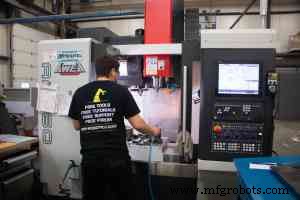
Programming usually begins with a sensor‑based handshake between the robot and the host machine. The robot reads the machine’s status, then moves to the loading or unloading position, manipulates the part, and returns to standby. The cycle repeats until the production run completes.
Multiple robot platforms exist—serial manipulators, SCARA arms, and Cartesian robots—all tailored to specific payloads, reach, and precision requirements. Selecting the right platform depends on machine type, part geometry, and throughput goals.
Factors to Consider When Choosing a Robotic Machine Tending Solution
Choosing the right system begins with understanding the host machine’s constraints—size, cycle time, and mechanical interface—because these dictate the robot’s reach and payload. Consider whether the machine is a press, a CNC mill, or a packaging line, as each demands different interaction strategies.
Part dimensions and weight are equally critical. A robot’s payload rating must comfortably exceed the heaviest part, while its reach must accommodate the full range of motion required for loading and unloading.
Cost remains a decisive factor. Though robot prices have fallen, the total cost of ownership—including tooling, integration, and maintenance—must be weighed against projected productivity gains and safety improvements.
Best Practices for Robotic Machine Tending
To maximize returns, adhere to a disciplined maintenance schedule: regular cleaning, lubrication, and component checks keep the robot operating at peak efficiency. Periodic software updates and sensor calibrations further safeguard performance.
Equipping staff with comprehensive training—covering programming, troubleshooting, and safety protocols—ensures that the technology is used to its full potential. Skilled operators can fine‑tune routines, diagnose issues, and maintain compliance with workplace safety standards.
For detailed information on our training and support programs, contact our technical team.
Robotic machine tending transforms manufacturing by automating repetitive tasks, enhancing safety, and driving cost efficiency. Selecting the right robot, implementing robust maintenance, and investing in skilled personnel are the pillars that unlock maximum productivity and profitability.
Industrial equipment
- Femco HL-35DMSY CNC Lathe: 23-Station Durga Turret for Rapid, Accurate Machining
- Maximize Tool Life with Cutting-Edge Tooling, Toolpath, and CAM Innovations
- How to Select the Ideal Flex Auger Screw Conveyor for Your Application
- Understanding Bridge Taps: How They Affect Your Phone Service
- Understanding Pilot Drills: Purpose, Benefits, and Usage
- Wire Nails Explained: Types, Uses, and Installation Tips
- Understanding Hydraulic Cranes: How They Operate and Why They're Efficient
- MS52 CNC Bar/Chucker: Open‑Front Design for High‑Volume Production
- How Drones Revolutionize Industrial Jobsites: 5 Key Benefits
- Top 3 Thermal Cutting Tools for Precision Metal Work