



Painting Robots: Maximizing Precision, Efficiency, and ROI in Manufacturing & Automotive
Painting Robots are increasingly employed in the manufacturing, construction, and automotive industries. Discover their many benefits and applications.
Painting robots apply coatings with great precision and evenness. They are usually employed in a manufacturing environment. In particular, the automobile industry has used painting robots for many years. Over the last decade, the sophistication of painting robots has dramatically increased. And more applications have become possible.
Modern painting robots employ arms with six degrees of freedom. This means they can paint not only the outside of a car, but they can also reach inside, for example. In general, surfaces that are hard to reach manually can often be more easily accessed by robot painters. Also, complex parts with angular or curved surfaces can be painted or coated.
As the name implies, painting robots are most often used to apply paint. However, they can also be used to put on a variety of other coatings.
Some examples of various kinds of coatings include:
- anti-fingerprint
- antifog (for glass)
- water resistant
- sound-absorbing
- vibration damping
- anti-bacterial
Industries that Use Painting Robots
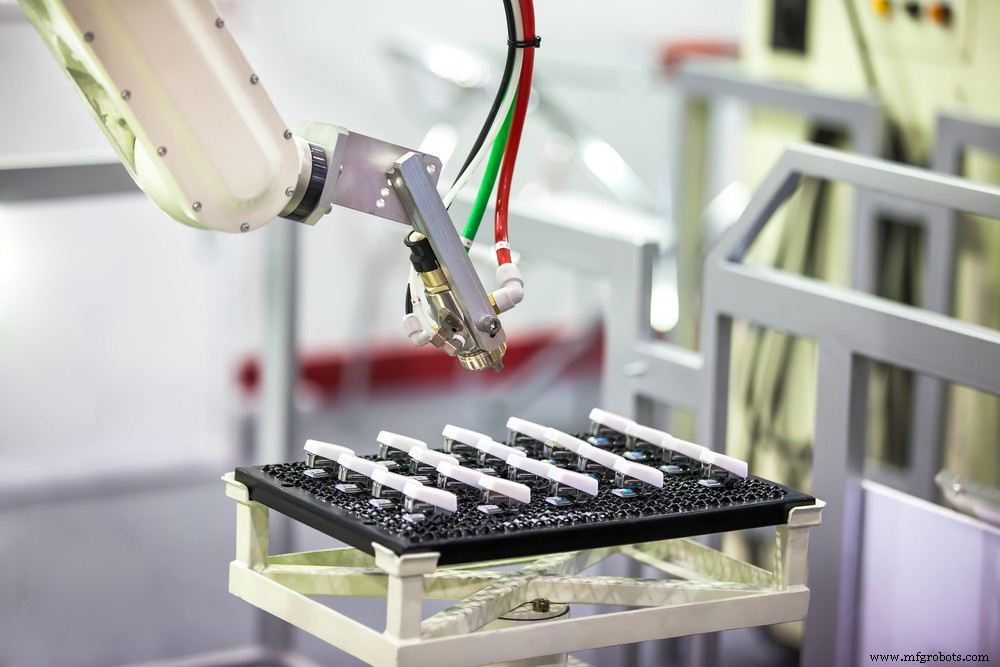
Painting robots are still relatively costly. So, the industries that use them typically manufacture a high volume of products, enabling them to achieve a rapid ROI. Or the products to be painted need a high-quality finish that justifies using the greater precision of a robot. Here are some of the types of manufacturers using painting robots:
- automobile
- glass
- aerospace and defense
- smartphone
- railroad cars
- shipyards
- office equipment
- household products
- other high-volume or high-quality manufacturing
Advantages to Painting Robots
The benefits of using painting robots include:
- Uniformity of coating - robots can move at a constant speed far better than a person and thereby ensure an even coating
- Precision of application - the robotic painting arm moves with great accuracy. The position of the robot will be much more precise and repeatable than with a human painter.
- Speed (as much as 30 times faster than manual methods)
- Keeping workers safe from harmful fumes and chemicals
- Reduced cost by minimizing the amount of wasted coating
Types of painting robots
One can separate painting robots by two properties: the mounting method and the technology used to apply the coating.
How Painting Robots are Mounted
The four main ways of installing painting robots are:
- Floor - takes up the most space but is easiest to integrate into a painting booth.
- Ceiling - requires less space than floor mounting but is more complicated and expensive.
- Wall - also takes up less floor space than floor mounting. Care must be taken to accommodate the dynamic forces.
- Rail or Overhead Gantry - enables the painting robot to move back and forth over large distances. Can paint exceptionally large objects like airplanes, trucks, and railroad cars.
Technologies Used to Apply the Coating
Painting robots use different methods of turning the paint or coating into a fine mist. This is important for an even application. Here are the most common technologies used:
- Air spray - a stream of air is mixed with the coating to break the fluid into fine droplets. Most common for paints.
- Ultrasonic spray - an atomization surface vibrates at an ultrasonic frequency. The coating hits the vibrating surface and is turned into a fine mist. Used to apply insulation and conductive films on small products. Other uses include anti-glare coatings, photoresist, and various coatings with special properties.
- Electrostatic - the coating fluid is charged with thousands of volts of static electricity in the nozzle. Electrostatic repulsion turns the liquid into a mist. The mist is attracted to the surface to be coated by an opposite electrical charge. With this method, an even coating can be applied to uneven surfaces. The efficiency is remarkably high, with little paint wasted.
Market Size for Painting Robots
The global market size for painting robots is expected to reach US$3.2 Bn in 2023, with a CAGR of 10.4% from 2017 to 2023.
Complementary Solutions
Technologies that complement painting robots depend on your application. Here are a few considerations.
Assistant Robot
There are applications for which it makes sense to have another robot help the painting robot. For example, the assistant robot can open the car door in automobile manufacturing to allow the painting robot to reach inside. In general, the auxiliary robot helps enable the painting robot to get at all the needed surfaces.
Fixturing
You'll need to consider whether you want to use a different fixture with the painting robot than you've employed previously. To maximize efficiency, you may wish to use a fixture that can reorient the piece to be painted.
Special Area for Painting/Ventilation Systems
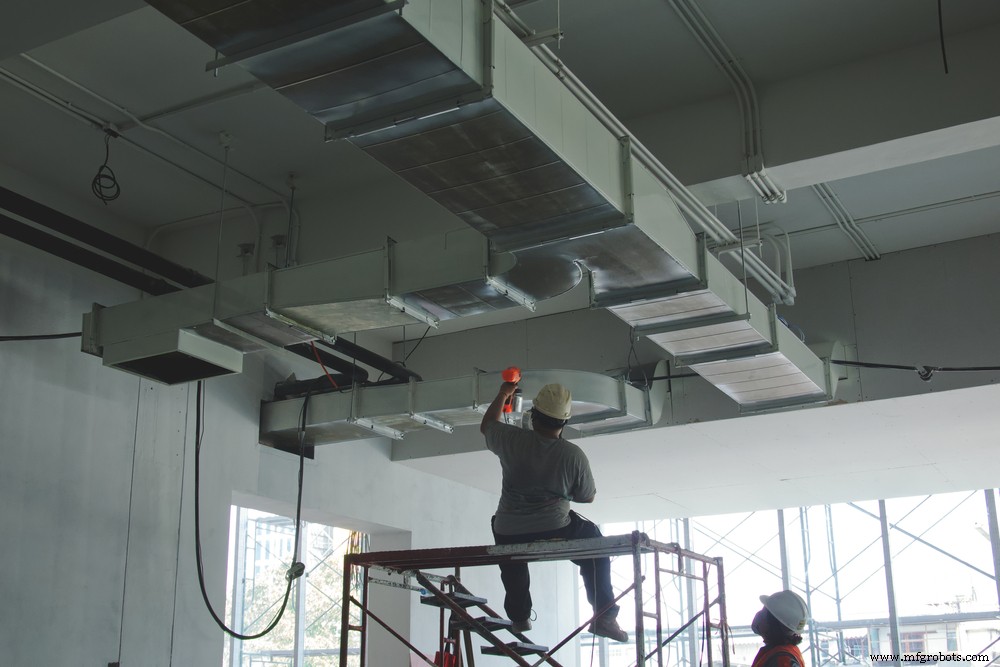
If you need to ensure that dust or contaminant particles are not present, you may want to invest in a cleanroom. If your requirements are not that stringent, perhaps a painting booth will suffice. In general, you'll need to consider where the painting takes place to maximize quality and safety. The area will need special ventilation.
Mounting Systems
How the painting robot will be mounted is an important consideration. You might want to fasten the painting robot to a rail or gantry system if it needs to paint large surfaces like railroad cars.
Maintenance for Painting Robots
You will need an ongoing maintenance routine to ensure the correct functioning of your painting robot. The spraying nozzle will need to be cleaned. The type of solvent for this task will depend on the coating that the painting robot sprays. Depending on the application, there may need to be other specific measures taken.
The manufacturer will supply standard maintenance information.
How to Source Painting Robots
HowToRobot is a global platform connecting end-users with robot and automation suppliers worldwide. We have the world’s largest directory of robotics companies. Using our guide, you can find the type of robot you need, ideally suited for your application.
If you are looking for automating a painting task, you can get tailored solution proposals from various suppliers. Simply describe your project and start receiving answers.
You can also get quotes and receive product information for specific painting robots, parts, components, and consultancy services. You will receive product information and pricing from multiple vendors.
There are impartial HowToRobot experts who can help you navigate through the process. Click here to set up a consultation with an expert advisor.
Industrial robot
- Robotic Cleaners: How They Work, Where They’re Used, and Their Limits
- Six-Axis Industrial Robots: Real-World Uses, Benefits, and Cost Breakdown
- Complete Guide to Industrial Robot Parts & Components: Sourcing & Usage Insights
- 12 Leading Industrial Robot Applications: Boosting Efficiency & Safety
- Cobots: Balancing Flexibility and Efficiency – Pros, Cons, and Key Differences
- Packaging Robots: Key Benefits & Capabilities for Industrial Automation
- Polyimide PCBs: Advanced Materials for High-Performance Electronics
- 5 Essential Benefits and Applications of Wire EDM Technology
- Robots That Kill: How to Identify and Mitigate Industrial Robot Hazards
- Boost Production Efficiency with Universal Robots' 24/7 Pick & Place Arms