



When to Automate Machine Tending: 4 Clear Indicators for Boosting Productivity
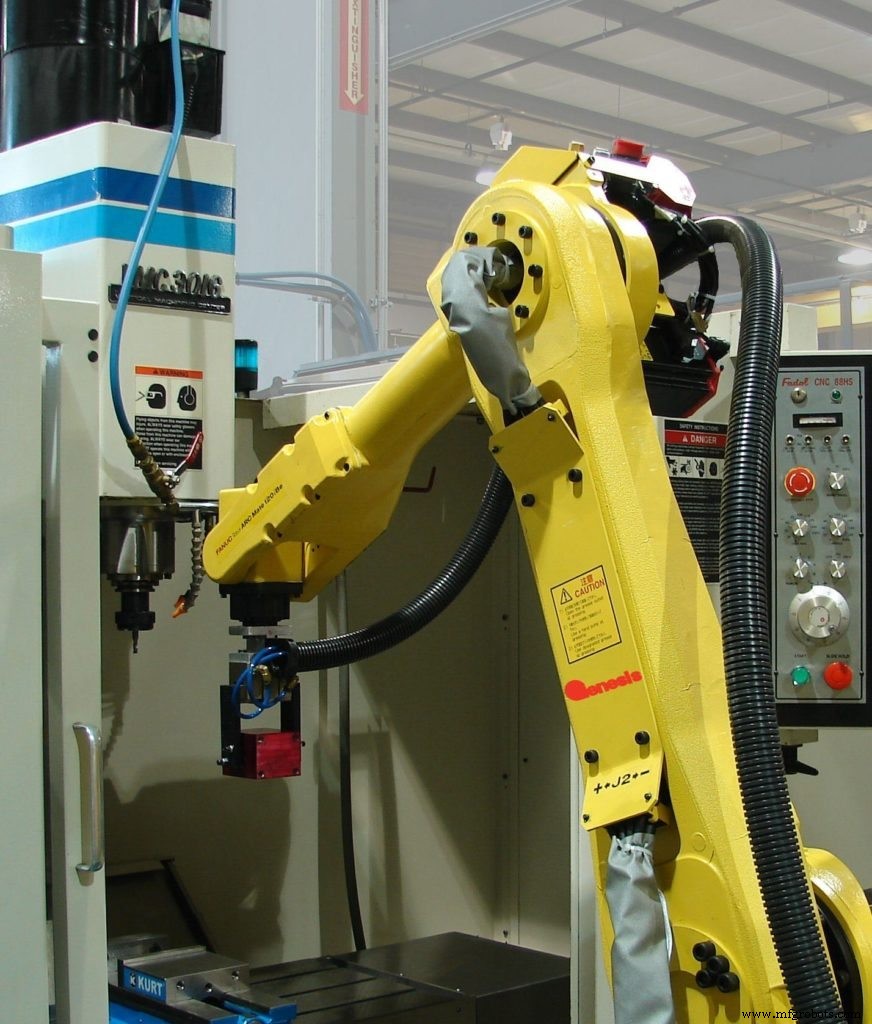
Machine tending applications are often slow to be automated, due to their perceived complexity. Manual processes are capable of loading and unloading machinery, but machine tending has the potential to be far more productive than this.
Just about any machine tending process can be automated profitably, however, it can be difficult to assess when it makes sense to automate machine tending processes, especially when the potential for productivity and return on investment (ROI) are unknown.
4 Signs It’s Time to Automate Machine Tending Processes
Typically, any manufacturer can identify one of four signs that they would find machine tending automation profitable.
Upgrading CNC Machines: outdated CNC machines present additional obstacles to automation which cut into profitability. But newer CNC machines can integrate with automated systems easily, sometimes with just a simple software package. When new CNC machines are installed, it’s a good time to consider robotic machine tending solutions.
- Production Bottlenecks: if production parts begin to build up at loading or unloading of machines, either the machine is too slow for other processes or too fast. Regardless, robotic automation of machine tending will create a smoother flow of products and increase throughput.
- Pre- and Post-Production Processes: oftentimes parts will need cleaned or inspected before or after machining. This can also create production bottlenecks. Machine tending doesn’t occur in a vacuum – if other processes are creating inefficiencies, robotic automation may be the solution.
- ROI Considerations: the ability to accrue ROI is not static. Labor may be harder to find, the costs of implementing automation may decrease and the need for efficiency may increase. When ROI goals can be achieved, it’s time to seriously consider robotic automation of machine tending.
The main signs that it’s time to automate machine tending processes include upgraded CNC machines, production bottlenecks, pre- and post- production bottlenecks, and changing ROI considerations.
Machine tending processes can be complex, but that doesn’t mean they can’t be automated. The majority of the time there is significant productivity to be gained from robotic automation of machine tending.
To learn more, see how Genesis Systems Group tackles even the toughest automation challenges for robotic machine tending.

Industrial robot
- Maximizing ROI with Robotic Machine Tending: Long-Term Value for All Operations
- Robot Machine Tending: Definition, Function, and Industrial Benefits
- Understanding the Mechanics of a Milling Machine
- Key Indicators You Should Upgrade Your Industrial Control System
- Detecting Faulty Industrial Gearboxes: Key Warning Signs
- Top 5 Key Considerations When Purchasing a Fiber Laser Machine
- Automate CNC Machines: Proven Strategies to Boost Throughput and Efficiency
- Is It Time to Invest in a Robot? Key Signals & Benefits for Your Factory
- When Is It Time to Repair Your Hydraulic Pump? Key Indicators Explained
- Identifying Early Signs of Hydraulic Pump Failure: A Proactive Maintenance Guide