



How Industrial Robot Arms Drive Factory Efficiency and Quality
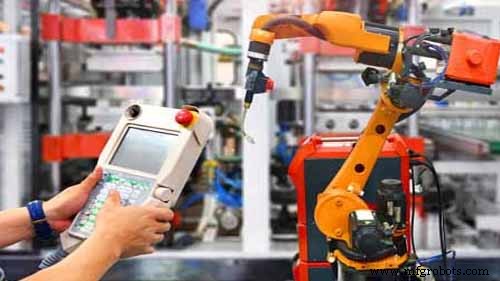
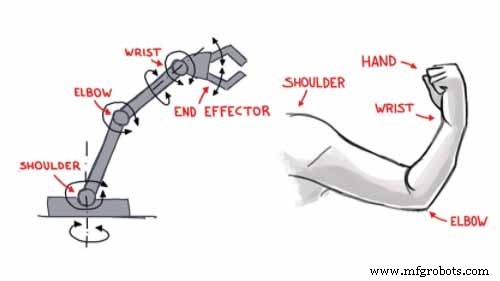
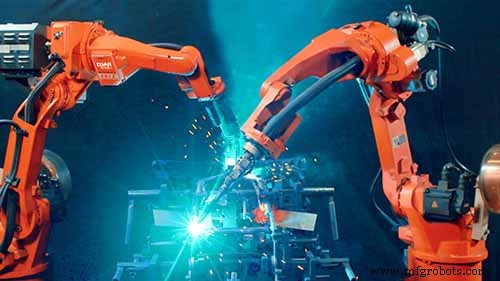
In recent years, the industrial sector has rapidly been shifting towards automated operations. Manual labor is now either being supplemented or replaced entirely by industrial robots. This has largely been driven by the need to improve efficiencies and boost production quality among other value-adding objectives. Industrial robot arms are the unsung heroes of this industrial shift to automation. They play a significant role in the performance of factory robots but remain a mystery to many. If you are looking to automate your operations, it may be helpful to understand how they work. So, read on and let us explore the importance of industrial robot arms on factory robots. Factory robots are programmable machines that can be manipulated to perform various industrial tasks. Examples of such tasks include picking and placing, palletizing, and high-risk production processes. Some of the advantages of factory robots in manufacturing include: Lower costs of operations Faster production output than human labor is capable of Fewer errors when executing tasks The structure of a factory robot comprises a base onto which an industrial robot arm is attached. The base is a source of stability and power supply for the robot arm. Source: www.servomagazine.com An industrial robot arm mimics the human arm. It is the dextrous part of a factory robot that moves to perform tasks. It has 3 main parts that all work in unison and are powered by motors placed in the robot arm. The parts and their functions are as follows: Shoulder – this is the end of the robot arm that is joined to the main structure of the factory robot. Elbow – it is a joint in a robot arm that allows it to bend and unfold as it performs tasks. Wrist – this is the end of the robot arm that handles parts and objects when the robot arm is working. Usually, it is affixed with an end-effector that matches the tasks being performed. Industrial robot arms are classified based on their degrees of freedom also known as axes. A 6-axis robot arm, for instance, has more degrees of freedom than a 4-axis robot arm. This means that it can move in more directions and thus can execute more complex operations. Source: Pixabay An industrial robotic arm is a flexible appendage of a factory robot. It can stretch and bend to perform operations within a wider work envelope with ease. In doing this, it provides a dexterity that a factory robot would not have on its own. In essence, the functionality of a factory robot would be very limited without a robotic arm. A robotic arm, through different types of end effectors, also makes a factory robot able to fulfill more operations. Take, for example, a robot arm being used to load raw material into a processing machine. Using a different end effector, the same robot can be used to handle the finished product. This provides more value out of one robot than you would get without the arm. Further, top-quality industrial robot arms can improve the safety of factory robot operations. Robot arms with ingress protection, for instance, can be applied safely in wet tasks without damaging a factory robot. A bomb-proof robot arm too can be used in reactionary or high-heat processes without any fear of them getting damaged. Robotic arms can be applied for a variety of tasks including: Material Handling – raw materials are often heavy and need to be loaded into machines multiple times during the production process. A material handling robotic arm could ease this as it can handle higher payloads than factory workers. It also minimizes risk if the raw materials are hazardous. Pick and place- picking and placing products for packing or further processing is a tedious, repetitive process that is also time-consuming. Using a pick and place robotic arm for this task frees up factory workers to take on more rewarding tasks. Welding – industrial welding robotic arms are joined to a welding machine. They make it possible to weld large objects and hard-to-reach areas that a welding machine guided by a human may not manage. Additionally, given the light and sparks involved, they are much safer to use. Choosing the right robotic arm for your factory robot can significantly improve its performance. It is, however, advisable that you work with a reputable robotic arms manufacturer with high production standards. It would equally be a plus if they can customize the robot arms to match your factory’s needs.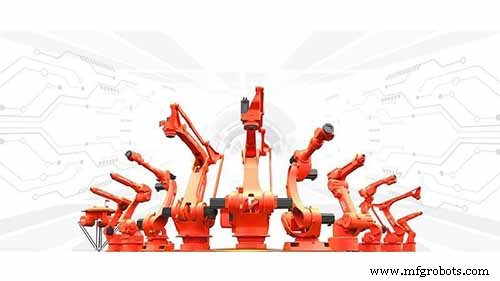
Table of Contents
What Are Factory Robots?
Understanding Industrial Robot Arms
How an Industrial Robotic Arm Benefits a Factory Robot

Functions of Robotic Arms
Conclusion
Industrial robot
- Leading Industrial Robot Suppliers in the UK – Your Guide to Cutting-Edge Automation
- 2020’s Leading Industrial Robot Manufacturers: Top 10 Ranked
- Industrial Robots: The Complete Expert Guide
- How Robot Arms Enhance Human Capabilities and Business Efficiency
- Key Parts and Components of Modern Industrial Robots
- How Giant Robot Arms Revolutionize Industrial Projects
- How Tabletop Robot Arms Enhance Manufacturing Efficiency
- Industrial Robot Maintenance: The Complete Repair & Reliability Guide
- Industrial Robot Arms Revolutionizing the Meat Industry
- Why Precision Matters: The Critical Role of Robot Accuracy in Production