



5 Agile Robot Applications Driving Manufacturing Growth
When we talk about “agility” in manufacturing, it can sometimes be unclear as to what we’re really talking about.
What are some examples of agile robot deployments?
What makes a robot cell agile?
Agile robotics is becoming an important driver of manufacturing growth in this third decade of the 21st century. Manufacturers who can respond quickly to changing market forces have more chance of surviving and thriving in this volatile moment in the history of the industry.
But, although you might recognize the benefits of staying agile in the current climate, you might not get clear on how you can start.
What is an agile robot?
What are the factors that determine a robot’s agility?
Which applications are suitable for an agile robot deployment?
What Most People Think of as an Agile Robot
Agility is a company’s ability to seize new opportunities and improve its processes to respond to those opportunities. An agile company is able to change quickly.
Robotics is a key technology for any agile manufacturer because they can be reprogrammed for new tasks. But, not all robots are equal in this regard.
Some people assume that industrial robots are not capable of being truly agile because it takes so long to deploy them. Robot deployments can take many months if they are not approached in an agile manner, disrupting a manufacturer’s operations in the process.
One type of robot that is often considered agile is collaborative robots. These are, generally, smaller robots that are designed to operate safely around humans. Thanks to their easy programming options, they are usually faster to deploy than more traditional industrial robots.
However, you don’t need a collaborative robot to be agile.
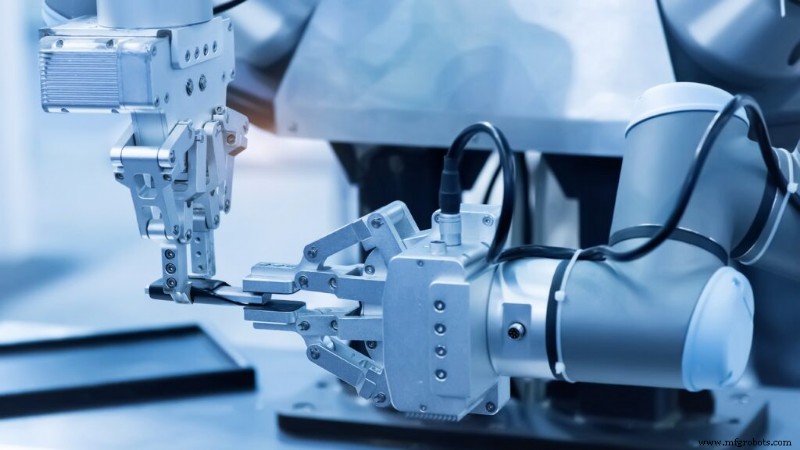
Actually, any robot is agile in a way. You just need to use the right tools, such as programming tools that make the deployment quicker and easier.
What Makes a Robot Cell Agile?
When you use a robot in an agile way, it allows you to take full advantage of the potential opportunities that come your way.
If you need to quickly introduce a new product line to respond to a new market opportunity — as happened at the start of the Covid-19 pandemic when manufacturers switched to making ventilators, masks, and hand gel — you will be able to do that.
But, what makes a robot cell agile?
Agility is less about the robotic hardware and more about your approach to the robot deployment.
Some examples of factors that indicate robot agility include:
- Reconfigurability — A robot cell is agile if you can change it quickly and easily. This doesn’t mean that you need to completely change the cell. However, the relevant parts of the cell (e.g. the end effector, fixtures) should be reconfigurable.
- Modularity — When you think of your robot cells in terms of modules, it becomes easier to reconfigure them. For example, pre-designed robot cells are created using defined modules that can be laid out in the cell to suit the needs of your application.
- Easy programming — Programming is one of the most important factors affecting the agility of a robot. If you are using programming tools that allow you to easily reprogram the robot, changing the application becomes much simpler.
- The right robotic technology — While it is true that you can use any robot in an agile way, it will be easier with some robots. Robotic hardware that requires extensive fiddling to get it working will make it harder to reconfigure the robot when needed.
- In-house robotic knowledge — When members of your team have the skills needed to operate the robot, this allows you to make changes more quickly than if you have to rely on external suppliers for everything. This could be as simple as choosing a programming tool that doesn’t require specialist robotics knowledge.
5 Smart Agile Robot Applications to Improve Manufacturing
So, what does an agile robot application look like?
There are many applications that could be deployed in an agile way.
Here are 5 examples of robot applications that can improve your manufacturing agility:
1. Pre-designed Robot Deburring Cells
Whatever application you choose, you can seriously speed up your deployment by going with a pre-designed robot cell.
We teamed up with DIY-Robotics to create their pre-designed, modular cells. One of their applications is a deburring station.
2. Robot Machining
With robotic machining, there are some great opportunities to operate in an agile way compared to traditional CNC machining.
For example, Doosan robotics — whose robots are supported by RoboDK — has a series of agile robot cells for robotic machining.
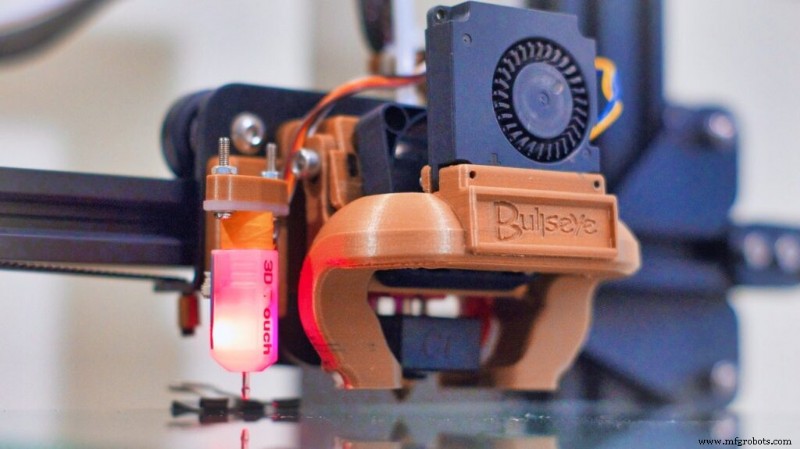
3. 3D Printing
Additive technologies like 3D printing have become a game-changer for agile manufacturing.
We have seen various examples of robot-enabled 3D printing that have brought this technology to new heights, including 3D printed food and architecture.
4. Machine Tending
One way to improve agility without changing your existing process is to add a robot to support another machine.
Machine tending allows you to improve the productivity of, for example, a CNC machine by taking over the job of the human operator. That person then has more time to improve your operational agility in other ways.
5. Inspection
Another non-process task that can strongly affect the agility of your operations is inspection. Products waiting for inspection can quickly mount up.
Robotic inspection is a great way to reduce this bottleneck and help you to remain agile in the face of changes.
The Key to a More Agile Robot Solution
What will determine if your robotic cell will be agile or not?
While there are several factors that indicate that your robot is agile, one of the most important is the programming tool that you use.

When the robot is easy to operate and reprogram, it’s always easier to change its operation when you need to respond to market changes.
How would more agility help your business? Tell us in the comments below or join the discussion on LinkedIn, Twitter, Facebook, Instagram, or in the RoboDK Forum.
Industrial robot
- PCB Manufacturing in the Era of 5G: Trends & Challenges
- Leveraging Additive Manufacturing for Advanced Electric Vehicle Production
- 17 Key Industrial Robot Applications Empowering Smart Manufacturing
- Choosing the Right Robotic Positioner: A Comprehensive Guide
- Select the Right Industrial Robot for Your Production Line Quickly and Confidently
- 9 Innovative Robotic Solutions Revolutionizing Textile Production
- Top 15 Robotics Solutions Boosting Efficiency in the Electronics Sector
- Manufacturing Challenges and Robotics: A Lean Solution
- Revolutionizing Manufacturing: The Next-Gen Industrial Robot Arm
- Robotic Spindling: Precision, Consistency, and Safety in Automated Material Removal