



Designing a High‑Performance Robotic Workcell: A Step‑by‑Step Guide
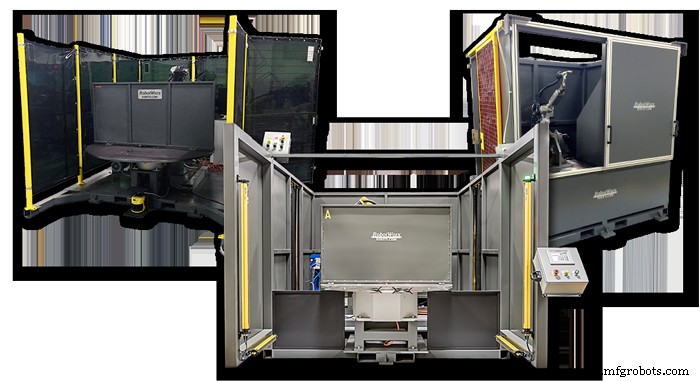
So, you’ve seen those amazing robotic workcells that build car parts, machine pieces and several other consumer goods. You’ve decided you want that kind of innovation and improvement in your own production line. But, then you hit a dead end. Where do you start?
Well, there are a few key pieces to a robot workcell that have to be decided on before the building process can begin. You should try to figure out what application you want your robot workcell to perform and what materials you want to use. Then, once that has been decided, it is a matter of considering what equipment you want – robot, positioner, safety package, end-of-arm-tooling – and whether you want it new or refurbished.
So – let’s get started!
First, what application do you want your robot workcell to perform? This is important when determining what kind of robot you will need. Whether you are performing a welding, material handling, material removal or some other application will help narrow down your robot search.
Once you decide on the application, then you must consider your product’s materials. Will you need to handle materials like flat panes of glass? Will your robotic workcell need a welding package to weld different work pieces? All these things come into play when designing your workcell.
Now, onto the equipment. After you decide whether your budget can handle a refurbished or new system, you will move on to choosing your robot. There are several different robotics companies that have robot models on the market today. Three of the largest in the industry are Fanuc, Motoman, and KUKA. These companies offer several different models for a large variety of welding, material handling and material removal needs.
After the robot is decided, the positioner is the next key piece in the system. A positioner can be a turntable that will rotate a piece in and out of the robot’s work zone for welding or material removal purposes, or it can be a ferris wheel positioner that moves objects in a different motion. Even another robot can be a positioner, especially in material handling applications.
Then, you have to consider your safety options. Do you need light curtains? Do you want alarms, emergency stop? All of these sensors are important to keeping workers safe and away from the robot workcell’s work zone while the robot is in operation.
It all sounds a bit daunting, doesn’t it? Well, luckily, RobotWorx, a certified integrator for Fanuc, Motoman, ABB, Universal Robots, and KUKA robotics, is available to help you with all the layout, design and building needs for your robotic workcell.
You can work with RobotWorx’ staff of talented engineers, technicians and salesmen to design and build the perfect robotic workcell that will work perfectly for your application needs.
Industrial robot
- Selecting the Optimal Workcell for Automated Robotics: Ensuring Safety and Performance
- The 4 Cs for Selecting a Reliable Panel Building Partner
- Five Key Components of Industrial Robot Arms
- 5 Proven Steps to Achieve Quality in Robotic Incremental Forming
- 6 Proven Steps to Repurpose Industrial Robots Effectively
- Robotic Palletizing: A Modern Ergonomic Solution for Workforce Efficiency
- Optimize Production: Deploy Software for High-Speed, Precise Robotic Assembly Lines
- Robotic Workcells Unveiled: Design, Options, and Benefits
- How Interconnected Robotic Systems Drive Reliable Performance
- How to Select the Ideal Robot Design for Your Application