



How Clean Are Fanuc Cleanroom Robots? A Comprehensive Evaluation
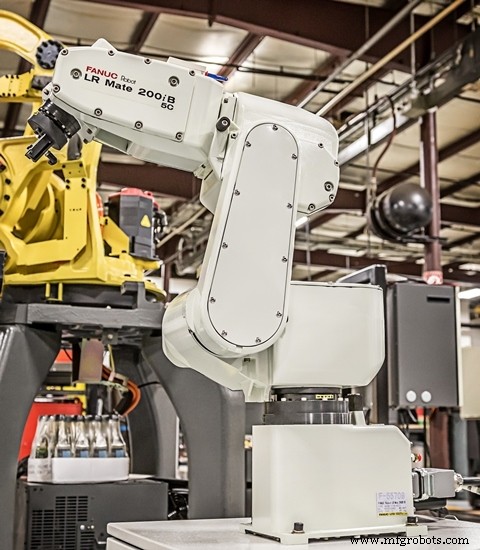
Cleanroom robots were developed to work in environments that had to be controlled and cleaned to ensure only a certain level of particles could be in the air at any time. Fanuc had developed an entire line of cleanroom robots with different reaches and payload capabilities to fit almost any application a lab or other cleanroom facility may want to throw at it. But, how clean is clean for a Fanuc cleanroom robotic system?
According to Robotics.org, cleanliness classes for cleanroom robots are 1 to 100,000 are a scale that measures the particle count per cubic foot, equivalent to the cleanroom’s volume. A cleanroom 1 robot can be in an environment where there is no more than one 0.5 micron particle per cubic foot, a cleanroom 100 robot can be in an environment with 100 size 0.5 microns per cubic foot, and so on.
Fanuc cleanroom robotic systems are made with special belts, coating and parts so that they do not fling particles into the air and contaminate the air past the respective levels necessary to keep the cleanroom as clean as it needs to be to complete its task. Electronics that create LCDs, disk drive assemblies and other hardware find cleanroom robots necessary to ensure that their parts and put together with as little contamination as possible.
Industrial robot
- Enhancing Consistency with Autonomous Spray Robots
- How Paint Robots Cut Rework, Boost Consistency, and Save Costs
- Maximize Productivity and Versatility with Fanuc Loading Robots
- Fanuc Robotics: Leading Innovations in Industrial Automation
- Top Benefits of Fanuc Industrial Robots for Manufacturing Efficiency
- Fanuc Launches Comprehensive Dress Package to Extend Robot Lifespan
- Advanced Cleanroom Robots: Precision & Sterility for Modern Manufacturing
- Dry Cleaning Robots: Simple Steps to Keep Your Industrial Robot Spotless
- Key Facts About Industrial Robots: From Unimate to Modern Applications
- Fanuc Robotics: Leading Innovation in Industrial Automation