



Reducing Food Contamination in Meat Processing with Fanuc Robots
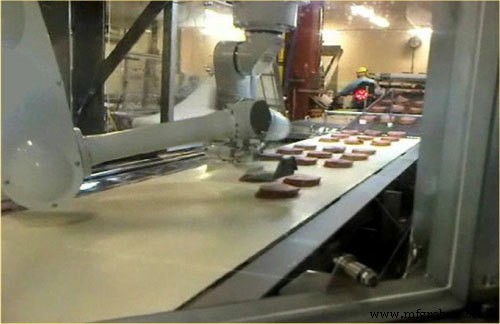
Contaminants are a very real part of our food processing industry. We see multiple stories plastered all over the news about recalls on food products because of different bacteria or other contaminant issues. The meat processing industry is no exception. That is why some meat processing plants are turning to robots, like Fanuc meat processing robots, to cut down on those contaminants.
According to the Centers for Disease Control (CDC), one out of every 6 Americans will get sick from food-borne illnesses every year. That is 48 million people! That is why it is so important to find new ways to keep harmful pathogens and other contaminants out of food. A production worker at a meat processing plant can easily come to work sick, or bring in pathogens. Their close contact with the food makes it an easy target from spreading illness. Fanuc robots do not get sick, and they do not leave the facility or have contact with other structures in the facility, dramatically reducing cross-contamination issues.
Cleanliness is imperative, whether you are a human worker or a robot. Human workers need to adhere to the cleanliness standards of your facility 100 percent of the time. However, that is not always the case. Human error happens. With Fanuc robotic meat processing systems and a regular cleaning schedule for robots, conveyors, and cutting tools, there is no need to worry about these contaminants.
Fanuc offers many food-grade robots that are acceptable in different areas of the food industry, including meat processing. The M-430iA is USDA accepted by the meat and poultry industry, according to Fanuc. The robot is made of materials that are able to withstand the humidity in a meat processing environment, as well as the high pressure cleaning with hot water and strong chemicals necessary to keep the robots safe for meat processing automation.
Also, it is important to ensure that all robots, like the M-430iA, are fitted with equipment that do not break and contaminate the food with metal shards, especially when it comes to meat cutting. According to Fanuc, equipment surfaces are smooth, corrosion and abrasion resistant, shatterproof, nontoxic, and nonabsorbent. This means that any greases or other materials used on the robot are food-grade and safe for humans.
However, the cutting robots are not the only robots that have to be food grade, according to the USDA. Robots, like the M-3iAand LR Mate 200iC/5C, that work with unpackaged and packaged food have to have an IP67 rating, meaning they are waterproof and can withstand harsh environments. They must also use food-grade grease to avoid contamination.
Are you interested in learning more about meat processing with Fanuc robots? Then you should contact RobotWorx today. Our staff will work with you to find the best meat processing robot system available for your facility.
Industrial robot
- Precision Laser Cutting Powered by Fanuc Robotics
- Cutting Costs and Boosting Efficiency with Precision Waterjet Robots
- Enhancing Product Safety: Automated Bottle Packaging to Minimize Contamination
- Automating Frozen Food Packaging with Fanuc Robotics
- Precision Aluminum Welding with Fanuc Robots for Automotive Excellence
- Enhance Production Quality: Fanuc Robots for Error‑Proof Cutting
- Precision Laser Cutting with Motoman Robots for Automotive Manufacturing
- Enhance Production Precision with Motoman Cutting Robots
- Fast, Reliable Material Handling with Fanuc Robots
- Motoman Robotics: Cutting-Edge Automation for Meat Processing