



Arc Welding Basics: A Beginner's Guide
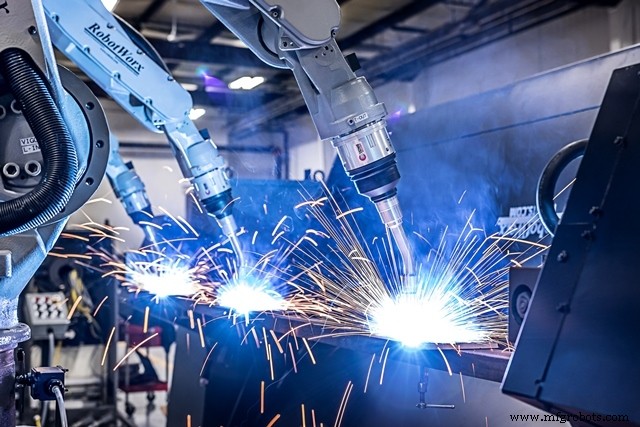
What is arc welding?
Arc welding fuses parts permanently together by using a power supply to generate an electric arc between an electrode mounted in a torch and a metal. This arc is an electric current flowing between two electrodes through an ionized column of gas is able to produce a heat intense enough to melt the metal.
The heat is produced through a negatively charged cathode and a positively charged anode. The negative and positive ions are bounced off of each other in the plasma column at an accelerated rate. The electrode is typically a specially prepared rod or wire that not only conducts the current but also melts and supplies filler metal to the joint.
The arc is formed between the actual work and an electrode (stick or wire) that is guided along the joint. It provides the heat needed to melt the electrode and the base metal, and sometimes also supplies the means to transport the molten metal from the tip of the electrode to the work.
This intense heat (around 6500ºF at the tip) applied at the joint between two parts is melted and caused to intermix with an intermediate molten filler metal. This heat melts both the base metal and the electrode, creating molten droplets that are detached and transported to the work through the arc column when the electrode is consumable.
In carbon or TIG welding there are no molten droplets to be forced across the gap and onto the work so filler metal is melted into the join from a separate rod or wire.
Regardless, this pool of molten metal is sometimes called a "crater." The crater solidifies behind the electrode (see "slag" below) as it is moved along the joint. The result is a metallurgical fusion bond that produces a weldment that has a similar strength to the metal of the parts. This is different than non-fusion processes of joining where the mechanical and physical properties of the base materials cannot be duplicated at the joint.
This metal transfer can occur one of two ways: Surface Tension Transfer where a drop of molten metal touches the molten metal pool and is drawn into it by surface tension or Spray Arc where the drop is ejected from the molten metal at the electrode tip by an electric pinch propelling it to the molten pool (great for overhead welding).
Powering Arc Welding:
Below is a diagram of the basic arc-welding circuit that includes a power source. There must be an ionized path to conduct electricity across a gap and then some sort of ignition in order to start the arc. This is usually caused by supplying an initial voltage high enough to cause a discharge or by touching the electrode to the work and then withdrawing it as the contact area becomes heated.
When welding, one can use a direct current (DC) with the electrode either positive or negative or alternating current (AC). The choice of current and polarity depends on the process, the type of electrode, the arc atmosphere, and the metal being welded. Whatever power source is necessary is fitted with necessary controls that are connected by a work cable to the work piece.
Arc Shielding
Arc shielding is a necessary process in arc welding as any metal at high temperatures has a higher reactivity to chemical elements in the air. So, the process has a means of covering the arc and molten pool with a protective shield of gas. Shielding gas is used while the torch is joining parts together in order to prevent contamination. This also confirms the strength of welds and minimizes post weld cleanup of a part.
Robotic Arc Welding:
Since the 1980s, welding automation has become a much more robust and mature process. It has advanced quickly and has become extremely effective at meeting tedious production demands at fast rates, while also being economical, efficient, dependable, and enabling further protection of workers from dangerous tasks.
6-axis robot systems are able to more than mimic a human arm’s movement within a cell and allow the torch to be placed exactly where necessary in order to work in the most efficient, repeatable position.
In just about every industry, big or little, welding is used as a principal means of the fabrication and repair processes for practically any application. Robotic welding includes processes like arc welding, MIG welding, TIG welding, laser welding and spot welding.
These benefits are causing the welding robot market to yield growth rates faster than any other industrial robot. This is evident in the estimate that the automated welding and accessories division alone will be worth $1.9 billion in 2017.
Benefits of Robotic Welding:
- Speed: Robotic welding systems are masters at getting the job done quickly. Robots don’t have any required lunch breaks nor needed vacation times; they will work continuously without interruption, 24/7. There is less handling compared to a manual weld cycle so the robot achieves much higher levels of arc-on time and typically will increase output by a factor of two to four. Subsequently you will see a dramatic increase in your throughput and productivity that increases your company’s overall efficiency.
- Accuracy: Robotic systems have regulations that enable them to make fewer errors than a manual welding system which helps to decrease wasted material and time. There are also designs to help reach difficult or slim places, such as a slender robotic arm.
- Consistency: The regulations and resulting accuracy produce weldments that are extremely consistent. This increases the confidence in the product quality, every single time.
- Safety: Welding can be a very dangerous application as it deals with flash, fumes, sparks and heat. When you automate, you are able to protect workers as the robots can endure these hazards. Employees claiming compensation if they are put in harm’s way can also be reduced. Companies can reduce the risk of their employees claiming compensation if they are affected by the hazardous working environment.
- Cost Reduction: The cost of manual welding can be steep as it requires time, skill, and concentration. Robotic welding takes less time and allows you to cut costs of direct labor, conserve energy (fewer start-ups), and conserving materials. Insurance and accident related costs are also reduced. The cost savings that robot welding brings can help companies to be more competitive with low cost manufacturing countries in Eastern Europe or China.
- Quality: A robot has an excellent path following accuracy and can present a welding gun at the correct welding angle, speed, and distance at a very high repeatable accuracy (± 0.04 mm). This presents the ability for optimum welding conditions to be used for each and every joint which results in consistent high quality output, 24/7, with reduced costs for rework, scrap, wire consumption, or removal of weld splatter.
- Labor: Manual welding will always be required to some degree, but it brings its own sets of challenges… training, recruitment, and dealing with a high turnover rate all can come at high costs. Robotic automation brings much more stability and dependability for your company’s welding job.
- Flexibility: The robot can be used to weld many different products such as MIG, TIG, SMAW, FCAW, SAW, and PAW. This also allows companies to produce a variety of products with a very quick turnaround.
- Floor space: Compared to the same output from manual welding bays the robot requires less floor space.
Get Started with Robotic Arc Welding Today:
The demand for arc welding automation systems today is increasingly rising as companies are aware of the low availability in qualified welders paralleled by the increase in competition demands seen in the global market. After viewing all of the benefits and looking at your projected ROI, you shouldn't need any more convincing.
Don't waste any more time, RobotWorx is ready to find you the perfect arc welding automation system. We have over 25 years of experience, especially with arc welding automation. We have many different new and used arc welding robots and workcells in stock ready for integration.
Contact RobotWorx today online or call us at 877-762-6881.
Industrial robot
- Boost Your Bottom Line: How to Maximize ROI with Robotic Arc Welding Systems
- Laser Beam Welding vs. Plasma Arc Welding: A Comparative Overview
- Welding Explained: Definition, Types, and Applications
- Exploring Arc Welding: Types & Applications
- Welding Explained: Definition, Processes, and Types
- How Electric Arc Welding Works: Core Principles Explained
- Essential Safety Precautions for Arc Welding Operations
- Mastering Electric Arc Welding: Types, Equipment, and Pros & Cons
- ABB ARCITEC – Advanced Integrated Arc Welding System
- Advanced Robotic Arc Welding Machines for High‑Precision, High‑Volume Production