



Zest Labs Leverages IoT and Blockchain to Revolutionize Fresh Food Supply Chains
In an industry still acclimating to blockchain, Zest Labs stands out by marrying IoT sensor data with distributed ledger technology to address a pressing agricultural issue. Their fresh‑food management platform prioritizes consistent quality, waste reduction, and food safety—all backed by real‑world data.
Scott Durgin, CTO, explains: "Food waste costs the United States an estimated $218 billion annually, according to the NRDC. Even produce harvested on the same day varies in shelf life due to humidity, field conditions, and storage temperatures. This variability undermines traditional best‑by dates."
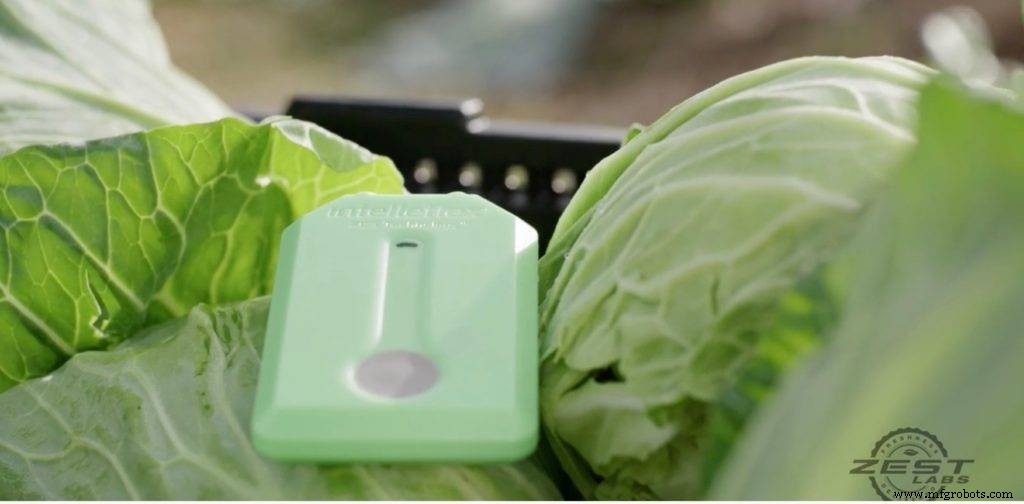
To tackle this, Zest Labs has devised the ZIPR code—a single freshness metric derived from product type, growing location, and actual harvest and processing conditions. Using patented algorithms and sensor inputs, the Zest Fresh software assigns a ZIPR score to each pallet, ensuring inventory and shipping decisions reflect true freshness.
Growers, retailers, and restaurants can now employ intelligent routing: produce approaching its best‑by date can be diverted to closer destinations or specialty venues, such as juice bars, before spoiling.
Field trials indicate that applying the ZIPR code via Zest Fresh cuts waste by roughly 50%, while simultaneously elevating the customer experience through continuous, real‑time visibility of remaining freshness capacity.
— Durgin further elaborates —
Zest Labs Introduces Blockchain Integration
Recently, Zest Labs announced free blockchain setup for growers and shippers using the Zest Fresh platform. Durgin argues that the blockchain adds an extra layer of security and transparency, allowing all participants to verify key freshness metrics in real time.
While many sectors explore blockchain benefits, food suppliers are particularly attentive—anticipating that large retailers may eventually mandate blockchain participation. History shows that forced technology adoption can be challenging, as seen with RFID, which small suppliers struggled to afford once mandated.
According to Durgin, blockchain complements, rather than replaces, conventional IoT data processing and storage. He likens the current adoption curve to his experience managing Lotus Notes at IBM, noting that early resistance often gives way to industry‑wide acceptance.
As ag‑tech becomes increasingly automated and connected, blockchain is poised to become a standard tool in a farmer’s arsenal—enhancing trust, traceability, and operational efficiency across the fresh‑food supply chain.
Internet of Things Technology
- Harnessing Machine Learning to Optimize MRO Supply Chain Management
- IoT-Driven Supply Chain Management: Real-Time Asset Tracking & Fleet Optimization
- Revolutionizing Logistics: How IoT Drives Supply Chain Efficiency
- How Blockchain Is Transforming Global Supply Chains
- Four Key Consumer Trends Shaping the Food & Beverage Supply Chain
- Harnessing Blockchain & Edge Computing to Revolutionize Supply Chain Efficiency
- How Blockchain Transforms the Global Food Supply Chain: 4 Key Benefits
- Vertical Farming: Tackling Waste and Inefficiency in the Global Food Supply Chain
- Harnessing IoT for Smarter Supply Chains: Benefits, Challenges, and Real-World Examples
- How IoT Is Revolutionizing Supply Chain Management: Key Insights