



Leveraging IoT for Early Wildfire Detection and Prevention
A new breed of IoT‑based wildfire early‑warning systems, offered by startups such as Dryad Networks, is emerging on the market. Will these technologies make a measurable difference in a world where wildfires are increasingly common?
Flames flick on the horizon and spread uncontrollably into the valley below. The blaze razes a cluster of outbuildings, then rips into a group of family homes, leaving in its wake smoldering houses, charred possessions, and ruined lives.
This scene became all too familiar across the Western United States during the summer of 2021. The resulting smoke drifted as far as Chicago and New York, creating severe air‑quality issues. While preventing fires entirely may be beyond technology’s reach, mitigating their severity is achievable. A growing number of IoT firms are proving this point.
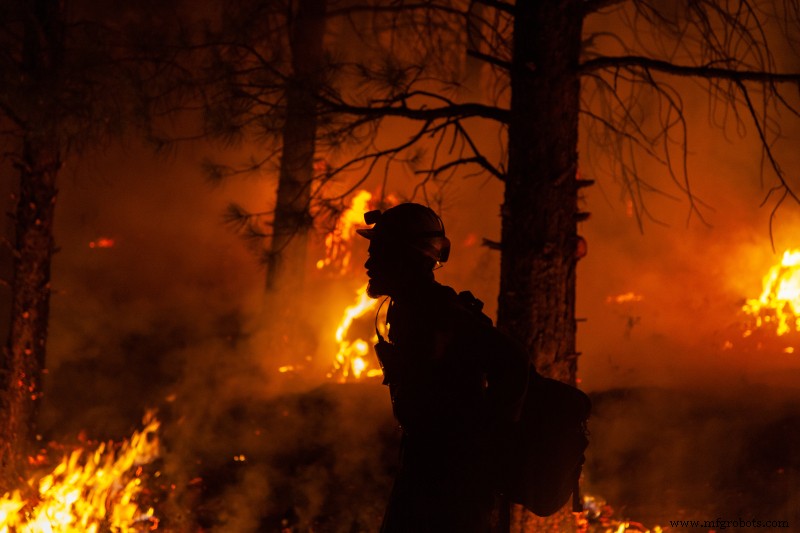
The Bootleg forest fire currently burning near Bly, Oregon. The fire is so intense it is making its own weather, including lightning.
Intense wildfires are not confined to the U.S.; the Amazon and Australia have also suffered devastating blazes in recent years.
Debates about the causes of this surge range from climate change to local factors such as 5G tower fires in Colorado or target shooting incidents in Nevada.
Regardless of cause, the impact of wildfires is catastrophic and frequency is climbing. The National Interagency Fire Center reported that, as of July 20th, 83 large fires had burned across the United States, totaling over 2,585,492 acres. Experts estimate that wildfires contribute roughly 20 % of global annual CO₂ emissions.
The Bootleg Fire is currently the most extensive wildland blaze in the U.S., having consumed more than 400,000 acres in Oregon. Meanwhile, the Dixie Fire in California has burned over 197,000 acres across three counties and was only 22 % contained as of July 26.
Climate Central reports that, on average, wildfire acreage has doubled in the past four decades.
So how can we prevent wildfires?
Early detection is key. The sooner a fire is identified, the easier it is to halt its spread. Prior to aircraft and satellite monitoring, fire‑prone areas relied on weather reports, seasonal lookout posts, and sheer luck.
IoT SolutionsStartups like Dryad Networks, LADsensors, and Seidor are developing wireless sensor networks that deliver real‑time early warning of wildfire activity.
EE Times spoke with Carsten Brinkschulte, co‑founder and CEO of Dryad Networks, about his company’s solar‑powered LoRaWAN‑based sensor system. “Our innovation adds a mesh network to LoRaWAN, allowing base stations to relay messages among themselves until they reach an internet‑connected gateway,” Brinkschulte explained. “This architecture lets us cover thousands of square kilometers without requiring each base station to have a direct internet link.”
The sensors connect to border gateways that transmit data via LTE‑M, Ethernet, or a Starlink satellite dish. All gateways are swarm‑enabled, enabling collaborative data sharing.
The battery‑free sensors are designed to simply hang on a tree, requiring no maintenance. Dryad has even promoted the concept as the ‘Internet of Trees’ in its marketing.
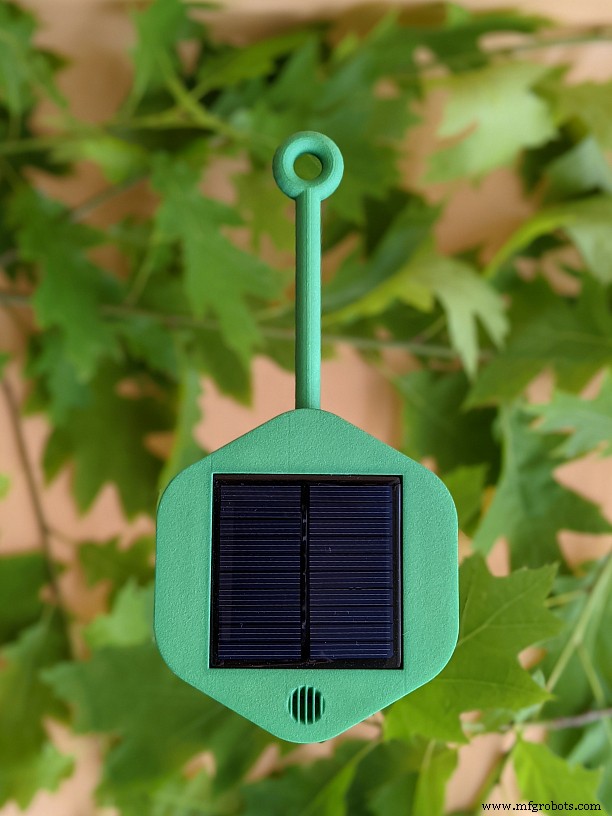
Each sensor integrates a Bosch BME688 gas‑sensing chip that monitors hydrogen, carbon dioxide, and carbon monoxide. Using edge‑processing and machine‑learning algorithms, the sensor identifies the gas signature characteristic of an early fire, yielding high accuracy and low false‑alarm rates.
Detecting Fires EarlyDryad targets sub‑hour detection of wildfire activity. “The earlier a fire is caught—ideally during the smoldering phase—the more effective the response,” Brinkschulte said. This capability allows fire services to intervene before a blaze escalates.
In a wildland‑urban interface zone with both roads and forest, a coverage of 10 square miles would require roughly 500 sensors. In dense forest, the density drops to about 250 sensors per 10 square miles.
The base price for a sensor is currently about $50, making a 10‑mile interface installation cost roughly $25,000. Volume discounts are expected, and Brinkschulte projects unit prices could fall to $20 once Dryad scales production.
In addition to hardware, the company charges an annual subscription fee that constitutes 10–15 % of the hardware cost. The solution is tailored for governments, utilities, and large forestry enterprises rather than individual consumers.
Dryad also plans to integrate other sensor types—such as soil moisture and tree‑growth monitors—into its network, which could be particularly valuable to logging companies.
These IoT‑based early‑warning systems are still in the early stages and have not yet undergone full field trials during active fires. Nevertheless, they represent a promising new layer of protection that complements satellite and camera‑based monitoring.
While they are not a panacea, Brinkschulte says the technology offers a critical, ultra‑early detection capability that fits neatly into the broader wildfire‑management toolkit.
>> This article was originally published on our sister site, EE Times.
Internet of Things Technology
- IoT: The Real Golden Ticket for Business Growth—or Just a Goose with a Golden Egg?
- Connecting the Remote World: How Satellite IoT Expands Global Coverage
- AIoT: Harnessing the Synergy of Artificial Intelligence and the Internet of Things
- Revolutionizing Firefighting: How IoT Enhances Safety, Response, and Rescue
- IoT Revolutionizing Field Service: Predictive Maintenance & Higher ROI
- How Smart Cities Harness IoT, Microservices, and Dashboards for Efficient Asset Management
- IoT World: Inside Vertica’s Big‑Data Solution for IoT Analytics
- Enterprise IoT: Unlocking 36x the Value of the Current Internet
- Goodyear Introduces IoT-Enabled Smart Tires for the Future of Mobility
- 6 Powerful Advantages of IoT Transforming the Energy Sector