



How Open-Source Libraries Accelerate Robot Vision Development
This article is part of an AspenCore Special Project on vision guided robots.
Robot vision systems demand a wide range of capabilities, yet the open‑source ecosystem offers solutions for almost every requirement. From basic image processing and object recognition to advanced motion planning and collision avoidance, developers can tap into a rich collection of libraries. Below we highlight key open‑source image‑processing packages that enable sophisticated robotic applications. (Note: this report focuses on foundational image‑based algorithms and deliberately excludes AI‑driven vision frameworks.)
Any discussion of robot‑vision software must acknowledge the OpenCV library. Widely adopted and feature‑rich, OpenCV delivers over 2,500 algorithms across modules such as:
core – the foundational data structures and utilities shared by all modules;
imgproc – linear/non‑linear filtering, geometric transforms, color space conversion, histogram analysis, and more;
video – motion estimation, background subtraction, and object tracking;
calib3d – camera calibration, pose estimation, and basic geometry algorithms;
features2d – feature detectors, descriptors, and matching routines;
objdetect – detection of predefined object classes and instances.
Written in C++, OpenCV offers language bindings for C++, Python, Java, and MATLAB, and runs on Windows, Linux, Android, and macOS. It also supports SIMD instruction sets and delivers GPU acceleration via CUDA (gpu module) and OpenCL (ocl module). The recent OpenCV 4.0 release introduces performance enhancements and integrates the popular Kinect Fusion algorithm.
While OpenCV’s depth is a strength, it can also pose a steep learning curve for developers eager to prototype quickly. The Python‑based SimpleCV library addresses this gap. Built atop OpenCV, SimpleCV offers a high‑level, intuitive API that allows less experienced developers to implement common machine‑vision tasks with concise Python calls. For example, image thresholding can be performed with a single line:
from SimpleCV import Image, Color, Display

# Create a half‑and‑half image

def halfsies(left, right):
    result = left
    crop = right.crop(right.width/2.0, 0, right.width/2.0, right.height)
    result = result.blit(crop, (left.width/2, 0))
    return result

# Load an image
img = Image('https://i.imgur.com/lfAeZ4n.png')

# Binarize with a threshold of 90 and invert the result
output = img.binarize(90).invert()

# Create the side‑by‑side image
result = halfsies(img, output)

# Display and save
result.show()
result.save('juniperbinary.png')
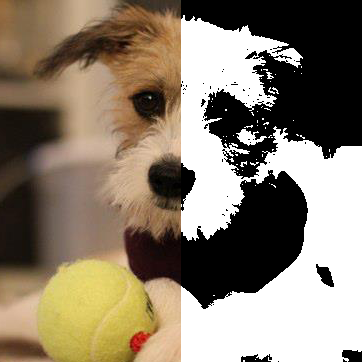
Figure 1. Results of the Python code above (Source: SimpleCV)
Beyond basic image manipulation, both OpenCV and SimpleCV provide advanced algorithms essential for robotic perception, such as object recognition, alignment, and safe navigation. A central data structure in these tasks is the point cloud—a multi‑dimensional representation of an object captured by depth cameras. Point clouds enable core robotic operations like identification, alignment, and fitting. The Point Cloud Library (PCL) supplies algorithms for filtering, segmentation, keypoint extraction, and more, making it indispensable for 3D perception.
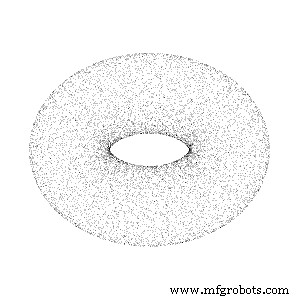
Figure 2. Point cloud data set for a basic torus. (Source: Wikimedia Commons/Kieff).
Internet of Things Technology
- Rigorous Software Testing at RTI: Ensuring Reliability Across Connext DDS
- 5 Clear Indicators Your 3D Printing Service Bureau Needs Workflow Software
- Xilinx Strengthens Adaptive Computing with Acquisition of Falcon Computing Solutions
- GE Launches $1.2B IIoT Spin‑Off to Strengthen Digital Portfolio
- Legacy Meets IoT: Leveraging SaaS for Smarter Manufacturing
- 10 Key Indicators That Your ERP System Needs an Upgrade
- Elevate Your Automation Strategy with RPA Developers & Data Scientists
- Fuji's Gyroflex Ultimate: Versatile Automation for All Production Scales
- CMMS Expert Series: Choosing the Right Maintenance Software – Part 1
- Detecting Red Lights on PLCnext with OpenCV and Python