



Preparing Your Manufacturing Business for Industry 4.0: A Practical Roadmap
Industry 4.0 is reshaping manufacturing across Europe, the United States, and Asia. By integrating advanced automation and data exchange, it unlocks new value for both customers and organizations. Elsevier’s latest readiness model helps manufacturers assess how prepared they are for this transformation.
But what exactly is Industry 4.0? How can your company leverage its benefits? And what steps should you take to accelerate your journey? The following guide answers those questions and outlines a clear path forward.
What Is Industry 4.0?
Industry 4.0 is the shift toward full automation and real‑time data exchange within production processes. At its core lies the Internet of Things (IoT), which connects every device and component to the network, enabling continuous data collection and analysis.
This movement builds on the concept of Smart Manufacturing—adaptive production lines that automatically adjust to produce multiple product variants and respond to changing conditions without manual intervention.
Key Benefits
- Higher product quality through real‑time monitoring
- Increased productivity and operational flexibility
- Mass‑customization with sustainable resource use
- Reduced downtime via predictive maintenance
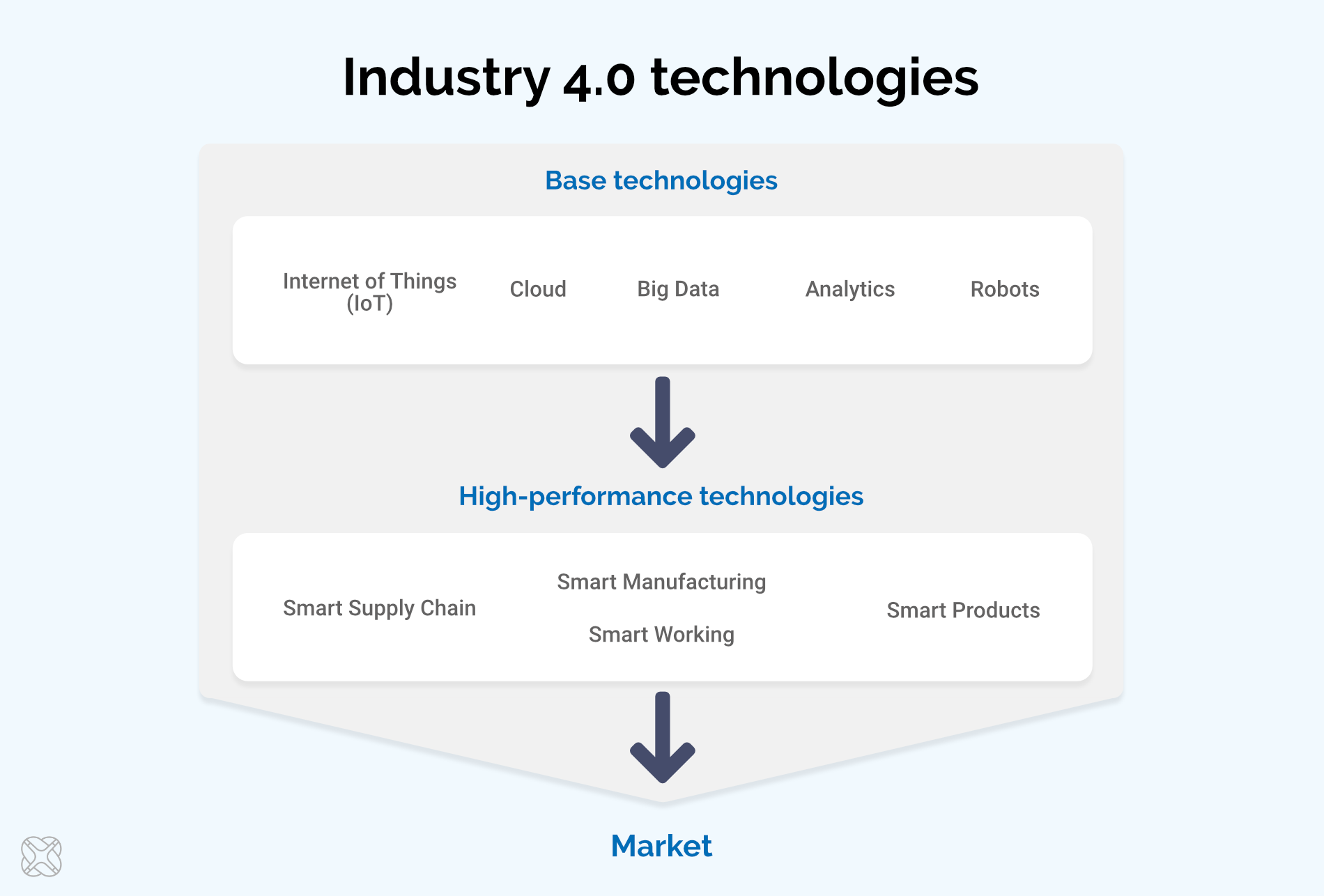
The Five Pillars of Industry 4.0
- Internet of Things (IoT): Seamless communication between devices and systems
- Cloud Computing: Scalable access to data and services from anywhere
- Robotics & Automation: Enhanced productivity and lower cost structures
- Big Data: Massive volumes of sensor and operational data
- Analytics: Transform raw data into actionable insights
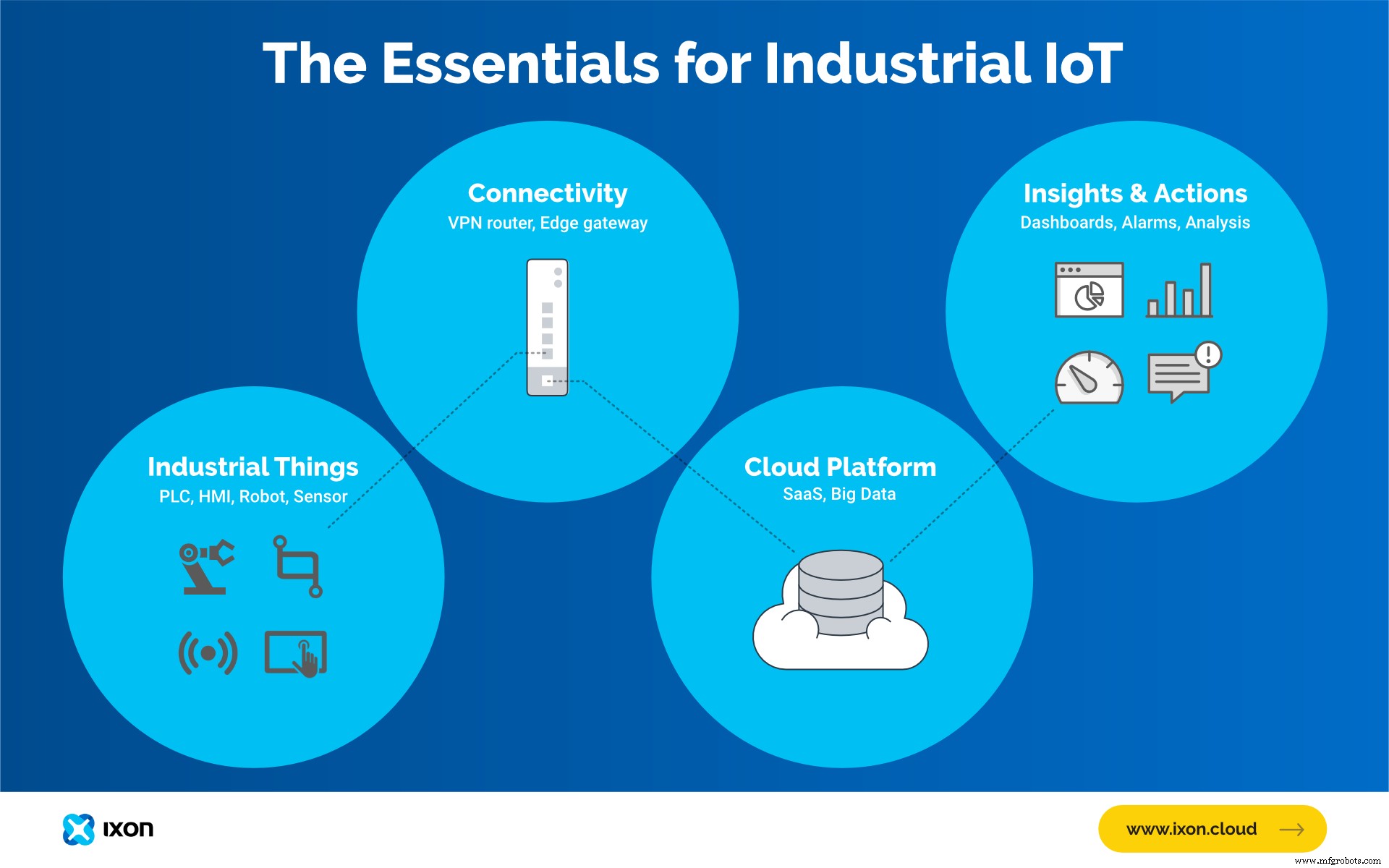
When IoT and cloud are combined, they enable remote operations, smart manufacturing, and intelligent supply chains. These capabilities feed into advanced applications such as cyber‑physical systems, autonomous robots, predictive maintenance, and AI-driven decision making.
Overcoming the Industry 4.0 Challenge
Big data and analytics are the biggest competitive differentiators in the fourth industrial revolution. The first obstacle is connecting equipment to the cloud and beginning to capture data. The next is turning that data into actionable knowledge to optimize processes, enhance services, and extend equipment life.
If your organization hasn’t yet embraced IoT and cloud, start with the following four steps. Think big, start small.
A 4‑Step Roadmap from Digitalisation to Industry 4.0
- IoT Connectivity & Cloud – Connect machines to a secure cloud or industrial IoT platform.
- Data Capture & Visualization – Log critical metrics and display them on intuitive dashboards.
- Predictive Maintenance – Use data to anticipate failures and schedule proactive service.
- Artificial Intelligence & Autonomy – Deploy machine‑learning models for autonomous decision making.
Because IoT is the cornerstone of Industry 4.0, we’ve compiled ten practical tips to help your company accelerate implementation.
The Ultimate Guide to Accelerating Industry 4.0
Download our free 10‑tip guide to jump‑start your IoT rollout and build a resilient, data‑driven manufacturing operation.
Sources: "The degree of readiness for the implementation of industry 4.0"; "Industry 4.0 technologies: implementation patterns in manufacturing companies"
Internet of Things Technology
- How to Prepare for Industry 4.0 in a Post‑COVID‑19 World
- Harnessing Industry 4.0: Cisco’s Path to Manufacturing Excellence
- Elevate Your Manufacturing Operations with the Industrial IoT Maturity Model
- Preparing Your Manufacturing Operations for AI with IoT
- Industry 4.0: Why Manufacturers Must Adapt Now
- The Millennial Revolution: Reshaping Manufacturing with Digital Expertise
- Synergizing Industry 4.0 and IIoT: Driving Digital Transformation in Manufacturing & Beyond
- Mastering Industry 4.0: Proven Steps to Future-Proof Your Business
- Preparing Your Facility for a New Waterjet Cutting Machine
- Are Manufacturers Ready for XR? A Guide to VR, AR, and MR.