



How Automation Drives Lean Manufacturing Success
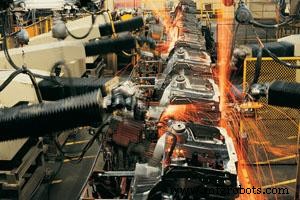
Automation and lean manufacturing share a common objective: deliver customer value at the lowest cost. Both disciplines focus on eliminating non‑value activities, reducing waste, and ensuring predictable quality. While many seasoned professionals have struggled to merge these approaches, the synergies between them unlock powerful benefits.
Eliminate Waste
When properly configured, automated equipment produces parts within tight tolerances and can trigger alerts if the process drifts toward upper or lower limits. This precision eliminates scrap and rework—two of lean’s most costly wastes. Even highly skilled operators cannot match the consistency of automation on routine or semi‑routine tasks. Automation also reduces motion waste in two key ways:
- Many machines combine multiple operations, removing the need to move material between work centers.
- After a cycle, automated systems can deliver components directly to storage or the next station without human intervention.
Internet of Things (IoT)
Connecting equipment to enterprise systems automates status reporting, eliminating manual documentation of operation completions, scrap, and material usage. This frees operators to focus on higher‑value activities that directly satisfy customer needs.
Control Costs
Manufacturers in high‑labor‑cost regions struggle to compete with low‑cost counterparts. Automation reduces the number of shifts and personnel required for the same throughput and cuts reliance on material‑handling equipment like forklifts. Collaborative robotics—designed to work safely beside humans—offer rapid ROI. ABI Research projects the collaborative‑robot market to reach $1 billion by 2020, with over 40,000 units sold annually. These versatile robots are affordable and accelerate lean production.
Increase Safety
According to the U.S. Bureau of Labor Statistics, 2.9 million workplace injuries were reported in 2015—about three per 100 full‑time employees. More than 238,000 of those were falls, trips, or slips, and OSHA estimates that companies pay nearly $1 billion per week in workers’ compensation. Warehouse automation reduces employee exposure to hazardous areas; most staff no longer need to traverse automated storage and retrieval systems, lowering the incidence of falls.
Improve Accuracy
Inventory management is critical yet often wasteful. Automating picking and put‑away processes dramatically reduces lost or misplaced items, ensures accurate lot tracking, and cuts obsolescence or spoilage caused by expiration. Accurate inventory is essential for reliable customer delivery and operational efficiency.
Front‑ and Back‑Office Automation
Modern office automation extends beyond simple alerts; AI‑driven solutions streamline routine tasks—from accounts payable and production dispatch to sales‑order prioritization—providing consistent quality, eliminating paperwork waste, and freeing employees for high‑value work.
Automation is reshaping manufacturing in many forms. By leveraging its synergy with lean principles, companies can fully embrace lean tenets and reap extensive benefits.
About the Author
John Hinchey is the vice president of sales at Westfalia Technologies, a leading provider of logistics solutions for plants, warehouses, and distribution centers.
Internet of Things Technology
- How Short‑Run Manufacturing Drives Innovation and Efficiency
- 5 Key Advantages of 3D Printing for Modern Manufacturing
- Lean Manufacturing Demystified: Boost Efficiency with Flexible Automation
- Unlock Efficiency: Key Advantages of Lean Manufacturing
- How Prototype Manufacturing Accelerates Startup Success: 6 Key Benefits
- Infographic: How IoT Drives Efficiency and Innovation in Manufacturing
- Lean Manufacturing: Core Principles, Waste Reduction, Benefits, and Key Tools
- Eliminate the 8 Lean Manufacturing Wastes: A Guide to Streamlined Production
- Harnessing Automation in Manufacturing: Boost Efficiency & Cut Labor Costs
- Unlocking Lean Manufacturing: Key Benefits for Business Efficiency