



Edge Computing Explained: Why It Matters for Modern Business
Edge computing is reshaping data handling, processing, and delivery across the globe’s millions of connected devices. As the Internet of Things (IoT) expands and real‑time applications demand instant processing, edge systems are becoming essential.
Next‑generation networking, especially 5G, fuels this shift, enabling ultra‑low latency for video analytics, autonomous vehicles, AI, robotics, and more.
Learn more about edge computing and network visibility
- 4 essential edge‑computing use cases
- Edge computing: When to outsource, when to DIY
- Major League Baseball’s run at network visibility
- How edge networking and IoT will reshape data centers
Initially, edge computing addressed bandwidth costs from IoT data traveling long distances. Today, the demand for real‑time processing drives its evolution.
What Is Edge Computing?
Gartner defines it as “a distributed computing topology in which information processing occurs near the edge—where devices and people generate or consume that information.”
By moving computation and storage closer to data sources, edge computing eliminates latency that would otherwise slow down time‑sensitive applications. It also reduces cloud bandwidth costs by filtering data locally.
Edge computing emerged alongside the explosive growth of IoT. Devices—ranging from factory sensors to home appliances—generate massive data streams. Transmitting every byte to the cloud can degrade quality and inflate costs.
Edge gateways process data on‑site, forwarding only relevant insights to the cloud or delivering real‑time responses back to devices. This architecture supports scenarios like live video feeds from remote offices or monitoring manufacturing equipment.
Edge devices include sensors, laptops, smartphones, security cameras, and even smart kitchen appliances. Edge gateways themselves are integral edge nodes.
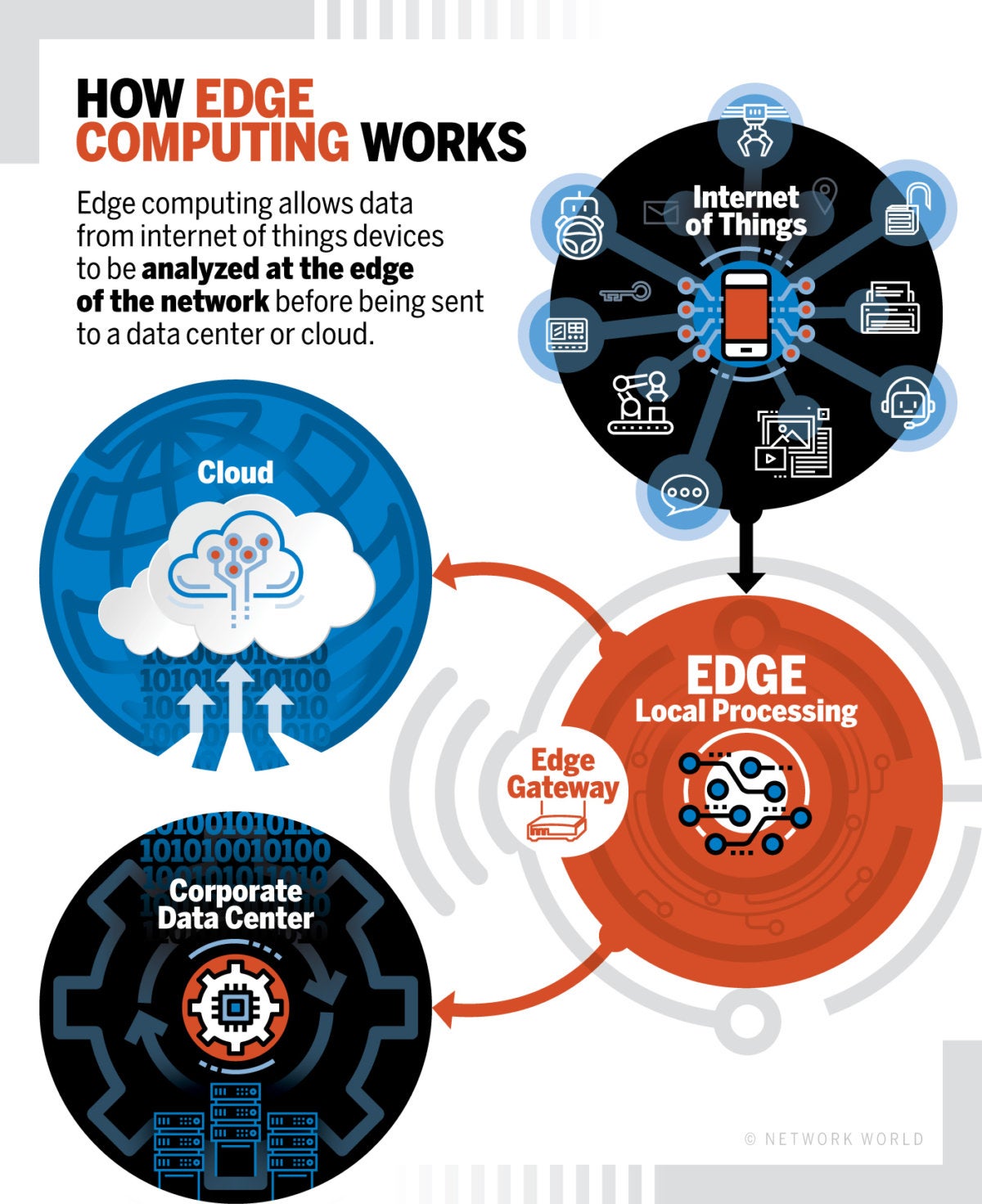 Network World / IDG
Edge Computing Use Cases
Edge solutions adapt to industry needs. Key sectors include:
- Manufacturing & Heavy Industry – Delays‑intolerant control of heavy machinery and predictive maintenance rely on local processing.
- Agriculture – Sensors on soil, weather, and equipment stream data for real‑time farm management.
- Retail – In‑store edge nodes unify POS, foot‑traffic analytics, and targeted promotions.
Hardware choices vary: rugged, low‑latency nodes for factories; LP‑WAN or Sigfox for outdoor agriculture; and Wi‑Fi or Bluetooth for retail foot‑traffic.
Edge Equipment Architecture
Clients connect to nearby edge modules—often called edge servers or gateways—for faster processing and smoother operations. Terminology differs across vendors.
DIY vs. Managed Services
Businesses can build their own edge stack—selecting hardware from Dell, HPE, IBM, and architecting networks—or opt for managed services from vendors like GE, Siemens, or cloud providers. DIY offers customization but demands in‑house expertise; managed services provide turnkey solutions with minimal deployment friction.
Benefits
Edge computing delivers cost savings by cutting bandwidth usage and enhances real‑time performance. For example, facial‑recognition algorithms can now run locally on smartphones, eliminating the delay of cloud calls. Applications in AR/VR, autonomous vehicles, smart cities, and building automation all thrive on edge’s low latency.
IDC’s research director Kuba Stolarski notes that edge infrastructure is poised to be a primary growth driver in the server and storage market for the next decade.
Leading AI firms, such as Nvidia, are embedding AI capabilities directly into edge modules—like the Jetson Xavier NX—enabling complex machine‑learning workloads on devices ranging from drones to medical instruments.
Privacy and Security
Securing data at the edge is critical. Implement encryption, robust access controls, and VPN tunneling to protect distributed devices. Redundancy and fail‑over mechanisms ensure data integrity when individual nodes fail.
Edge Computing and 5G
5G’s high bandwidth and low latency empower edge deployments worldwide. Carriers are integrating edge services into their networks, offering “virtual” edge nodes at base stations. Verizon’s 5G Edge, AT&T’s Multi‑Access Edge, and T‑Mobile’s partnership with Lumen exemplify this trend.
Gartner’s 2021 roadmap highlights the synergy between 5G and edge computing, underscoring collaborations between hyperscalers like Amazon and Microsoft and major ISPs to scale mobile‑edge solutions.
While the original goal of edge computing was to reduce bandwidth costs for distant IoT data, the rise of real‑time, local‑processing applications will continue to drive its evolution.
Now see “How to determine if Wi‑Fi 6 is right for you”
Internet of Things Technology
- Industrial Edge Computing: How It Drives Manufacturing Performance
- Fog Computing Explained: Transforming IoT Data Flow and Reducing Cloud Load
- Quantum Supremacy Explained: Why It Matters for the Future of Computing
- ISO Certification Explained: How It Boosts Quality, Safety, and Market Credibility
- Smart Manufacturing Explained: Benefits & Impact for Modern Industry
- Edge Computing Explained: Why It’s Critical for Modern Businesses
- Edge Computing & 5G: Powering Enterprise Transformation
- Arms Trade Treaty Explained: Why It Matters for Security, Economy, and Global Policy
- Industrial IoT (IIoT): Transforming Manufacturing & Why It Matters
- Fiber Orientation in Composites: Why It Matters for Strength and Performance