



Engineering Next‑Gen IoT Solutions that Cross Boundaries and Drive Operational Excellence

In recent decades, industrial IoT (IIoT) has infiltrated nearly every facet of automation and operations. With seamless connectivity, technology‑agnostic interoperability, and standardized data, operators can now monitor, manage, and exploit data from a wide array of proprietary assets and processes—capabilities that were once prohibitively expensive.
The reach of IIoT has grown beyond the factory floor, sending torrents of real‑time data to the cloud. This influx fuels advanced analytics, predictive AI, and enterprise‑wide data applications—an almost clairvoyant vision of awareness and intelligence, according to Cloudleaf’s Marketing Head Nitesh Arora.
While the promise sounds compelling, the reality demands a practical focus:
Too often, IoT deployments are driven by automation alone, with little regard for how the technology could future‑proof capital investments by addressing tangible business challenges.
Many companies adopted IoT for its novelty, only to be left with an additional system to learn, maintain, and finance. Even in best‑case scenarios, IoT footprints are far from low‑overhead, demanding substantial implementation, integration, and training resources.
More critically, these solutions injected operational complexity, diverting attention from core competencies—partner collaboration, workforce management, customer experience, and compliance with safety regulations.
Today, only a handful of industrial IoT solutions are built from the ground up to address real business challenges and generate sustainable value. Common pain points cited by operations managers include:
- I don’t have a way to efficiently orchestrate our complex workflows of materials, tools and people,
- I can’t track the location or condition of my assets, or prevent them from getting lost or stolen
- I have no idea how to leverage our partner relationships and tie into their inventory systems
- I don’t have a good way of keeping my operational costs in check
Fortunately, a new breed of IoT solutions has emerged, combining robust technologies with simplicity to deliver the sustainable, industry‑centric solutions that operators demand. Below are four essential ingredients for effective IoT asset tracking and workflow optimization.
Robust and battle‑tested techIoT solutions must rely on technology that is robust, interoperable, cost‑effective, and highly available. By equipping assets with unobtrusive medium‑range wireless transmitters—such as Bluetooth‑Low‑Energy—plant managers can quickly build smart networks of sensors, gateways, and real‑time data channels that feed into cloud applications.
This provides managers with virtually unlimited control over large groups of assets and, given a plethora of sensors—capable of measuring position, vibration, temperature, and shock—enables virtually endless monitoring capabilities. The true value lies in cloud applications that transform this metadata into actionable insights.
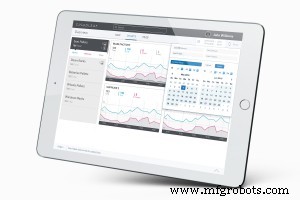
Hardware, connectivity, and applications must work in unison and deliver ergonomically designed dashboards that clearly display alerts, notifications, metrics, trends, analytics, and KPIs related to inventory, product quality, predictive maintenance, audit, and regulatory compliance. Achieving this interoperability requires front‑loading robust programming into the solution, including an extensive library of APIs, SDKs, and pre‑built connectors that facilitate integration with existing enterprise systems—SCM, ERP, MRP, MES, and big data analytics.
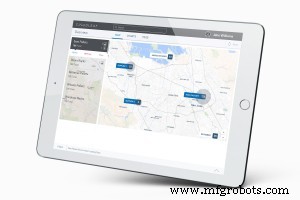
By leveraging proven IoT‑enabled technologies, enterprises can configure highly granular operations that function at the individual asset, process, and workflow level. Each component plays a critical role in ensuring the efficient flow of raw materials, tools, sub‑assemblies, and WIP goods.
Unlocking true cross‑boundary asset and workflow managementEnterprises increasingly seek industrial IoT solutions that solve operational and supply‑chain challenges without operating in isolation. Asset tracking and workflow optimization must provide visibility beyond the factory walls, allowing operators to monitor the status and movement of assets arriving inbound or flowing outbound.
Real‑time materials management, inventory control, workflow planning, and staffing have profound and far‑reaching logistical implications. More fundamentally, these solutions foster synergies among stakeholders, enabling best‑of‑breed integrations for suppliers, distributors, and customers.
IoT solutions built on secure, open‑standard frameworks offer ubiquitous connectivity, seamless interoperability, and encourage stakeholder collaboration, gaining dominance in the industrial IoT operations market.
Engineering industry‑centricity into the solutionThe promise of IoT is to enable enterprises to focus on their core competencies and unlock potential. This requires solutions engineered around the customer’s industry, stakeholder ecosystems, and everyday language, concepts, and metrics.
A purpose‑driven approach reduces complexity, shortens the learning curve, and lets enterprises focus on core activities rather than wrestling with implementation details. The result is a simple, elegant IoT‑enabled platform that delivers tangible value and solves narrowly defined business challenges.
This compartmentalised strategy yields high‑visibility asset tracking that leverages the latest real‑time connectivity technologies, keeping operators informed of asset ecosystems—whether in‑house, in transit, or worldwide.
A goal‑driven approachThe ultimate objective is to unlock safety, profitability, and market share. Yet many IoT solutions prioritize technology over cost savings, risk reduction, and ROI. Few provide plant managers with tools to justify capital and operational expenditures.
Goal‑driven IoT solutions enable enterprises to remain agile, identify monetization opportunities as they arise, and uncover deep insights that tackle tomorrow’s global challenges.

Encouragingly, a few Fortune 500 early adopters are already well ahead of the digital transformation curve with sustainable IIoT solutions in place. However, most report modest success and still struggle to realize the promise of their investments due to questionable reliability, poorly executed implementation, burdensome integration, and increased operational complexity.
Cloudleaf Sensor Fabric™ is an IoT‑enabled ecosystem that offers enterprises a holistic end‑to‑end solution for monitoring, managing, and optimizing complex distributed asset ecosystems across internal and third‑party facilities. Cloudleaf’s solution represents a paradigm shift in enterprise‑grade IoT adoption, delivering immediate and sustained value and ROI.
Cloudleaf is such a company. What makes Cloudleaf Sensor Fabric™ a compelling solution lies in its technology approach and how it addresses the complex asset tracking and workflow optimization needs of its customers—foundations for the success of the Sensor Fabric™ stack.
The author of this blog is Nitesh Arora, head of Marketing of Cloudleaf
Internet of Things Technology
- Cisco Unveils Industrial Network Director: Streamlined IoT Network Management for Operations Teams
- Why OSGi Is the Ideal Framework for Modern IoT Solutions
- Lexmark Unveils Optra IoT Platform to Accelerate Manufacturing Digital Transformation
- Choosing the Right Connectivity Solution for IoT Networks: 5G, Wi‑Fi, Bluetooth, and LPWAN Options
- Choosing the Right Wireless Protocol for IoT Asset Tracking Solutions
- Industrial IoT: Key Building Blocks Driving Industry 4.0
- Practical Guide to Building Industrial IoT Environments
- ABB Introduces Intuitive IoT Dashboard to Boost Efficiency in Mid‑Sized Commercial Building Automation
- Cisco Launches Cloud‑Managed IoT Monitoring for IT & OT Environments
- Top 4 IoT Solutions Every Logistics Business Should Adopt