



Five Key Metrics CSPs Must Track to Validate Digital Transformation Success
 Ed Finegold of Netcracker Technology
Digital transformation has dominated the communications sector for several years, yet many providers still struggle to translate that momentum into measurable market leadership. According to Ed Finegold, strategy director at Netcracker Technology, success must be measured not only against internal performance metrics but also against objective, external industry benchmarks.
Internal improvements may look promising on paper, but without clear evidence of progress relative to competitors, CSPs risk falling behind in an intensely competitive landscape that demands rapid, customer‑centric evolution.
Below are five critical areas where CSPs often lag, the external milestones they should pursue, and concrete metrics to track progress.
The B2B Cloud
In the B2B cloud arena, leading providers such as AWS, Microsoft Azure, and Google Cloud dominate Gartner’s 2018 Magic Quadrant for Cloud Infrastructure as a Service. Other notable players—Alibaba Cloud, Oracle, and IBM—occupy the Niche Players segment. Reports occasionally elevate Digital Ocean and Rackspace to leadership positions.
Despite the cloud’s critical role in telecommunications, CSPs are rarely mentioned in these rankings. Yet the sector is worth an estimated $206 billion (≈€184 billion) and is growing faster than 17% annually, according to Forbes.
The Internet of Things (IoT)
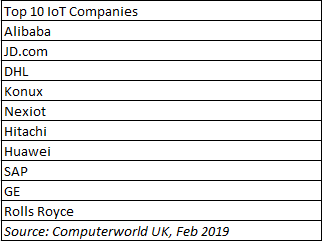
IDC projects global IoT technology spending to surpass $1 trillion (≈€0.90 trillion) by 2022. Yet, like the cloud, CSPs are seldom cited as IoT leaders in industry analyses, such as Computer World UK’s reports.
IoT’s horizontal nature draws innovators from diverse sectors, including many CSPs’ equipment suppliers. While CSPs can expect incremental revenue from the explosion of connected devices, they have yet to emerge as top-tier IoT platform providers—an essential step toward adding higher‑margin services beyond basic connectivity.
Customer Experience
Many CSPs set ambitious internal targets to elevate customer experience, yet brand recognition in this space remains low. Leading consumer brands—Disney, Amazon, and Netflix—frequently top lists of customer‑centric brands. For instance, Marketing Week’s 2018 UK top 100 brands for customer experience excluded any CSP.
Although CSPs invest heavily in CX initiatives, the impact has yet to resonate with customers or translate into broader industry perception. Success should therefore be measured against both internal KPIs and external brand‑ranking movements.
Artificial Intelligence
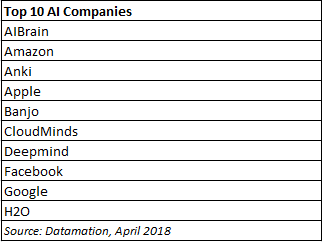
Artificial intelligence is a defining technology of the digital B2B era, and CSPs often announce ambitious AI ambitions. Yet, in rankings such as Datamation’s 2018 AI leaders, CSPs are absent. Leading AI players include Amazon, Apple, Facebook, Google, IBM, Intel, Microsoft, and Twilio.
The AI market remains nascent, offering CSPs a chance to capture early leadership—particularly when paired with robust cloud capabilities.
Top Places to Work
Digital transformation is as much about people as it is about technology. Recruiting and retaining high‑talent teams requires a culture that embraces innovation and change. Yet, in rankings such as Inc’s and Money’s “Best Places to Work,” CSPs rarely appear among the leaders, who include Facebook, Google, LinkedIn, Amazon, and Microsoft.
Competing against these firms means CSPs must showcase not only technological prowess but also a compelling employer brand that attracts top talent.
In a rapidly evolving digital landscape, CSPs can no longer rely solely on internal metrics. To establish themselves as true digital leaders, they must set and meet external milestones, delivering tangible, customer‑centric results that are visible to the industry and the public.
The author is Ed Finegold, strategy director, Netcracker Technology.
About the author
Ed Finegold, strategy director at Netcracker Technology, brings over 20 years of experience in mobile, cable, and digital transformation. He has authored two books on OSS/BSS strategy and architecture and pioneered new digital customer‑experience solutions.
Internet of Things Technology
- How Digital Inventory Enhances Additive Manufacturing: 4 Key Advantages
- Two Key Factors for Successful Industrial IoT Implementation
- Digital Transformation Strategy: From Buzzwords to Tangible ROI for Industrial Leaders
- Leveraging Data to Accelerate Digital Transformation
- 3D Printing: Driving Digital Transformation Forward
- How AI Can End Supply‑Chain Disruptions: Five Proven Strategies
- Accelerating Digital Transformation with Collaborative Technologies
- Strategic Blueprint for Digital Transformation Success
- Overcoming Digital Transformation Challenges in Manufacturing: Strategies for SMB Success
- Five Essential Steps to Accelerate Your Digital Transformation