



What Is a Contactor and How It Safely Controls High‑Power Equipment
A contactor is an electromagnetic relay designed to switch high‑current, high‑voltage circuits—such as motors, heaters, and lighting arrays—using a low‑voltage control signal. It allows operators to energize and de‑energize heavy loads without direct contact with the mains supply.
What Exactly Is a Contactor?
Unlike a simple toggle or rocker switch that is suitable for low‑current applications, a contactor is a dedicated switching device that can handle currents from a few amperes to several hundred amperes and voltages up to 480 V or more. It typically consists of a coil, a set of normally open (NO) and normally closed (NC) contacts, and a spring or magnet that forces the contacts to open or close when the coil is energized.
How Does a Contactor Work?
The core of a contactor is its coil, a wire wound into a solenoid. When a control voltage—commonly 24 V, 120 V, or 240 V—is applied to the coil, it generates a magnetic field that pulls the contact armature toward the contacts, completing the circuit.
Key steps:
- Energize the coil: Apply 24‑V control voltage.
- Magnetic actuation: The magnetic field pulls the contacts together.
- Load current flows: The high‑current circuit is now live, powering motors or other equipment.
- De‑energize the coil: Remove the control voltage.
- Contacts open: The magnetic field collapses, and the contacts separate, interrupting the load.
This indirect method keeps personnel at safe, low‑voltage levels while still enabling the control of powerful machinery.
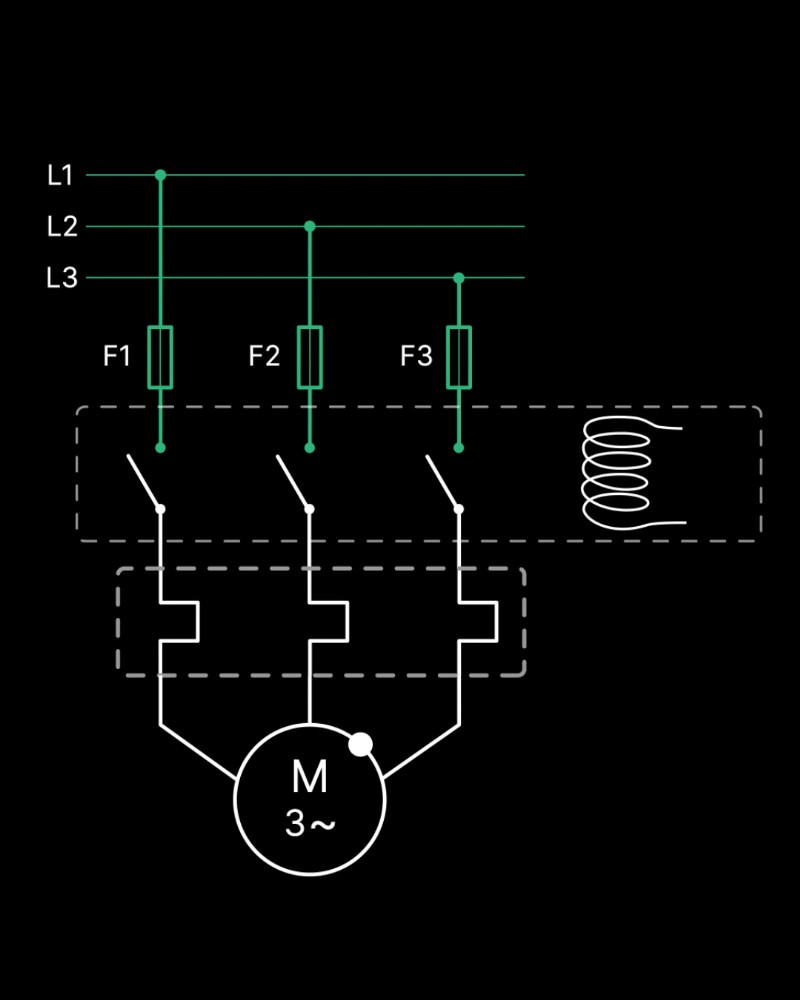
Key Takeaways
- Contactor: the go‑to solution for switching high‑power circuits in industrial, commercial, and residential settings.
- Low‑voltage coil (e.g., 24 V) provides safe control.
- Coil energization turns the coil into a magnet, closing contacts.
- Coil de‑energization releases the magnet, opening contacts and stopping the load.
In summary, a contactor enables safe, reliable control of heavy electrical equipment by translating a low‑voltage control signal into a high‑current switch action. Whether you’re running a factory motor or a building’s HVAC system, a properly rated contactor is essential for both safety and operational efficiency.
June 9, 2026
Automation Control System
- Honeywell Finds Warehouse Automation Generates New Jobs, Not Cuts
- Streamline Packaging Quality Assurance with Advanced Automated Control Systems
- Harnessing Technology to Drive Manufacturing Marketing Success
- Mastering the Journey to a Fully Automated Enterprise
- UiPath Saves Over 700,000 Hours Through Global Remote Work and Automation
- Clear Shop-Floor Guidance Accelerates Workforce Training and Improves Productivity
- Dole Sunshine: Pioneering Digital Indirect Procurement for Sustainability and Profitability
- CIOs Reveal How Automation Fuels Business Strategy
- Kuka Partners with Admares to Build Next-Generation Smart Factory Revolutionizing Building Construction
- Precise Automation Announces Exclusive Full Line of Industrial Collaborative Robots at Automate 2019