



Borophene: Unlocking the Potential of 2D Boron for Next-Gen Batteries and Sensors
Synthesized for the first time in 2015, borophene, an anatomically thin, crystalline 2D boron sheet has already captured the attention of scientists globally. Described as ‘the new wonder material’ due to its unique anisotropic flexibility and metallicity, it has the potential to revolutionize batteries, sensors and catalytic chemistry. This article summarises the synthesis, properties and potential applications of borophene.
Synthesis and Properties

Whilst graphene takes a single form, borophene is a polymorph, which can have many lattice configurations. Theoretically, there may be more than 1000 forms of borophene, each with different characteristics. Borophene was first synthesized by an international group of scientists under ultrahigh vacuum conditions using a solid boron atomic source. An atomically cleaned silver substrate was used to provide a well-defined and inert surface for borophene growth. In situ electronic characterization supported theoretical predictions that the polymorph of borophene they had successfully fabricated was metallic and formed planar structures with anisotropic corrugation. Its undulated structure was later attributed to the very small bending stiffness of borophene (i.e. the moment required to produce unit rotation) and its reactivity towards silver. The authors demonstrated that both the electronic and mechanical properties of the borophene produced were highly anisotropic.
Since its initial discovery, numerous studies have been conducted into the superconductivity, mechanical, electronic, and optical properties of different polymorphs of borophene. Borophene has now been fabricated using a number of different substrates including gold, copper and aluminium. A significant breakthrough came in 2019 when freestanding borophene was synthesized for the first time using a scalable process.
Borophene is strong, flexible and transparent. It is a good conductor of both heat and electricity, and it also superconducts. According to some computational predictions, borophene may transition to superconductivity at higher temperatures than graphene. First-principle calculations have indicated that the superconducting transition temperature may be as high as 24.7K for some polymorphs of borophene, which is much higher than the computationally predicted 8.1K and experimentally observed 7.4K in graphene. The anisotropy in its mechanical and electrical properties makes it tunable, which is amongst the reasons scientists and engineers are excited about its potential applications. Understanding how to characterize and control the atomic structure of borophene will be crucial to the incorporation of borophene with the desired properties into products.
Whilst many researchers are excited about the unique properties of borophene, there are significant barriers to the commercialization of this material. Firstly, borophene has relatively high chemical reactivity and can, therefore, be difficult to manipulate at ambient temperatures. It remains relatively difficult to manufacture even in small quantities. Like many 2D materials, borophene is prone to oxidation. This is generally considered disadvantageous, however, the oxidation can be used to improve the stability of the structure and to tailor its properties.
Applications of Borophene
A wide range of applications harnessing the unique properties of borophene are already emerging, for example:
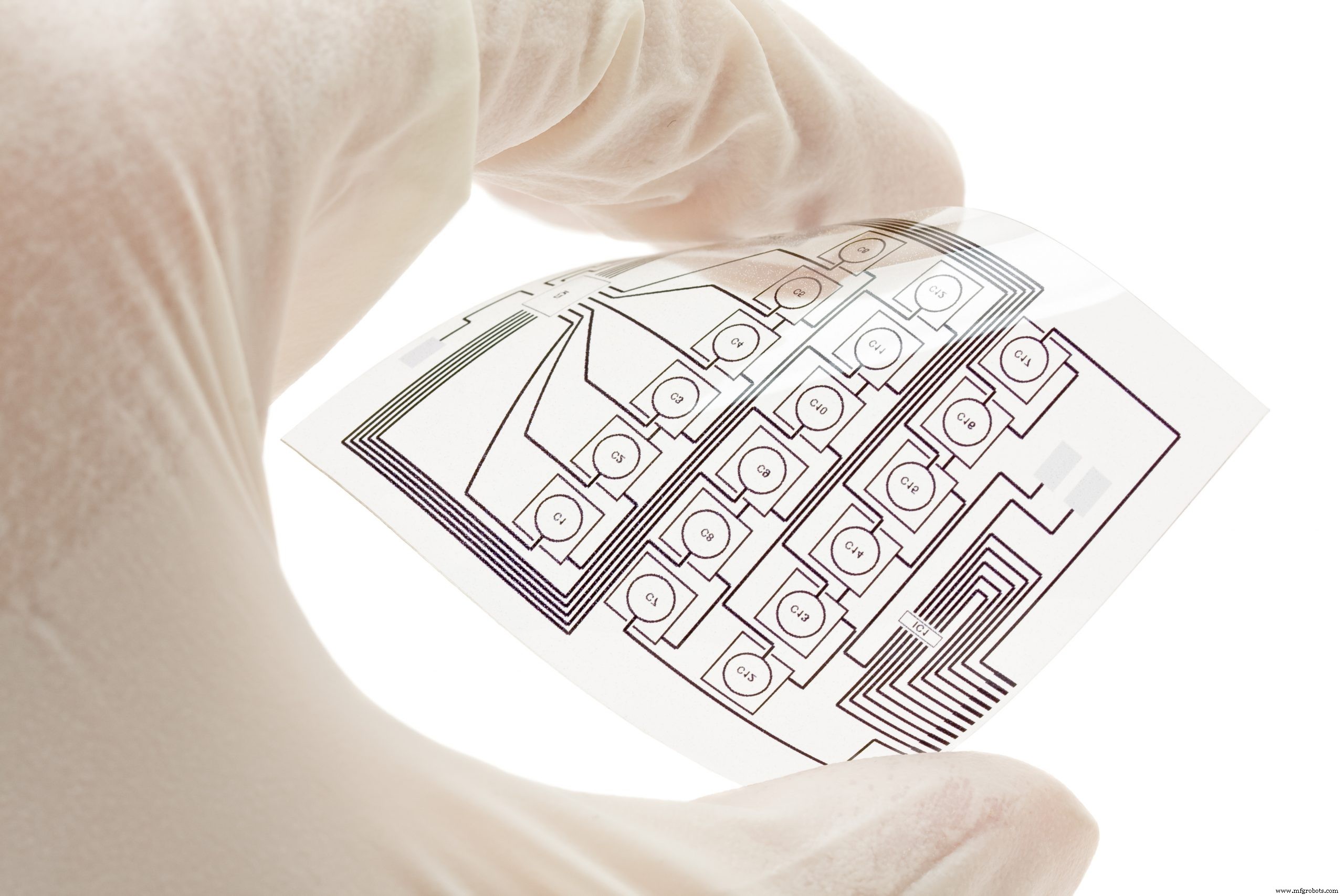
Flexible electronics: 2D materials may enable the development of scaled-down hybrid electronic devices designed to harness their superior qualities. Researchers believe that borophene’s unusual undulating structure would confer high stretchability if the borophene was transferred to an elastomeric substrate. In other words, it may be possible to fabricate devices using borophene that can be deformed and then return to their original shape. Since borophene is conductive, it may prove highly suitable for flexible electronic devices. One of the key challenges facing researchers is that like many 2D materials, borophene is highly sensitive to the external environment, and to date, it has not shown long-term stability and reliability when utilized in electronic devices. Researchers are currently developing new imaging techniques to capture the motion of individual atoms in 2D materials in order to understand the potential failure modes in electronic devices.
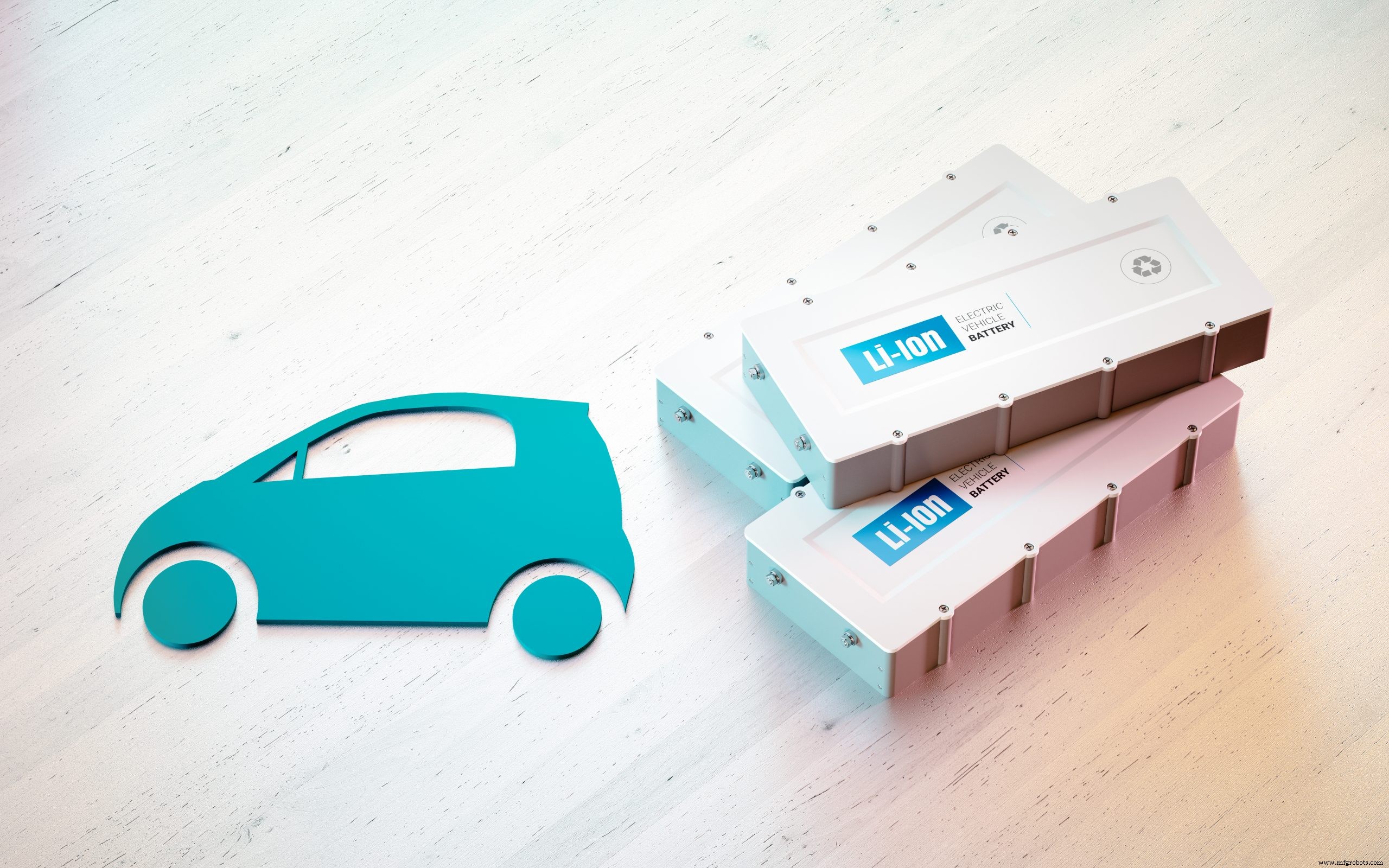
Battery electrodes: Lithium-ion batteries have become ubiquitous in electronic devices due to their high power density and long cycle life. In recent years, sodium-ion batteries have also become increasingly common due to their low operating cost and high operating safety. The unique morphology of 2D materials enables fast ion diffusion and makes them suitable candidates for use as electrodes. Borophene is a highly promising electrode material for lithium-ion and sodium-ion batteries due to its high storage capacity resulting in extremely high power density and electrochemical performance. A recent study reported that the storage capacity of borophene is the highest of all the 2D materials investigated to date.
Catalysis: 2D materials show great promise for use as catalysts due to their unique properties, including large surface areas and novel electronic states. Borophene can be used as a catalyst in hydrogen evolution, oxygen reduction and the electrochemical reduction of carbon dioxide. The electrochemical reduction of carbon dioxide, in particular, has enormous potential in contributing towards efforts to address climate change. However, progress has been slow as a consequence of the lack of stable and efficient catalysts.
Hydrogen storage: Hydrogen has the highest energy per mass of any fuel. In recent years, research into hydrogen storage systems has become increasingly prevalent, driven by demand for energy storage and the advancement of hydrogen and fuel cell technologies. Borophene has been shown to have impressive hydrogen storage capacity, in part due to the low mass of the boron atoms. The binding energy of molecular hydrogen to the boron sheet is stronger than that to graphene.
Gas sensors: The gas adsorption properties of borophene render it suitable in gas sensing applications for different gases including ethanol, carbon monoxide, phosgene and formaldehyde. 2D materials have demonstrated significant potential for the development of gas sensors due to their unique electronic structures and large surface-area-to-volume ratios.
Conclusions

The development of 2D materials is one of the most exciting frontiers in materials research today. The computationally guided synthesis of borophene, just over a decade after the synthesis of graphene, can be considered as a blueprint for the development of new 2D materials. Significant technical challenges remain in the development of borophene, for example, scaling up manufacturing processes, however its unprecedented and unique qualities are likely to reveal new horizons in flexible electronics, battery, and sensor technology.
Industrial Technology
- Selective Laser Sintering (SLS): Cutting‑Edge Technologies, Advanced Materials, and Expanding Applications
- How Lightweight Composite Materials Are Transforming Modern Medicine
- From Ivory to Bakelite: Tracing the Evolution of Modern Plastics
- Revolutionizing Talent: How Workplace Development Drives Modern Workforce Success
- Bill Lauer Retires from DVIRC, Signaling a New Era in Business Development
- Boston Materials Secures Nearly $1M NSF Funding to Accelerate Lightweight Carbon Fiber Development
- How Medical Materials Have Transformed Orthopedic Surgery
- Industry 5.0: Redefining Manufacturing for the Future
- Mastering Bill of Materials Creation in Manufacturing
- Top 5 Corrosion-Resistant Materials Every Manufacturer Should Know