



Robust Sensors for Smart Production Line Optimization
Collecting data is a task that has been carried out since time immemorial in order to understand what is happening around us; we measure parameters such as time, distance, temperature …
The same happens in the production lines, the unlimited capture of manufacturing, product and logistics data allows to take better decisions and add value throughout the production chain. The equipment that allows capturing all this data are the sensors. Sensors need to be reliable and robust when capturing data on production lines in order to cope with diversity and potential changes in processes.
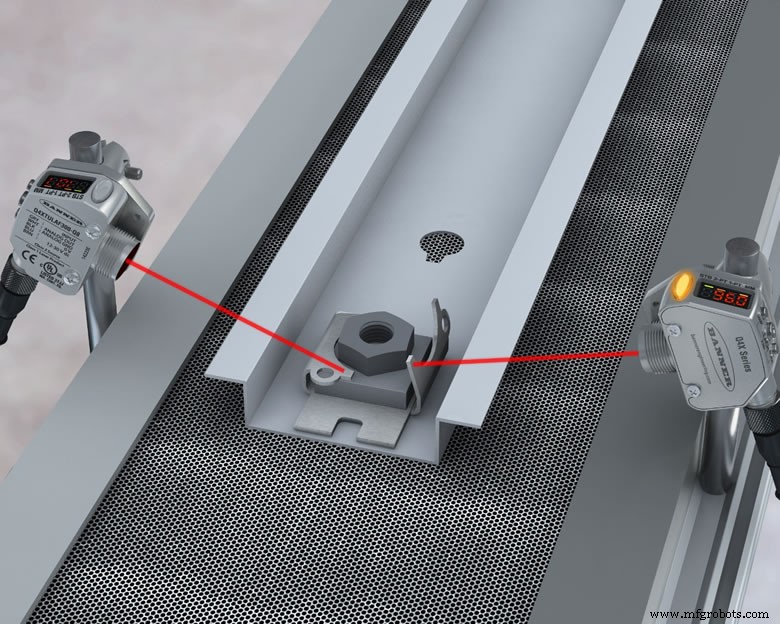
What is a sensor?
Sensors are devices that allow to collect data, in a massive way, generated in any process of a production line or logistics operation, among others.
Sensors are to machines what senses are to people. The information they collect enables machines to be smarter. To obtain this information, it is necessary to filtess the data obtained from the sensors.
Sensors give machines the ability to see, detect and communicate more intelligently, classifying and interpreting all this information. In addition to controlling the machines and processes, the information provided by the sensors enables these production systems to be monitored and possible failures to be detected or prevented. They can bring transparency to and optimize material and process flows. Processes can be more efficient. For this reason, sensors are a very important part of the automation and digitization of factories. In short, they allow:
- Examine how machines work in real time.
- Locate faults in manufacturing and / or operation.
- Study each process in order to find solutions that save time and / or money.
Information becomes the most important value, which allows us to make correct decisions in real time. The different types of sensors in production lines provide us with that information that allows us to achieve the desired quality in our products.
Types of sensors that we can find in the production lines
The evolution of sensors has made it possible to classify the types of sensors that exist into two different groups: conventional sensors and smart sensors. Conventional sensors simply provide the data, without performing any type of processing thereof to extract relevant information. On the other hand, smart sensors are those that process the data and obtain relevant information: parameters out of range, time evolution of the same, or network connectivity for data storage.
Some sensors that we can find in the production lines
There are many types of sensors that allow you to collect all kinds of data and measure different parameters. Proximity sensors can be of different types capacitive, inductive, photoelectric or magnetic and detect movement. Temperature sensors allow the measurement of degrees in an environment, machine, product… In addition, these types of sensors in production lines are used to guarantee optimal and safe operation.
There are also sensors to monitor different manufacturing parameters that can be useful in different processes. There are many of humidity, fat, protein, degree of roasting, thickness, grammage … These sensors are based on different technologies.
Other sensors that are widely used in industry are pressure sensors, level sensors, or vibration or speed sensors.
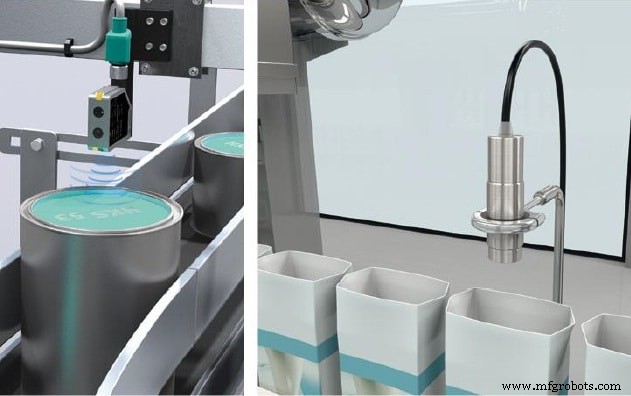
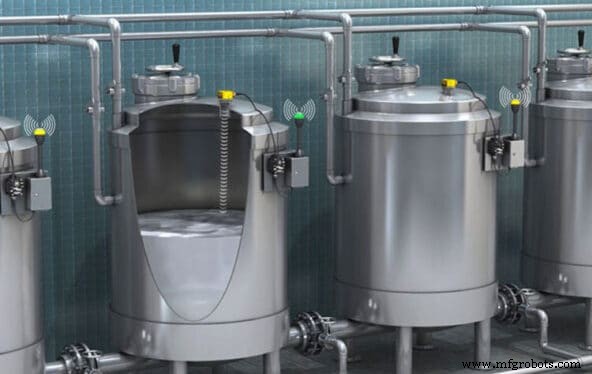
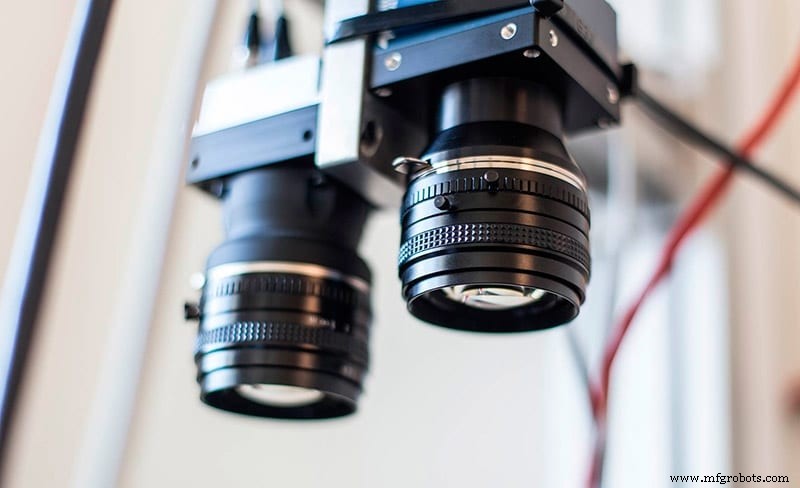
In addition to all these types of sensors, computer vision cameras are also sensors that provide data and information about processes. Computer Vision systems are intelligent sensors that capture images to detect actions, positions, defects, etc. They are intelligent since they are capable of generating responses to the information they obtain from the images.
Sensors for the improvement of production processes
The application of sensors in production processes manages to provide a further degree of automation Automation must be flexible to adapt to the different products and variants produced on the same line. Manufacturing plants must be flexible and adaptable. There are a lot of products, more and more, factories produce a great diversity of products, batches are getting smaller and more variable. This increases with the customization of the product for each client, so the sensors that allow automating these production processes must be able to adapt and adjust to each situation.
Analysing the current production levels, four industrial challenges are presented to which the sensor can provide more optimal automated solutions.
- Improved quality control: more and more products are produced, and it becomes more difficult to check the quality of these products manually. Quality requirements are also getting higher and there is a need to make them more efficient. Therefore, the automatic detection of failures and the obtaining of all the possible data of the products and their production is required. This is obtained by sensors of all kinds.
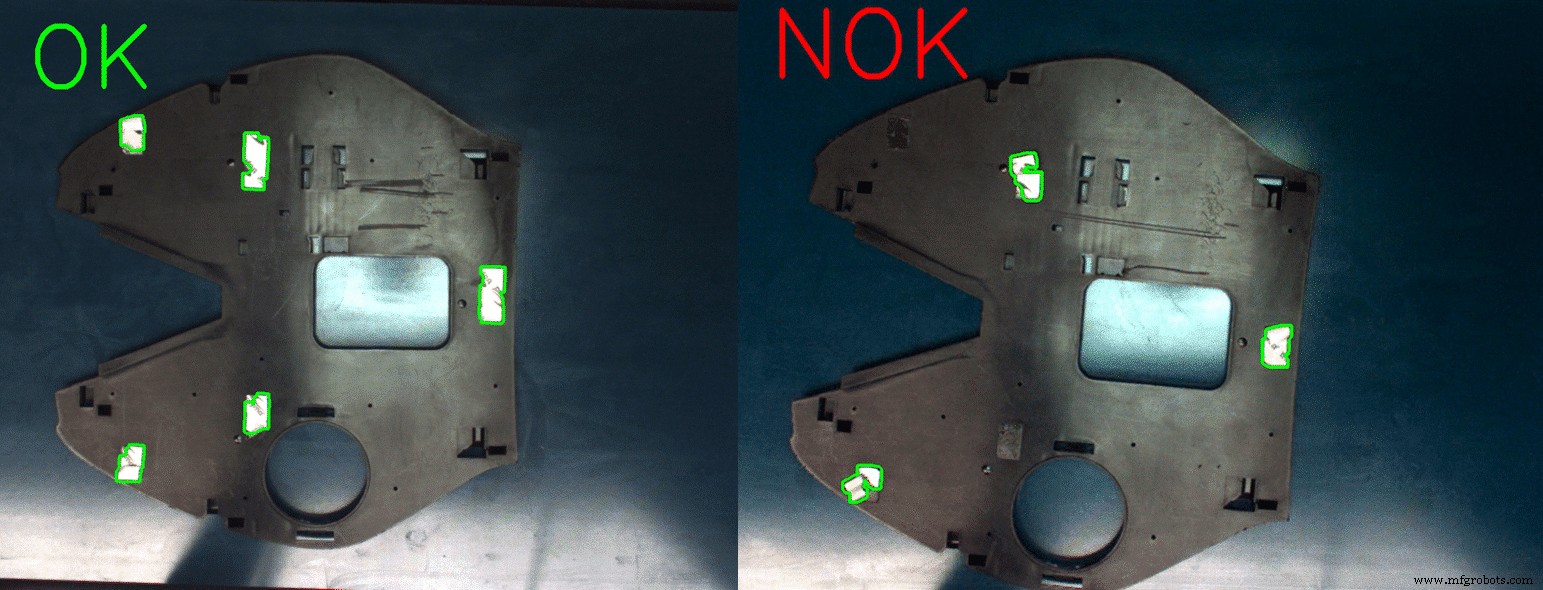
- More flexible automation: production and logistics management need to adapt quickly and profitably to possible needs or changes that may arise in a production process. For this, intelligent sensors are used that, through data analysis, are able to adapt production to needs.
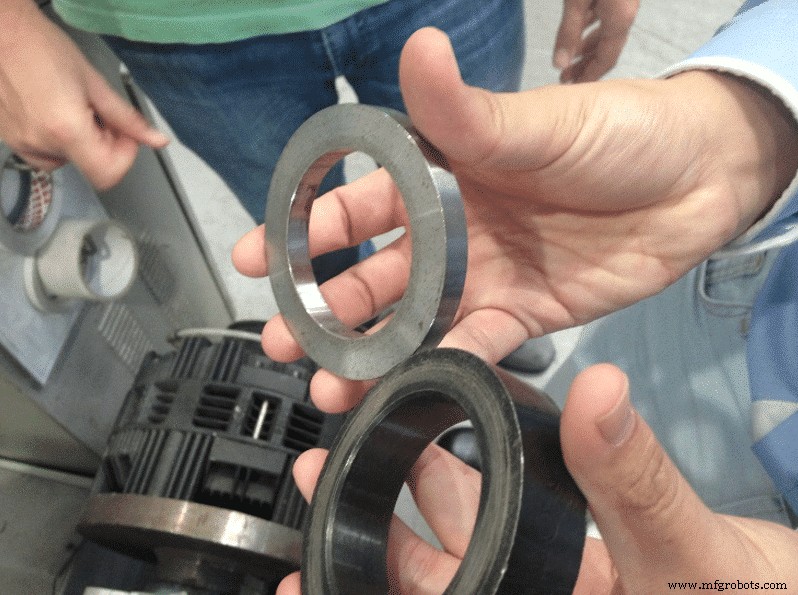
- Safety in work environments: the interaction between people and machines must be carried out safely, taking into account the safety and ergonomics of the work environment. By making machines more intelligent through sensors, they become one more collaborator who interacts with people and takes care of dangerous or repetitive tasks that do not add value to the final product.
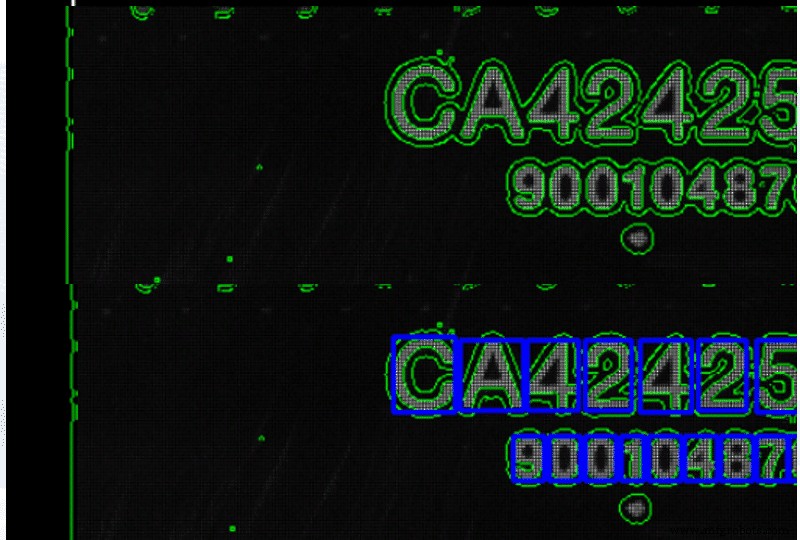
- Follow-up and traceability: the sensors allow to improve the way of identifying and tracking products throughout any production process. Traceability is important from production, through transport and delivery to the customer. The flow of materials must be transparent to make decisions faster.

Do you want to apply sensorics in any of your Projects? Contact us!
Reated posts:
- Indoor location systems
- Industrial Automation
- Computer Vision
- Computer vision and robots, the perfect couple?
Industrial Technology
- Master C++ For Loops: A Step-by-Step Guide
- Master Java For Loops: Syntax, Examples, and Best Practices
- MEMS Sensors: Powering the Invisible IoT
- Essential Criteria When Choosing a CNC Machine
- Nanodiamonds: Ultra‑Precise Magnetic Sensors for Biomedical and Quantum Applications
- Advanced DC Dielectric Sensors for Real‑Time Composite Production Monitoring
- 3 Proven Strategies to Accelerate Manufacturing
- Ensuring Quality in Casting Production: Proven Traceability Practices
- Top Metals for Precision Machining: A Professional Guide
- Mastering IPC Standards: The Ultimate Guide for PCB Design & Manufacturing