



Mastering Warehouse Location Mapping: 5 Essential Keys for Efficient Fulfillment
You might be distributing the best product in the world, but you can easily sabotage its success by implementing a thoughtless warehouse location mapping strategy. Because speedy fulfillment is currently the name of the game, devising a plan that takes a range of important considerations into effect is key. But, before we get too ahead of ourselves, let’s first focus in on defining the basics of warehouse location mapping.

Avectus Integrated Software defines warehouse location mapping as “identifying and naming all product shelving positions, work areas, and travel paths within your facility.” The software company also regards warehouse locations as being like “home addresses,” with aisles being “streets,” shelves being “floors in apartment buildings,” and shelving units being “apartment units.” Looking at it with this particular visual, it’s simple to understand to which level a warehouse operation can be organized when each product has a defined place to “live.”
While warehouse location mapping is a process that takes time for planning and implementation, there are a series of steps that all operations can take to get things moving on the right foot:
Pre-label the Locations
While select warehouse managers may know their layouts and operational flows well enough to begin a plan without their boots touching the floor, most experts suggest commencing the warehouse location mapping process by walking through the warehouse to better inform the assessment. Carry a pen and a pad of sticky notes with you, labeling highly-trafficked and trouble areas as you go. Take note of the travel paths that constitute the most streamlined routes and compare the shelving unit locations to your current picking strategy. These preliminary notes will act as the groundwork for your latest location plan.
Speak with Your Associates
Whether you are implementing a warehouse location mapping plan in a brand new operation, or you are in the midst of performing an overhaul on an established facility, it’s important that you gain first-hand knowledge from those who work on the floor and with your inventory. These are the associates who will be able to challenge the theoretical by providing you with the direct input that you need to formulate a well-researched plan. Get a particularly keen sense of the movements of your pickers, taking note as to the lengths of their routes, whether or not they double back many times to retrieve products, and if the most popular SKUs are placed in the most accessible zones available.
Create Smart Location Names 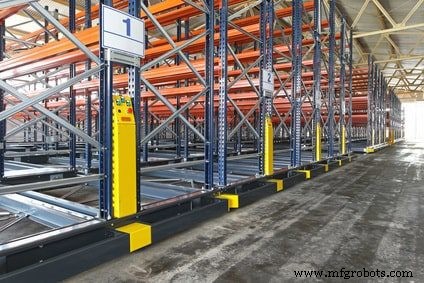
Now that you have gained a clearer sense of strategic location mapping for your warehouse, create location names for your various inventory and equipment that fits well into your overarching organizational structure. Here’s what should be included in the plan:
- A unique location name, using a manner of serialization that corresponds to the warehouse layout
- Denote zone or room names for inventory and equipment that exists in closed spaces within the warehouse
- Don’t worry about “over-labeling”– every location, no matter how inconsequential it might seem, should be assigned a unique label
- Assign labels to empty areas so that no additional labeling procedures are needed once filled
- Location names should be assigned from top to bottom, and left to right
- Break departments into zones – i.e., ‘Shipping and Receiving’, ‘Office’, ‘Restroom’, etc.
Select and Order Warehouse Location Labels
Once all locations are strategically named and mapped, it’s time to add durable, scannable, and easy-to-read labels to each location. Camcode offers a range of warehouse label options that are designed to work within even the harshest of warehouse environments. To determine the warehouse location labels that are best of your operation, consider the temperature, climate, and wear and tear to which your infrastructure is exposed. For a heavy-duty permanent option, opt for the Premium Polyester, and for temporary options to be used on transitional racks, consider the Magnetic label option. Proper labeling of aisles, docks, and other areas is essential for warehouse efficiency.
Integrate your Warehouse Location Mapping Plan into Your Choice of Software
Don’t put in all of this hard work only to track your warehouse location mapping plan with an Excel spreadsheet, or worse yet, an archaic paper and pen system. Instead, take the time to integrate your locations into your current software solution. Most warehouses use, at the very least, a rudimentary WMS (warehouse management system) to track their inventory, procedures, orders, and to gain end-to-end visibility within their supply chains. Now that all locations are effectively mapped for optimized efficiency, it’s important that all software systems reflect the changes before the new mapping plan goes live.
Formulating a warehouse location mapping plan takes a fair amount of thoughtful advice, strategic thinking, and updated training, but once you have your optimized plan in place, your operation will be running in a much more streamlined manner.
Industrial Technology
- How to Select the Ideal Site for Your Water Well Drilling Project
- 3 Proven Tactics for Hiring & Keeping Warehouse Talent
- Warehouse Operators Turn to Location Tech to Accelerate E‑Commerce Fulfillment
- Mastering Location Accuracy Levels in IoT-Driven Supply Chains
- Metric Keyways Explained: Dimensions, Tolerances, and Key Applications
- Key Factors for Selecting the Ideal Warehouse Location
- Warehouse Racking Explained: Boost Efficiency & Space Utilization
- Build a Reliable Warehouse Location Numbering System for Unmatched Efficiency
- Warehouse Operations: Driving Faster, More Reliable Fulfillment
- Warehouse Automation Explained: Benefits, Processes, and ROI