



Master Inventory Tags: Expert Guide to Uses, Types, and Best Practices
Nowadays, enterprises the world over are feeling the heat when it comes to maintaining order accuracy and speedy fulfillment. Though there are plenty of management systems to aggregate the data and processes, one facet that can end up falling by the wayside is inventory. Performing comprehensive counts, whether they’re scheduled on a monthly basis, or through custom-fit cycle counting, must be done with complete precision to safeguard your business’ ever-changing fulfillment needs. One of the best ways to do this is to take advantage of cutting-edge inventory tags. 
When paired with a competent asset or warehouse management system, inventory tags can be scanned to inform your supply chain of changes in your current inventory. This practice helps build end-to-end visibility among all parties, from supplier to customer, as your inventory moves through your warehouse.
In this guide, we’ll discuss:
- What Is an Inventory Tag?
- How Do You Label Inventory?
- Benefits and Main Uses for Inventory Tags
- Best Practices for Inventory Tags
- Businesses that Benefit from Inventory Tags
- Types of Inventory Tags that Will Fit Your Warehouse’s Needs
- How to Select a Software System that Complements Your Inventory Tags
- Additional Resources on Inventory Tags
What Is an Inventory Tag?

An inventory tag is a barcode label or plate that is attached to a product or package for the purpose of tracking. These tags can be used for performing manual inventory counts or connected to a system of scanners and an Inventory Management System (IMS) for automated counting. The use of inventory tags is ideal since these labels can be customized to meet the needs of each company and provide adequate inventory control.
The most basic inventory control tags usually contain an inventory number, barcode, and name of the company that is managing the inventory. In some cases, they may contain additional identifiers such as product name or a “do not remove” statement. By standardizing its inventory labeling with a tag, a company can ensure uniformity across its organization and more efficient monitoring, stocking, and shipments.
How Do You Label Inventory?
Managing inventory is a little different than managing assets because your inventory is likely to be turned over more quickly. Your individual inventory items may be consumed by production orders or require relocation periodically as customer orders are filled, parts are replaced, or supplies are used. For many companies, this requires a very flexible system that also accounts for inventory space on shelves and racks. To begin with an inventory labeling project, the following steps are recommended.
- Confirm label requirements. Before any work can be done to create your labels it is best to understand any local, regulatory, or equipment-based requirements that may dictate the formatting and content of your label. These considerations include the barcode type, label size, and label material type.
- Procure quality labels. Whether printing your labels inhouse or using a trusted supplier to make your labels, you should ensure that the quality of your labels meets the needs of your intended applications. Check the compatibility of labels with the expected environment that your products will be subject to. It is always best to choose a label material and coatings that are designed to withstand any potential exposure to harsh conditions.
- Label inventory uniformly. Once you have your labels, make sure that a basic policy is in place that dictates how and where the labels should be placed on the inventory. Each label should easily readable when the product is placed on a shelf or rack. You should also ensure that the label barcode is easily accessible for any scanners that may be used. One final recommendation is to check that the location names on racks and shelves are fully aligned with your inventory labels and refer to the proper items. Setting a standardized process for your label placement creates uniformity and makes it easy for staff to notice issues and process individual items.
- Review your inventory processes. The best warehouses will likely manage a constant flow of potential improvements that can enhance performance and save costs. Set a regular interval to review your internal and external workflows so you can identify issues and any areas that may not be working well. Once your inventory management workflow is working well and you have adequate inventory labels in place, you will be in a great position to really see the benefits of your system.
Benefits and Main Uses for Inventory Tags

When it comes to utilizing inventory tags, businesses the world over use them for several key operations, including:
- Inventory tracking – Bar coding technology allows necessary parties to locate where the inventory might be at any given time. Inventory tracking allows simpler and less stressful counts or cycling, especially when it’s time for an inventory audit.
- Inventory counting – If your skilled warehouse team is still conducting counts by hand, know that you are wasting valuable time, money, and skillsets. Instead, use the technology behind inventory tags to receive proper inventory counts, on-demand.
- Asset management – Don’t forget that your warehouse’s inventory might make up a hefty percentage of your company’s moveable and fixed assets. When inventory counts are run through the latest asset management software, you will be able to track your assets’ throughput. Having this information on-hand, at the drop of the hat allows companies to make more shrewd decisions without the stress that comes with tracking down errant inventory.
- Strengthening end-to-end visibility – These days, end-to-end visibility is the name of the game because it provides every party throughout the supply chain with real-time info on your current inventory situation. With the data compiled via your inventory tags, everyone from your customer service department to your suppliers to your customers will be able to know what your stock looks like at all times. Making use of a system like this gives you back work time that you would otherwise be spending on communication with your suppliers and customers.
- Seamless reporting – End of the year or quarterly reports can be a struggle to assemble, especially if your company is experiencing a particularly busy spell. Luckily, inventory tags are one very important component that goes into your inventory asset management system. When the tags are scanned, their data can be aggregated to give comprehensive reports – long before audit or tax day.
Best Practices for Inventory Tags

Naturally, just purchasing and installing inventory tags won’t solve all of your inventory tracking and asset management solutions. As mentioned above, these affordable tags act as important components that make up a bigger puzzle.
Once you’ve selected the tags that work well with your inventory, assets, and warehouse needs, it’s time that you follow these best practices to put them to good use:
- Find an inventory management system to pair with your inventory tags that can scale with your business. Don’t settle for a software that will just hold you over in the short-term; your investment will only pay off if your system looks towards the future with you.
- Outfit each inventory label with unique item identification numbers. This simple task will make inventory tracking, in particular, so much simpler.
- Begin with a starting count – even if you don’t have an inventory management system or any inventory tags currently in place. Don’t just settle for the counts from last month’s audit; the whole point here is to ensure that your starting point is correct so that it can inform the rest of data that goes into the system going forward. This step will guarantee seamless reporting when you need it the most.
- Put a comprehensive training program in place before you start making use of your new tags and software.
- Guarantee that all appropriate parties have full access to your system on a variety of different devices. The key here is to diversify visibility as much as possible so that the most holistic monitoring, tracking, and control can take place easily in today’s mobile world.
- Follow correct inventory tag installation procedures. The procedures shift depending on the material in which your tag is made as well as the surface that it is being applied to. Follow all relevant instructions and only select materials that are made to withstand the elements in or outside of your warehouse.
- Last but not least, implement a coherent units system to measure your inventory. To avoid confusion, take care that this never varies.
Businesses that Benefit from Inventory Tags
While most may think that the word “inventory” only applies to commercial manufacturing, stores, or e-commerce operations, it actually occupies a much broader spectrum. Remember, inventory is included in the realm of moveable and fixed assets, which means that materials that are procured, managed, or even stored can be considered inventory. Take a look at these surprising sectors that hold, ship, and maintain inventory regularly: 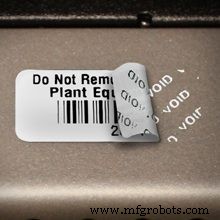
- Healthcare – Pricey and date-sensitive medical supplies that must be safeguarded against theft.
- Education – High-tech teaching implements that regularly get passed from student-to-teacher and within departments.
- Government – Includes everything from office equipment to construction tools used on roadways.
- Oil and Gas – Managing spare parts inventory as well as compliance issues like LDAR.
- Utility Companies – Repair and maintenance management; utility companies need the most durable tags as many pieces of inventory are made to endure harsh conditions.
- Telecom and Cable – Used to manage spare inventory that’s kept on-hand in the event of a repair.
The above are just a few of the largest industries that regularly benefit from the use of inventory tags. If you are having trouble working out whether or not yours should invest in the technology, too, first assess your assets; if your moveable assets are many, diverse in nature, change location often, and are pricey, then this process can definitely streamline and safeguard your operation.
Types of Inventory Tags that Will Fit Your Warehouse’s Needs

When inventory tags are installed and integrated into your inventory tracking system, the results are usually seamless. But, before you can experience the benefits of the management system, you will first need to select the types of tags that will fit the needs of your applications best. Here are Camcode’s most popular options:
Metal Foil Labels
- Most popular and versatile option
- Constructed from durable .003″to .005″ anodized aluminum
- Bar code and printed info remain readable over the lifespan of the inventory
- Will stay put when exposed to chemicals, UV rays, extreme cold, and heat
- Most often used in healthcare, education, government, and manufacturing
Rigid Metalphoto Tags
- Ultra-durable option for indoor/outdoor use
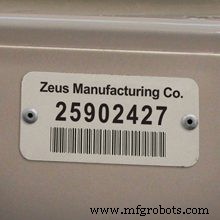
- Constructed from .020″ anodized aluminum face stock (optional thicknesses from .008″ to .063″)
- Adhesive permanently bonds to high surface energy metals and plastics, and textured and contoured surfaces
- Resistant to chemicals, abrasives, solvents, UV rays, extreme cold, and heat with the lifespan exceeding 20 years
- Most often used in healthcare, oil and gas, telecom and cable, and chemical processing
Premium Polyester Inventory Labels
- Flexible, ultra-thin label option
- Constructed from a 2.0 mil gloss white polyester face stock, over-laminated with a 1.0 mil clear polyester film
- Designed to permanently bond to high and low surface energy plastics, slightly textured, or contoured surfaces
- Good resistance to general purpose and household cleaners, mild acids, oil and water with a lifespan of up to 2 years
- Used in indoor office environments in all industries
Tamper-Evident Bar Code Labels
- Flexible, ultra-thin label option
- Constructed from a 2.0 mil gloss white polyester face stock, over laminated with a 1.0 mil clear polyester film
- Designed to prevent tampering and authorized use–when the label is removed, a “VOID” message is revealed
- Good resistance to general purpose and household cleaners, mild acids, oil and water with a lifespan of up to 2 years
- Used in indoor office environments in all industries
Destructible Vinyl Inventory Labels
- Flexible, ultra-thin label option
- Constructed from a 2.0 mil white cast vinyl face stock, with a 0.8 mil permanent pressure-sensitive adhesive
- Designed to break apart when removed from the asset’s surface so as to discourage unauthorized tampering
- Good resistance to general purpose and household cleaners, mild acids, oil and water with a lifespan of up to 2 years
- Used in indoor office environments in all industries
Two-Part Labels
- Flexible, ultra-thin label option
- Constructed from a 2.0 mil gloss white polyester face stock, over-laminated with a 1.0 mil clear polyester film
- Designed to clearly display company name, asset number, and/or bar code with a second removable tab to attach to your records
- Good resistance to general purpose and household cleaners, mild acids, oil and water with a lifespan of up to 2 years
- Used in indoor office environments in all industries
Removable Inventory Tags
- Flexible, ultra-thin label option
- Constructed from 3.5 mil biaxially-oriented polypropylene
- Designed for inventory that only needs to be labeled on a short-term basis; can be repositioned
- Good resistance to general purpose and household cleaners, mild acids, oil and water with a lifespan of up to 2 years
- Used in indoor office environments or outdoor environments in the short-term in all industries
As you can see, there is a label option to meet the needs of your inventory management system. Remember, it’s rare for one company to stick to a singular category of label as some inventory requires more durability than others. To determine your needs, look through your register and ask yourself these questions:
- Is this piece of inventory stored indoors or outdoors?
- Is this piece of inventory regularly exposed to any harsh chemicals or elements?
- Are theft-prevention and detection a priority when it comes to this piece of inventory?
- Is the label needed for short-term or long-term use?
- What type of information needs to be included on the label?
Once you answer these questions, place your inventory into categories organized by similar type. Once you’re finished, you will have a better idea of the number of tags needed and an estimated cost of the investment.
How to Select a Software that Complements Your Inventory Tags
Similar to selecting the best inventory tags, you need to ask yourself plenty of in-depth questions about the specifics of your business before you invest in the first inventory management system that you see. Here are some of the key ones to consider: 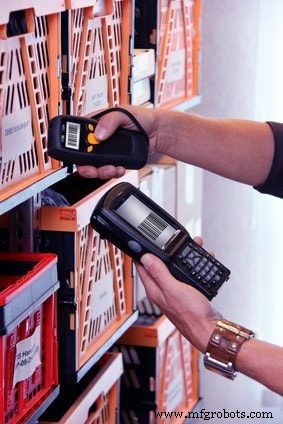
- Is my company already using an asset-tracker, like QuickBooks? (If so, purchase a system that has QuickBooks integrated and ready for your transfer.)
- What’s my company’s budget?
- Is my company a small, medium-sized, or large business?
- Does my workforce need branded training materials to go along with the software?
- Is my business’ IT department confident that the current system will integrate easily into the new one?
- Is my business in need of comprehensive, on-demand reporting functions?
- Is automated purchasing a concern?
- Does my company require cloud-based software?
- Does the software need to support multiple locations, sites, and warehouses?
- What types of employees will be using this software?
- Is end-to-end visibility a goal?
- Will my company be expecting on-demand cycle counts?
- Would bar code reader support be helpful?
- Does the warehouse manager want to use reporting from the system to streamline warehouse organization and operations?
Once you have answered and considered all of these questions, take a look at our list of the top 30 inventory management software tools available to help you make your selection.
Inventory tags can make a huge difference when it comes to efficiency, accuracy, safety, theft-prevention, and the overall lifespan of your inventory. It’s time that you integrate your valuable assets into an inventory system that rewards and safeguards your business.
Additional Resources on Inventory Tags
For more information on how inventory tags can help streamline your operation, visit the following resources:
- What to Put on Your Inventory and Asset Tags
- The 101 on Fixed Asset Inventory Tags
- 5 Reasons Asset Tracking Is So Important to Your Company
- Why is Asset Tracking Important?
- 8 Inventory Management Techniques that Are Losing You Money
- Five Steps to Painless Inventory Management
- What is Inventory Control?
- 6 Inventory Techniques for Stock Optimization
- Reducing Employee Theft Through Inventory Tracking
Products and Tracking Solutions from Camcode:
- Rack Labels
- Metal Barcode
- Warehouse Inventory Tags
- UID Tags
- Warehouse Aisle Signs
- Equipment ID Labels
- Warehouse Signage
- Silver Foil Labels
- Utility Pole Marking Tags
Industrial Technology
- Choosing the Right Pump Coupling: A Practical Guide for Reliable Performance
- Warehouse Inventory Management Mastery: 80 Proven Resources on Frameworks, Best Practices, Software & Mobility Solutions
- Asset Identification: Proven Methods & Best Practices for Accurate Tracking
- Proven Equipment Tracking Strategies: Asset Tags, Software, Maintenance & More
- Warehouse Automation 101: From Organization & Labeling to Cutting-Edge Tech & Best Practices
- MIL‑STD‑129 Explained: Barcode Standards, Compliance Tips & Best Practices
- 50 Proven Inventory Management Best Practices to Boost Efficiency, Cut Costs, and Maximize Profit
- 50 Proven Asset Inventory Management Tips for Optimal Efficiency
- 50 Proven Facilities Management Tips & Best Practices
- The Definitive Guide to Vibration Sensors: Types, Applications, and Integration