



Facility Management Mastery: Proven Strategies for Operations, Leadership, and Project Excellence
Facility management, or FM, is a broad discipline that includes a variety of industries, from food to technology, manufacturing to e-commerce and beyond. But, though the core of each business may be completely different from even its closest competition, successful facility management practices are easily interchangeable from enterprise to enterprise. As a matter of fact, it is one of the only job titles that can be found in, basically, any small to large organizations, including public entities, like schools and hospitals, to private businesses, like those that manage their inventory in warehouses.
But, reciprocal tendencies aside, facility management procedures and techniques must be highly-specialized for the business in which they are being used. Because the discipline covers complex specifics, including business continuity planning and even fire safety, it’s key that your organization offers a holistic outlook on its facility management procedures.
In this guide, we’ll discuss:
- The Core Competencies of Facility Management
- Operations and Management Strategies
- Project Management for Streamlined Facilities
- Best Leadership Practices for Facility Managers
- Additional Resources on Facility Management
The Core Competencies of Facility Management
According to the International Facilities Management Association (IFMA), facility management is an interdisciplinary practice that “considers the coordination of people, place, process, and technology.” Broken down, this means that a facility manager is responsible for the success of the all facets of the facility, including organization, safety, security, and maintenance, along with the key, everyday operational practices. 
It may seem like an overwhelming job to put on one person or one small team – and it is an overwhelming job – but what’s important to remember is the fact that facility management is just one aspect of what makes a healthy business. Simply put, all necessary departments must work with facility managers to build a business’ overall success.
Here’s what the discipline of facility management encompasses – and why poor management could easily lead to an organization’s demise:
- Safety – It’s the facility management team’s job to ensure the safety of all of the employees and customers occupying the property. This responsibility spans all possible environmental health and safety issues, particularly ones that concern the building and its equipment, specifically. Failure to do so can mean serious business in the form of fines, lost business, or even prosecution if it was deemed that the manager or business’ negligence caused casualties or permanent environmental damage. Fire, for example, is usually right at the top of the radars of facility managers because it’s a preventable tragedy that, when prepared for sufficiently, can save lives and valuable inventory. A thorough facility management team can protect its company best by guaranteeing that all parts of the facility are up-to-code, its employees are trained well, and all permits and certificates are completely valid. This function entails everything from safe and efficient lighting to flooring choices.
- Security – In regards to importance, second to safety is facility security, yet another important piece of the puzzle in which the facility management team must answer to. Though larger companies or ones with particularly pricey inventory or equipment might make the wise choice to outsource its security needs in the form of a private firm, it’s still the role of the facility manager to ensure that the firm performs competently. Technology advancements like biometrics and wearables are making it possible to maintain strict access control for high-security areas, but it’s up to facility managers to stay on top of these developments and make smart security technology investments. In addition to general safety, it’s also important that the facility management team has the technological know-how to safeguard and maintain its priciest hardware. This role is a key one as it doubly affirms that assets are protected just as closely as the safety of the community.
- Maintenance and Inspections – No matter the focus of the organization, one of the most heedless things that a facility management team can do is slack off on its building maintenance duties. Every part of the building, including installed machinery such as HVAC systems, must be maintained by the facility management team. Because some facilities contain countless elements that need regular maintenance, establishing and following strict maintenance schedules helps to ensure that all moving and permanent parts of the facility stay up-to-date and working well into the future. Along with general maintenance, inspections are also something that facility management teams must always be ready for. They can prepare the business by conducting internal inspections, as needed, for the many formal regulatory inspections they might incur annually. Of course, the team must also take into account any time the facility undergoes a major change in hardware, level of inventory, or capacity – and, they must also keep their eyes on all changes in laws that could affect their current procedures.
- Business Continuity Planning – Part of leading an effective facility management team means planning for “worst case scenarios.” This means that each team must sit down with the powers that be to come up with a plan in case disaster strikes and the business can’t afford to shut down operations. For example, let’s say that a community college endures a major fire and the authorities have deemed the entire main building a total loss. The community college is currently in the middle of a semester which it can’t cut short – this is a situation where prior business continuity planning is key. If this were done in the aforementioned scenario, the facility management team would have already come up with alternate locations to hold classes and operate the organization’s administrative duties. In addition to the new venue, the team would have already made a solid plan for the temporary facility’s security, maintenance, and hardware needs.
- Daily Operational Duties – In addition to serving as the safety and security liaisons for the facility, it’s also important that facility management teams are organized to handle the inherent day-to-day challenges that might arise. Depending on how the given organization is structured, this can mean anything from mending a leaky roof in the women’s restroom to even fixing a jammed fax machine.

No matter the size of the organization, it’s key that the higher-ups bring on a facility manager that can hire or outsource a reliable, competent team. And, because not every company is filled with safety-minded individuals, it is the job of this manager to act as an advocate for the workers and/or customers that occupy their facility. Having this level of tenacity and attention-to-detail in the facility management spectrum is necessary – in fact, it can save a business or even a life.
Operations and Management Strategies
The current presiding global facilities management organization, the International Facility Management Association, calls for these leaders to take a more tactical and shrewd approach when it comes to protecting the future of their business’ properties.
In the IFMA’s Strategic Facility Planning white paper, the organization makes a call for facility managers to carry out SFP (strategic facility planning) as it “helps to avoid mistakes, delays, disappointments, and customer dissatisfaction.” In addition to the aforementioned safety and maintenance-heavy responsibilities, the IFMA wants managers to begin looking beyond their normal duties so that they can better aid in the efficiency of their organizations.
To do this effectively, managers must compile two things: 1) a strategic facility plan and 2) a master plan for the facility. Let’s take a look at how each one can better strengthen the overall productivity of the business:
- Strategic Facility Plan (SFP) – In order to compile a comprehensive SFP, the IFMA urges managers to first become acquainted with three very important things: the core values or changing values of the organization and how facilities must reflect the values, the compiling of an in-depth analysis of the facility, including location, capability, and condition, and, finally, a fundamental understanding of how the organization’s goals might make for the ramping up or down in regards to facilities. If the manager can confirm each and every one of these benchmarks with the appropriate departments and find a way to support their organization’s ambitions while carrying out effective day-to-day practices, then they will be acting as a truly “strategic” support system. This blend of “current” and “future” allows for all parties involved to grapple with changes as they come in the most effective manner possible.
- Facility Master Plan – Any facility manager should already be constantly re-working their facility’s master plan, a framework that looks at the “physical environments that incorporate the buildings,” but that doesn’t mean that each is as comprehensive as it could be. Let’s take a look at what a holistic master plan that takes both the day-to-day tasks as well as the future space use analyses into consideration.
Here’s what a facility master plan should include:
- Zoning, regulation, covenant assessments
- Space standards/benchmarks descriptions
- Program of space use
- Workflow analyses
- Engineering assessment and plan
- Block, fit, or stacking plans
- Concept site plan or campus plan
- Architectural image concepts
- Long-term maintenance plan
- Construction estimates
- Phasing or sequencing plan (the sequence or projects)
Once a facility manager does the proper footwork to make contact with all departments that influence their facility, they will be better equipped to support their organization as it makes profitable moves in the future.
Project Management for Streamlined Facilities
Because the name of the game for facility managers is safety, maintenance, and planning, it surely comes as no surprise to you that the manager must also develop and execute a laundry list of projects to ensure that everything on and in the building is running smoothly. 
Here are some examples of how project management tactics can streamline a facility’s overall efficiency:
- The establishment of project schedules that include both scope and budgetary needs
- Advising all workers, including employees and consultants, on development and work progress
- Maintaining transparent databases on each and every project to ensure that higher-ups are advised of any changes to schedule, budget, or manpower in real time
- The compiling of comprehensive training schedules to ensure that all employees are properly certified for any regulatory changes that may arise
- Conducting budget estimates for all proposed construction projects
- Coordinating any service or maintenance upgrades for the facility’s systems
- Conduct meetings and get approval for necessary space alterations which might be necessary for the modernization of the space
- Developing internal audit processes to ensure that all applicable regulatory standards are met, including the new ISO 41001, Facility management – Management systems – Requirements with guidance for use
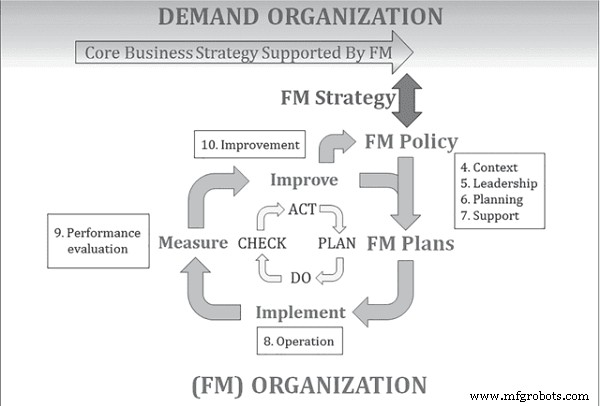
Screenshot via ISO
Of course, addressing all issues of infrastructure first is paramount to ensuring the safety and security of the facility.
Best Leadership Practices for Facility Managers
As you’ve already surmised, facility management is a big, often complex job that requires a strong, forward-thinking, and most of all, responsible leader who thinks about their facility’s needs in as holistic of a manner as possible. In addition to possessing these qualities, the most informed managers either have years of diverse industry experience under the belt or have earned a specialized degree in the discipline. Continuing education is also common in the field, and there are a number of facilities management courses that can help facility managers stay up-to-date on current trends and best practices.

So, now that we have an idea of what an adept facility manager might look like on paper, let’s delve into the most effective leadership practices they can implement to guarantee the safety and efficiency of their organization:
- They are on the same page as the higher-ups in regards to the future – As mentioned throughout this guide, being a powerful facility manager means looking ahead into the future. From compiling business continuity plans in the event of a disaster to keeping an open line of communication with other departments, the manager understands that they will only be a true leader if their facility and staff are ready to roll with the changes.
- They know how to plan and budget – Facility managers know the current value of every part of their facility’s infrastructure – and how much it will take to upgrade. They also have an acute understanding of how their budgetary needs might ebb and flow moving forward so that they can accurately propose budgetary changes to the powers that be.
- They have a feel for developing a great team – Depending on the specific needs of the organization, the facility manager might be responsible for the hiring and training of the facility workers, contractors, or even consultants. This means that the manager needs to have an innate understanding of the duties and restraints of each position and how they can best work together to make the most capable team possible. Remember, these team members are ultimately in control of the safety and security of the facility, very important jobs that can break an organization in regards to liability if something were to go awry.
- They are willing to listen – It’s only natural for facility managers to become frustrated with higher-ups calling for big shifts who might be physically disconnected with the facility, but that doesn’t mean that they are wrong. Dynamic leaders collaborate with all departments by listening to their propositions and ideas. By doing so, they create an open, safe line of communication that, no matter the outcome, will strengthen interdepartmental relations.
Facility management is a challenging job, and it’s one that grows increasingly complex as technology advancements reshape old processes into newer, streamlined approaches. The best facility managers understand exactly how to balance smart technology investments that boost efficiency while minimizing risks (e.g., fiscal and safety risks) for a positive influence on the bottom line. In short, facility management is the backbone of operations across a multitude of industries today.
Additional Resources on Facility Management
For more information on the best facility management practices, visit the following resources:
- IFMA Knowledge Library
- The Essence of Facilities Management and Leadership
- Redefining the Executive View of Facility Management
- Succession Planning for Facilities Managers
- 6 Ways to Drive Cost Leadership in Facility Management
- 6 Essential Characteristics of Facility Managers
- A Brief History of Facilities Management
- Facilities Management Training
- How Important is Facilities Management?
- Top 10 Reasons Your Company Needs a Facilities Management Professional Like You
Products and Tracking Solutions from Camcode:
- Warehouse Rack Location Labels
- Barcode Labels
- Warehouse Location Labels
- UID Tags
- Inventory Control Tags
- Warehouse Aisle Signage
- Metal Equipment Tags
- Warehouse Signs
- Custom Foil Labels
Industrial Technology
- Retailers' Blueprint: Optimizing Labor and Operations in the Post-COVID Era
- Facility Operations: Definition, Significance, and Key Benefits
- 50 Leading Warehouse Management Blogs to Boost Efficiency & Optimize Operations
- 50 Proven Inventory Management Best Practices to Boost Efficiency, Cut Costs, and Maximize Profit
- Top 50 Facility Management Software Solutions for Modern Operations
- Operations Management: Principles, Strategies, and Best Practices for Efficiency
- Master Class C Amplifiers: Comprehensive Guide & Expert Insights
- The IRF740 MOSFET: Comprehensive Overview & Practical Applications
- Complete Guide to RJ45 Connector Pinouts – Pin Configuration, Wiring, and Applications
- A4988 Stepper Motor Driver Pinout: Complete Guide to Features, Wiring, and Operation