



Industrial Internet of Things vs Industry 4.0: What You Need to Know
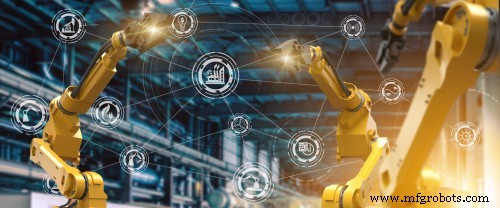
In today’s fast‑paced manufacturing environment, the term automation has evolved far beyond simple robotic assembly. While robots and automated lines have long boosted speed and consistency, the next wave—Industrial Internet of Things (IIoT) and Industry 4.0—offers a deeper, data‑driven transformation that keeps companies competitive.
IIoT vs. Industry 4.0
Although often used together, IIoT and Industry 4.0 are distinct concepts that complement each other. IIoT focuses on the wireless connectivity of factory equipment, while Industry 4.0 is the broader strategy that harnesses that connectivity for lean, intelligent operations.
To help you navigate these terms, we break them down into:
- Key similarities and differences
- Business and operational impacts
- The evolving role of automation and robotics in modern plants
What Are IIoT and Industry 4.0?
Both terms build on foundational ideas that emerged in the late 1990s. The original Internet of Things concept envisioned everyday devices communicating with each other and with servers. Industrial IoT adapts this idea for the manufacturing sector, connecting machinery to internal networks and the wider internet to collect actionable data.
Industry 4.0—a term coined by the German government—represents the Fourth Industrial Revolution. It highlights the fusion of advanced connectivity, big data analytics, and digital technologies to create smarter, more agile production systems.
How IIoT Powers Industry 4.0
IIoT supplies the raw data and real‑time connectivity that enable the broader Industry 4.0 vision. Without connected sensors, predictive maintenance, and cloud analytics, the transformative benefits of Industry 4.0 would not materialize.
Comparing the Two Concepts
Similarities
- Both aim to boost efficiency and profitability by streamlining processes.
- They rely on high‑speed, wireless connectivity to share data.
- Human expertise remains essential—automation amplifies, it does not replace, the need for skilled operators and data analysts.
Differences
- Scope: IIoT refers specifically to connected equipment and infrastructure, whereas Industry 4.0 encompasses the entire manufacturing ecosystem—including strategy, culture, and long‑term sustainability.
- Implementation vs. Vision: IIoT is a technology deployment (new sensors, retrofits, wireless gateways). Industry 4.0 is the overarching philosophy that drives how those technologies are integrated to achieve business goals.
While they serve different purposes, the synergy between IIoT and Industry 4.0 is essential for modern manufacturing success.
Partnering for Continuous Improvement
Adopting new technologies can be resource‑intensive. A dedicated maintenance partner—like ATS—can manage the deployment, monitoring, and upkeep of IIoT solutions, freeing your team to focus on core operations.
Whether you need a quick pilot, ongoing maintenance, or a fully integrated solution, ATS brings decades of collective experience to deliver tangible ROI.
Contact us today to learn how we can help your plant stay ahead in the Industry 4.0 era.
Industrial Technology
- Implementing Industry 4.0: Practical Steps for Machine and Component Manufacturers
- How IIoT Drives MRO Excellence in Industry 4.0: Part 1
- Industry 4.0: Building a Robust IIoT Ecosystem for the Future
- Industry 4.0 Explained: What It Means for Smart Manufacturing
- Industrial Internet of Things (IIoT): Definition, Scope, and Industrial Impact
- How 5G‑Enabled IIoT Drives Rapid Industry 4.0 Adoption
- Industrial Automation 4.0: Revolutionizing Production Efficiency
- Revolutionizing Hydraulics: How Industry 4.0 Drives Smart Manufacturing
- Optimizing Work Instructions for Industry 4.0: Enhancing Efficiency and Compliance
- Steel Industry Trends 2019: Market Overview & Future Outlook