



Stitch Welding vs. Seam Welding: Which Method Suits Your Manufacturing Needs?
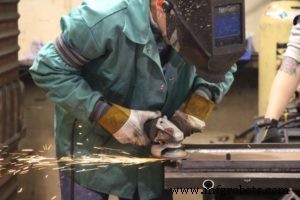
Don’t let the matter of stitch welding vs. seam welding confuse you. It’s an important concept both for engineers and welders who work in manufacturing settings, as well as businesses and professionals who depend on contract manufacturing for the delivery of products. Both stitch welding and seam welding have their advantages and disadvantages. To help you settle the stitch welding vs. seam welding debate in your shop or at your company, here’s a rundown of the differences, when you would use each and the advantages.
What Is a Stitch Weld?
Stitch welding is also known as intermittent welding. The reason for this name is that a stitch weld is not continuous along a joint. You’ll find gaps in stitch welding, which make it look like stitching. A stitch weld is not as durable as a seam weld because of these gaps. A stitch weld is most often used when the durability of a seam weld is not needed, or when you need to prevent heat distortion.
Among stitch welds, there are two common types: fillet welds and butt joint welds. Fillet welds are triangular and used to merge two surfaces at right angles. Butt joint welds are often used in merging welding pipes or tubes to other surfaces using a lap joint, T-joint or corner joint.
When you see a stitch weld callout, you’ll notice two numbers. The first is the length of each stitch in the weld, and the second is pitch – which is the distance from the centers of two stitches to the weld.
What Is a Seam Weld?
What we call seam welding is also known as continuous welding. Seam welds, like stitch welds, can be used to form fillet and butt joint welds – the only difference being that there are no gaps or spaces. Seam welds are far more durable than stitch welding because of the integrity of continuous seaming.
Given the durability of a seam weld, why would anyone choose to stitch weld? As mentioned above, a stitch weld is less intensive when it comes to time and money. If you don’t require the durability of a seam weld, a stitch weld will do just fine in less time. This is the main advantage of seam welding.
About Fairlawn Tool
When you need welding and comprehensive contract manufacturing services, count on the team at Fairlawn Tool. We offer turret punching, stamping, welding, robotic welding, fabrication, tube bending and other services so that we can be your go-to, one-stop shop for contract manufacturing. Our ISO 9001:2008 certification means quality is at the heart of everything we do. For service in Virginia, New York, New Jersey, Pennsylvania, Maryland and surrounding areas, trust our experience, knowledge and commitment to customers’ needs.
Contact us today about your contract manufacturing needs.
Industrial Technology
- Robotic Laser Seam Stepper Welding: Boosting Efficiency, Safety, and ROI
- Effective Strategies to Reduce Welding Distortion: 14 Proven Tips
- Understanding Welding Processes: Types, Techniques, and Applications
- Robotic vs. Manual Welding: Benefits, Drawbacks, and When to Choose Each
- The Essential Types of Welding for Modern Metalwork
- Brake Shoe Seam Welder: Expert Guide to Safe Welding
- Automatic Seam Welding Machine – Precision & Efficiency for High-Volume Seam Welding
- Welding Gases: Key Shielding and Fuel Solutions for Quality Welds
- Swanton Welding Expands Workforce: Careers in Fabrication & Welding
- Seam Welding vs. Stitch Welding: How to Choose the Best Technique for Structural Steel