



Ultimate Guide to PCB Surface Finishes: How to Choose the Best Option
PCB Surface Finish–One of the most critical aspects of the Printed Circuit Board (PCB) is the surface finish. The finishing applied in PCB determines its efficacy as well as longevity. But with quite some options available, how do you choose the ideal one? Read on to find out.
1. PCB Surface Finish—What is PCB Surface Finish?
A PCB surface finish is the coating between the bare printed circuit board and a component. PCBs have copper finishes that are susceptible to oxidization and deterioration if left unprotected. To this end, it becomes necessary to apply finishing for two crucial purposes:
• To protect the copper surface and circuitry
• To ready the surface for soldering associated components during assembly
Now let’s take a look at the specific surface treatments and the differences between them.
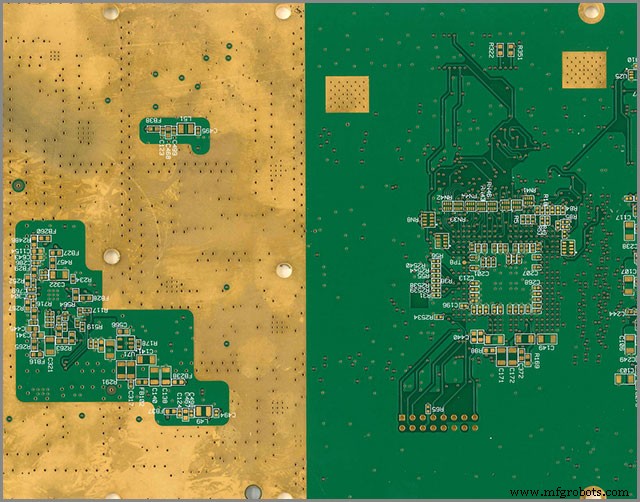
2. PCB Surface Finish—7 Types of PCB Surface Finish & Comparison
There are seven types of PCB surface finishes, and each comes with its advantages and shortcomings:
• Hot Air Solder Leveling (HASL)
HASL is the most common surface finish. It is also the most affordable. The application process involves dipping the PCB in a solution of molten solder and then blowing off the residue using a hot air knife. The resolution of molten solder is made of lead and tin alloys.
Advantages
The most significant advantage of HASL surface finishing is that it is economical. Other advantages include:
- It allows for a larger processing window
- It applies to a wide range of PCBs
- The provides for excellent solderability
Disadvantages
As mentioned, this surface finish involves dipping the board in a solution of molten solder made up of lead and tin. It makes it unsuitable for panels that demand RoHS compliance. This shortcoming is tied to other disadvantages that include:
- There is a difference in thickness between large and small pads
- Is not suitable for HDI products
- It causes bridging on fine pitch
- It is not suitable for BGAs and SMDs measuring less than 20mil in diameter
- Lead-Free HASL
Lead-free HASL is the most popular surface finish used on PCBs today. It is applied by immersing the PCB in a molten alloy lead, or tin alloy lead or tin alloy lead or tin alloy, which ensures that the entire surface is covered. Air knives are then used to blow off the residue for an even coating.
Advantages
One of the most significant advantages of lead-free HASL is that it exposes potential delamination issues by exposing the PCB to temperatures of about 2650C. Other advantages include:
- Is widely available
- It is eco-friendly
- Ensures durability
- It is re-workable
- It is affordable
Disadvantages
- May create thermal shock
- It may result in uneven surfaces
- Is not ideal for fine pitching
- It may bridge solders
- It reduces PTH (plugged-through holes)
- Immersion Tin (ISN)
Immersion Tin is the ideal surface finish for fine pitch products, planar, backplanes, and press fit. ISN is applied by initiating a chemical displacement reaction with the PCB’s copper surface.
PCB Surface Finish–Advantages
Immersion tin comes with a wide range of advantages that far outweigh its shortcomings. They include:
- creates an even surface, unlike lead-free HASL
- It can be reworked
- It can be substituted for reflowed solder
- Is highly reliable
- It is ideal for a wide range of PCBs
Disadvantages
Tin and copper have a strong affinity toward each other. It means that the diffusion of one of these metals into the other is inevitable. The result is a shorter shelf life when compared to most other PCB surface finishes. It may also limit the PCB performance. It is its most significant shortcoming. Other shortcomings include:
- not ideal for PTH
- Can be reworked, but to limited extents owing to its short shelf life
- It results in tin whiskering
- Can damage the solder mask
- It is difficult to handle and can result in a wide range of damages
- It may be unhealthy for handlers as it contains a carcinogen known as Thoreau
Cost of Immersion Tin
• Immersion Silver (IAG)
Immersion Silver has been widely popular since the WEEE and RoHS directive was passed. It is considered an excellent alternative to ENIG for several reasons, chief among them being that it is ideal for fine pitch. Immersion silver is mainly used for aluminum wire bonding, membrane switches, and EMI shielding.
Advantages
One of the main advantages of immersion silver is that it contains OSP, which prevents tarnishing. However, this also makes it necessary for the PCB to be packaged immediately after application as OSP is sensitive to contaminants on the board advantages of immersion silver include:
It is compliant with RoHS directives and requirements
- Suitable for fine pitch
- The moderate shelf life of about 12 months
- Highly stable when compared to other surface finishes
- Ideal for planar
- It is affordable and cost-effective
PCB Surface Finish–Disadvantages
As mentioned earlier, the presence of OSP makes immersion silver susceptible to tarnishing, which is its most significant shortcoming. Other shortcomings include:
- It may result in silver whiskering
- It is not suitable for compliant-pin interaction as it has a high fraction co-efficient
- Some of its systems cannot throw into micro vias aspect ratios of 1:1
- Electroless Nickel Immersion Gold (ENIG)
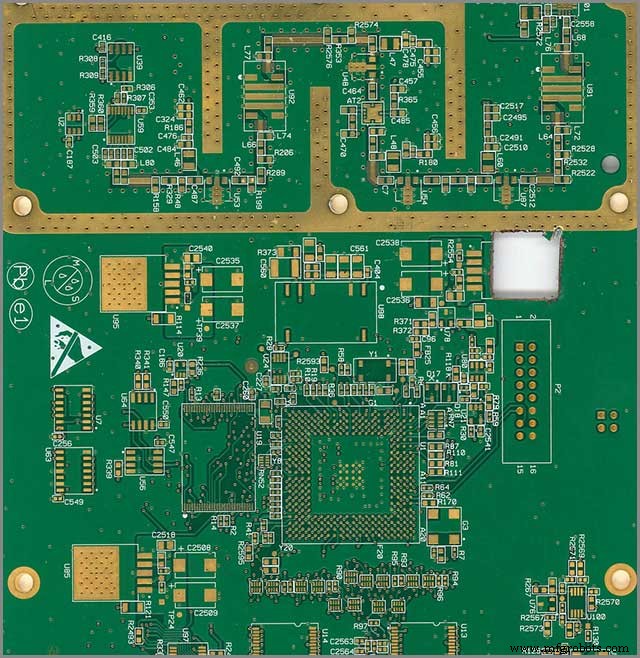
Electroless Nickel Immersion is fast becoming popular in the PCB industry as it overcomes many of the significant shortcomings associated with other surface finishes. ENIG has a two-part application process. First, a nickel layer is applied to serve as both a barrier to the copper and a suitable surface on which components can be soldered. Another layer of gold is then used to protect the nickel layer for the time during which the board is in storage.
PCB Surface Finish–Advantages
The most significant advantage of ENIG is that it is ideal for the new and upcoming generation of complex surface components, including flip chips and BGAs; other surface finishes have shortcomings that limit their application in these new boards. Other advantages include:
- Is ideal for flat surfaces as the layers of nickel and gold as thin and even
- It does not contain lead
- Ideal for PTHs
- It has a long shelf-life
Disadvantages
houghAlthoughAlthoughAlthough ENIG has a long shelf-life, it has also been associated with the “black pad syndrome,” a common problem that leads to the buildup of phosphorus between the layers of nickel and gold, thus resulting in fractures well as faulty board connections. The only other major disadvantage is that it is not ideal for reworking.
• Nickel Palladium (ENEPIG)
Nickel Palladium (ENEPIG) PCB surface finishing is an upgrade of ENIG. In ENIG, immersion gold has been shown to destroy the layer of nickel. ENEPIG introduces a layer of plating palladium between the layers of gold and nickel.
Advantages
ENEPIG has been dubbed the ‘universal finish’ because it applies to many modern, highly advanced boards with multiple surface packages. It comes with a range of advantages that include:
- It makes for a flat surface.
- Easy to process
- It doesn’t have a toxic effect on the skin.
- It doesn’t contain lead.
- Ideal for multiple reflow cycles
- It is highly compatible with Sn-Ag-Cu solders.
- It has a long shelf life.
Disadvantages
- It often results in the occurrence of black pad
- It reduces solder joint reliability
- The layer of palladium is too thick to support solderability performance
- Takes longer to wet compared to other surface finishes
- It is affected by plating conditions
- It is expensive compared to most other surface finishes
OSP (Organic Solderability Preservative)
OSP is an organic, water-based surface finish. It is selective in its bonding with copper, and it also makes the PCB solderable.
PCB Surface Finish–Advantages
OSP surface finishing is notable for its environmental-friendliness since it is organic and water-based. It also makes it easy to apply, and the process is relatively short and straightforward compared to other surface finishes. Its advantages include:
- Provides an even, co-planar surface
- Requires low equipment maintenance
- It does not contain lead
- It is repairable
Disadvantages
OSP is organic and water-based, makingngngng it quite sensitive to damages when handling. It is tied to several other shortcomings:
• It has a short shelf life
• It is terrible for PTH
PCB Surface Finish–How to Choose PCB Surface Finishes
The differences in these types of PCB surface finishes make them suitable and unsuitable for specific uses. To this end, anyone looking to apply the ideal surface finish should consider several factors:
• PCB Surface Finish–Pad Flatness
As mentioned severally, some surface finishes result in uneven surfaces that may impede performance, solderability, and other factors. If flatness is an important factor, consider surface finishes that have thin, even layers. Suitable options, in this case, include ENIG, ENEPIG, and OSP.
• Solderability and Wettability
Solderability is always a crucial factor when working with PCBs. Specific surface finishes such as OSP and ENEPIG have been shown to hinder solderability, while others such as HASL are ideal for it.
• Gold or Aluminum Wire Bonding
If your PCB requires gold or aluminum wire bonding, your options may be limited to ENIG and ENEPIG.
• Storage Conditions
As mentioned, some surface finishes such as OSP make PCBs fragile when handling while others improve durability. It should be considered beforehand when taking into consideration storage and handling requirements. Only when risk-free storage and handling requirements can be met, Surface finishes that make PCBs delicate should be applied.
• Solder Cycles
How many times will the PCB be soldered and reworked? As shown, many surface finishes are ideal for reworking. Others such as immersion tin, however, are not ideal for reworking.
• PCB Surface Finish–RoHS Compliance
RoHS compliance is crucial when determining the surface finish to go with. Usually, all surface finishes that utilize lead are not suitable for RoHS compliance and should be avoided.
Conclusion
As outlined, each type of surface finish has unique elements that set it apart from the rest. These elements make these finishes both suitable and unsuitable for specific applications, and the ideal option ultimately depends on the PCB’s makeup.
At WellPCB, we have vast experience with PCB boards and surface finishes. Get in touch to learn more about the different types of PCB surfaces and more! We would love to help you come up with the ideal surface finishing for your PCB.
Industrial Technology
- Understanding Shaft Fits: Three Types and How to Pick the Right One
- Selecting the Right PCB Manufacturer: A Practical Guide for Quality & Reliability
- Choosing the Right Compactor: A Comprehensive Guide to Efficient Waste Management
- Selecting the Ideal Crane: Expert Tips for the Right Choice
- Single‑Sided PCBs: A Comprehensive Guide to Cost‑Effective Electronics Design
- PCB Art: The Complete Guide to Superior Design, Cost Efficiency, and Cutting-Edge Performance
- Choosing the Best HDI PCB Manufacturer: A Trusted Guide
- HDI PCB Design: The Definitive Guide to Achieving Optimal High‑Density Interconnects
- Choosing the Perfect Motor Driver: A Comprehensive Guide
- Mastering Surface Finish: A Guide to Surface Roughness and Its Impact