



Flexible Circuit Solutions: Boosting PCB Production Quality & Cost Efficiency
With the development of science and technology, the flexible circuit has become more common. This article focuses on the applications and advantages of flexible circuitry and compares them with other materials’ PCB boards. Help readers understand the flexible circuitry more.
PCB manufacturers around the globe aim at producing quality products at a low cost. For that reason, most of them are turning to the Flexible circuit. And, since there are many PCB producers, their product’s quality determines who is the best. We can solve this as this article aims to educate you on what flexible circuits are, different types of flexible courses, and availability in the market.
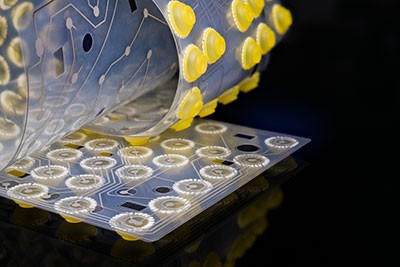
(A flexible circuit board)
1.Application areas of flexible circuitry
- Static application: Static application is when you install a flex circuit to fit the specific application. You can identify it as flex to fit in as it bends once.
- Dynamic Flexure Application: It is where you bend the application many times. Flexible circuits act as connectors. You can use them as resistors, integrated circuits, or capacitors. In some cases, you can use them for making electronic assemblies.
Also, in computers, you can use them in moving the print head of printers to move the read and write head of disk drives. In electronic devices, flexible circuits play a broad role in cameras, calculators, cell phones, LCD televisions, entertainment devices, and monitors.
2.The main types of flexible circuits
- Single-sided flexible circuit-These are the basic flexible circuits and have only one layer of metal traces of a dielectric layer. To protect the dielectric layer from environmental degradation, you have to add a polyimide overlay. The polyimide also helps in insulation.
- Double-sided flexible- This is the circuit that contains two conductive layers on both sides of the dielectric layer. To make connections, you have to materialize on the two layers in the circuit through holes.
- Multi-layer flexibility-It is a circuit that combines ends of single-sided or double-sided PCB by adhesive. Here the central part is not bonded together like other circuits. The multi-layer flexible circuit contains 4-8 copper layers that enclose with a dielectric layer connected through holes.
- The rigid, flexible circuit-These are circuits that contain many layers of flexible and rigid circuits. They are flexible in design options and highly reliable.
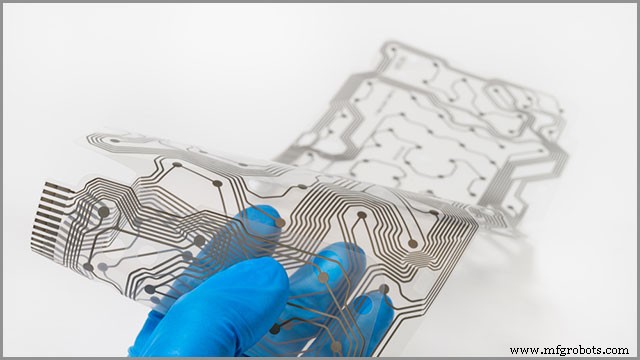
( a typical flexible circuit)
3. Common materials used in flexible circuits
- Conductor: These are the devices or materials that connect the electric current from one point to another. When it comes to flexible circuits, copper is one of the most used conductors. Other devices consider using carbon, silver ink, and aluminum.
- Adhesive: These are the components used in surface mounting and binding as they stick. When it comes to adhesives to use, you need to consider the thickness of the conductor. Some flexible circuits are adhesive less, such as acrylic, pressure-sensitive adhesives, and epoxy.
- Insulator: These are the devices we use to separate the electrical conductors but do not conduct current themselves. At times you can use them as support. Some of the Insulators you can use are; polyester, polyethylene terephthalate, solder mask, and polyimide.
- Surface treatment: The surface treatment offers resistance to the circuit from environmental attacks such as high-temperature and oxidation. The surface treatment of the circuit depends on the material that finishes it. Most finishers you can use are tin, solder, silver, and gold.
4. Advantages of flexible circuits
There are several advantages associated with flexible circuits. Let’s explore them below.
- Reduce assembly errors:Flexible circuits reduce assembly errors since their design is accurate. Also, its production is automatic, thus giving the user one of the best experiences.
- Lower cost: In making flexible circuits, you use improved materials, which is less than it was in the past. These reduce the time and cost of producing the circuit.
- Flexible design: Flexible circuits have a plan meant to offer a smaller package that meets all users’ needs.
- High-density applications: Flexible circuits have the best design to fit any application, be it static or dynamic. This feature makes them the best fit for any organization in the medical field, ICT, manufacturing, etc.
- Volume and weight: Through high technology currently, the manufacturers flex circuits of thin substrate materials. The materials are as low as 0.004 inches, which also reduces the package size. Flexible circuits are less in size compared to the traditional PCBs.Designed to fit where another solution is not viable: The design is so simple and less in length, making it the best circuit to consider using.
- Reduce vibration:Due to the circuits’ flexible nature, and they reduce any vibration effects that all environmental conditions may bring in the connector.
- Suitable for harsh environments: Due to the thickness of the circuit, heat dissipation increases. This increase allows the flow of cooling air, which makes the circuit better for anyone to use.
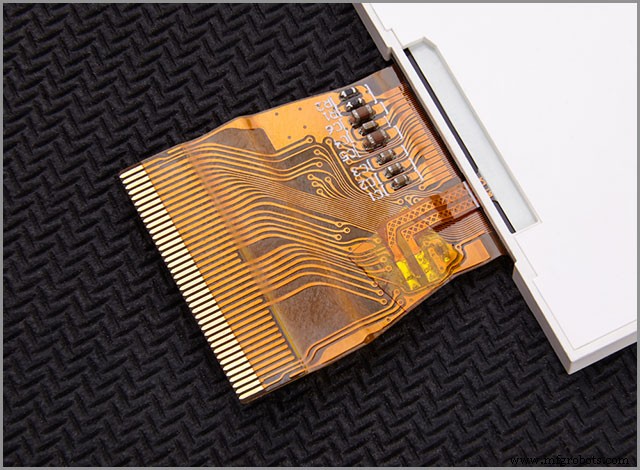
(ease of use of flexible PCB)
5. Features of the flexible circuit
- Operating characteristics:A flexible circuit is the best choice for a connection due to its weight and volume. Its relationship is lower than that of wiring alternatives that one can consider using. Due to its flexibility, the flexible circuit connects different components that operate with varying cycles of motion.
- Reliability:Due to its unique design, the flexibility circuit gives you a reliable circuit to use. A Flexible circuit has a reduced number of soldering terminals and jars. If you expose the joints strain to shock, a flexible circuit can decrease mainly due to the flexible circuit nature. You can easily package flexible circuits and hence reduce the risk of damage.
- Cost-effectiveness :Flexible circuits have a more identifiable conductor path that lowers the circuit’s assembly and installation expenses. Also, the cost of materials contributes to lowering the cost of the flexible circuit. You can reduce the cost of materials in the following three aspects.
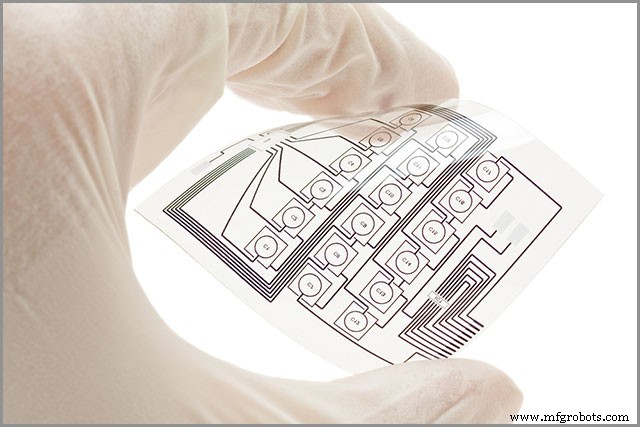
(Flexible PCBs are highly reliable)
6. Advanced functions of the flexible circuit
- Heat sink-The heat sink is a device that a PCB maker uses to absorb excessive heat. In the flexible circuit, this circuit is essential and will always help to absorb the excess heat.
- Controlled impedance-It refers to the propagation of signals in a flexible circuit without distortion. Controlled impedance is excellent when it comes to signal integrity. It is applicable when high-frequency signals propagate transmission lines.
- Crimp pin -When there is a need to cut stranded wires in the flexible circuit, a crimp pin is the best to use as it is solderless.
- Graphic overlay -It is the act of adding an extra layer of protection to a circuit to prevent it from environmental effects.
- Laser-cut slots and holes -You should place the holes away from the bends for as low as 2.5 times the material’s thickness. The spaces should be four times.
- Over molding -It is a situation whereby you bold two materials together. When it comes to a flexible circuit, you integrate mechanical bonding.
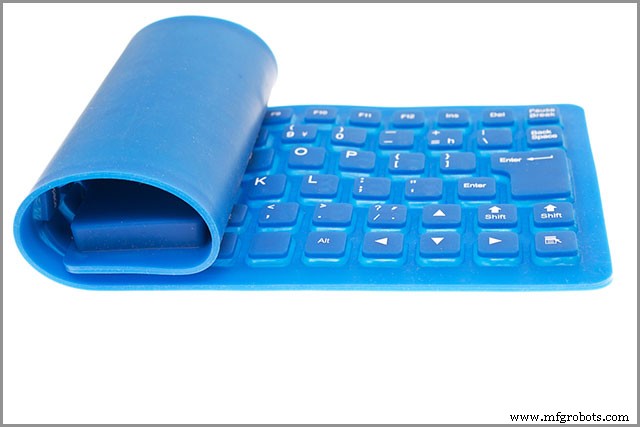
(A typical function of the flexible circuit)
7. Rigid-flex PCB vs. rigid and flexible PCB
Rigid-flex PCB takes charge of the flexible materials contained in the flexible PCB. It then incorporates them with rigid materials, thereby maintaining the strength and densities of both. With the hybrid, there is much possibility of a more challenging design in the market. Right flex PCBs have an excellent method in a manner that they are eliminating the flexible cables and the connectors from electric design.
When it comes to performance, the rigid-flex PCBs perform better. They have a more improved design with excellent reliability and connectivity. They have the best packaging in terms of weight and application; thus, their cost is a bit high compared to other PCBs.
The following are the areas upon which rigid-flex PCBs are applicable:
- Highly reliable applications: When it comes to excessive or repeated shock in the assembly, those connectors who use flexible cables have high chances to fail. Also, when exposed to a very high vibration environment, there are chances it will fail. When it comes to rigid-flex PCBs, they have more excellent reliability and offer extreme shock.
- High-density applications: An electronic PCB design requires a large enclosure to accommodate the connectors and cables needed for the operation. The flexible PCB and rigid PCB are at a point impossible for this operation. The rigid-flex can fold into a small profile that would save space in such a situation.
- Need more rigid board: When you need more than five rigid connected, flexible cables are not the best choice. Rigid-flex will do best at a cost-effective price.
Summary
Flexible circuits are lightweight and can change into different shapes and conform to small spaces. They are of three types, single-sided, double-sided, and multiple-sided. Flexible circuits are better compared to rigid PCBs and do away with bulky wires and also solder connections. They are also very light and save on both cost and space. You apply them in the medical field, electronic entertainment devices, and robotics. It would help if you were careful and considerate when you are choosing the flexible circuit.
After this article, you can keep in touch with us as we will be providing you with more content about flexible circuitry. We are always on top of research every change made in the field of circuitry. So, be sure that we will not hesitate to inform you when new changes will make your design life easy.
Industrial Technology
- Rigid vs. Flexible PCBs: Choosing the Right Circuit Board for Your Project
- How Environmental & Manufacturing Factors Damage Flexible PCBs
- Short-Circuit Protection: Essential Guide for Reliable PCB Design
- Managing PCB Board Costs: How to Control and Calculate Prices
- Essential Guide to Electronic Components: Functions & Types
- Why Every PCB Needs Conformal Coating: 7 Key Benefits
- Essential Semiconductor Device Fundamentals: 6 Key Concepts You Must Master
- Mastering RoHS 2 Compliance: A Guide to Producing Environmentally Safe PCB Products
- Flexible Resistors Explained: A Comprehensive Guide for Electronics Projects
- 4‑Layer PCBs Explained: Key Insights for Advanced Circuit Design