



How Bosch’s Open‑Source Transformation Powers IoT Innovation – Lessons for Your Business
Since the rise of the Internet of Things (IoT), many legacy firms are embracing open source—surprising the software sector, which once felt it alone owned the field. The challenge now is how traditional companies can sustain and foster this openness while still protecting their core assets.
Bosch and open source: the journey so far
Kai Hudalla
Long before IoT entered the mainstream, Kai Hudalla was pioneering IoT solutions at Bosch across smart home, energy management, e‑mobility, and automotive. He remains an active contributor to several Eclipse IoT projects, most notably the Eclipse Hono initiative, which connects millions of devices to the cloud. A regular conference speaker, Kai balances his technical work with a love of cooking and golf.
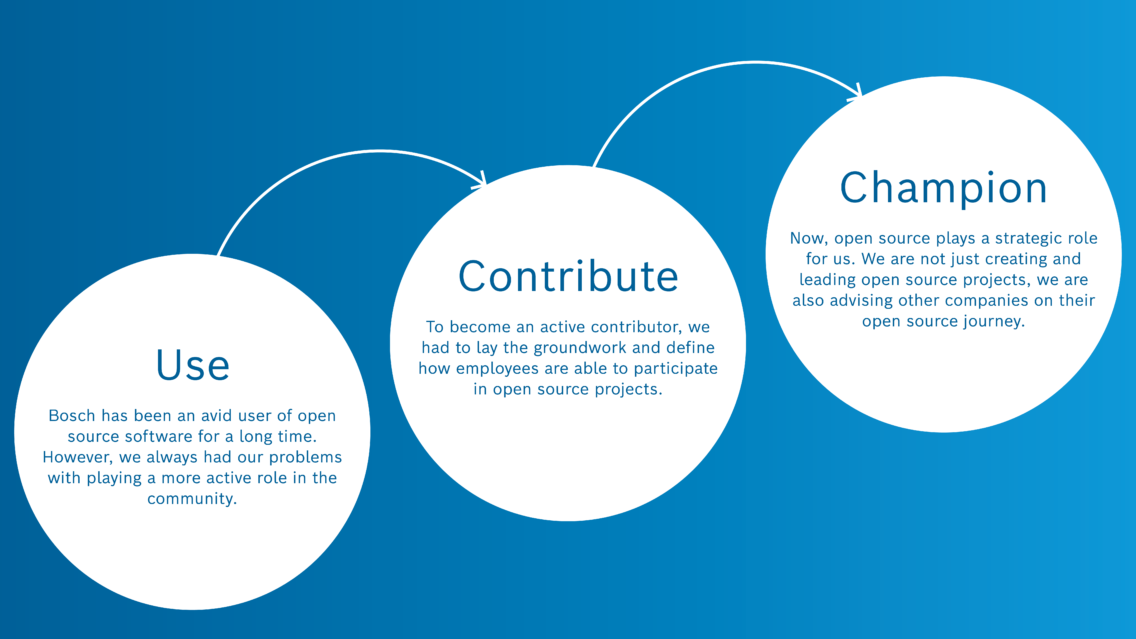
Bosch has historically benefited from open‑source software, yet early on it struggled to play a more active community role. Concerns ranged from legal and quality issues to potential delays in product development. Despite these hurdles, Bosch stepped up its engagement about five years ago, launching Eclipse projects that align with its core interests, including the Bosch IoT Suite—a cloud‑native IoT platform whose core is built on open‑source components.
The company’s overarching goal is independence from proprietary platforms offered by major vendors. By shifting from proprietary software to open‑source foundations, Bosch ensures its IoT business remains resilient and technology‑agnostic.
Impact of an open‑source strategy
Adopting open‑source development reshapes a company’s entire value proposition. For Bosch, the open source nature of the IoT Suite meant the company could no longer rely solely on software license sales. Instead, it offers the suite as a professional Software‑as‑a‑Service (SaaS) platform, where customers subscribe and pay for cloud-hosted services.
When releasing source code publicly, Bosch still safeguards its “crown jewels” by ensuring that any commercial-only features build upon open‑source projects. No essential function is omitted from the open‑source base that could only be accessed via a paid add‑on.
Moreover, Bosch recognizes potential friction between corporate priorities and the open‑source community’s goals. While the company may have its own roadmap, community input often provides fresh perspectives and innovative solutions.
Building the right foundation
Dr. Steffen Evers
Dr. Steffen Evers, director of open‑source services at Bosch.IO, leads a team that develops and supports essential open‑source components, and advises on strategy, community engagement, and compliance. With nearly two decades of experience in OSS advocacy, he has guided numerous firms toward successful open‑source integration.
In 2014, Bosch began formalizing its open‑source approach by drafting a set of clear rules—defining approval workflows, required training, and risk mitigation. These policies were designed to be practical: developers could contribute without being bogged down by excessive bureaucracy.
By 2015, Bosch had secured its status as a Strategic Member of the Eclipse Foundation, having already laid the groundwork for collaboration on projects like Eclipse Hono. Early partnerships with other industry players reinforced Bosch’s commitment and avoided the perception that it was merely open‑ sourcing proprietary code.
Sector‑level effects
1. Developers
Who is using Eclipse IoT?
Discover the companies accelerating the adoption of production‑ready, commercial‑grade open‑source technologies within Eclipse IoT.
Developers now collaborate beyond company boundaries, learning from peers worldwide. With visibility comes responsibility: contributions are publicly attributable, inviting constructive critique and the need for patience when addressing questions.
2. Sales
Sales pitches shift focus from proprietary features to the benefits of openness, independence, and adaptability. In an ecosystem where many products share similar functionalities, the value proposition centers on how the software can be customized and integrated.
3. Marketing
Marketing narratives must foreground the open‑source projects underpinning commercial offerings. The strategy begins with the open‑source ecosystem, then links to how specific applications are tailored for clients—highlighting lower implementation costs and greater flexibility.
A complex but rewarding journey
Bosch IoT Suite rated “best in class”
According to the latest PAC RADAR report on IoT platforms, the Bosch IoT Suite earned a “best in class” rating.
Transitioning from an open‑source user to a champion involves incremental steps: from reporting bugs to contributing fixes, then to developing features, and eventually to leading and maintaining your own projects. This evolution demands adaptation across business models, corporate processes, and sectorial workflows.
Despite the effort, the payoff is significant. If Bosch can navigate this path successfully, any organization can replicate the model.
Learn more about the report here.
Industrial Technology
- What Materials Can Be Cut with a Fibre Laser?
- Understanding Equipment Failure – Prevent It Before It Happens
- How Reliable Are Used CNC Machines? A Trusted Buying Guide
- RapidDirect: Reliable Quality Assurance for Precise Rapid Prototyping
- Counterfeit Crisis: Global $250B Infographic
- PLA (Polylactic Acid): Biodegradable, Compostable, and Cost‑Effective Sustainable Plastic
- Can You 3D Print on Glass? Expert Guide to Glass Print Beds
- How to Sandblast 3D Prints for a Professional Finish
- 3D Printing with Carbon Fiber: How and Why It Works
- 3D Printing Silicone: Feasibility, Techniques, and Applications