



Mastering Bend Reliefs: When and How to Add Them in Sheet Metal Parts
Take a piece of paper and try to fold just the middle inch of it to form a flap. You can’t do it because the rest of the paper wants to fold up, too. To do it, you need a way to ensure that only the one-inch width of paper can fold and leave the rest as a single, flat plane. But sheet metal stretches when it is bent, drawing on material around it to achieve the desired deformation needed to produce a geometry. If you bend a flange without a relief, that stretching is going to pull material from the area adjacent to the bend causing unsightly deformation and tearing. That’s why a bend relief is so important.
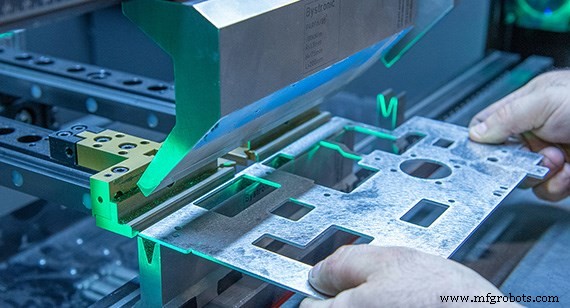
What is a Bend Relief?
A bend relief is nothing more than two small incisions cut into a piece of sheet metal to free the metal between the two. It separates the material you want to be able to fold from the rest of the part. You only need it when there is material on either side of a bend. A punched or lazed feature such as a hole or cutout can act as a bend relief if it is too close to the bend causing part of the cutout to deform or tear where the opposite side is flush with the flat. To avoid creating unintentional bend reliefs, make sure your hole features are at least 2-3x material thickness away from the bend region.
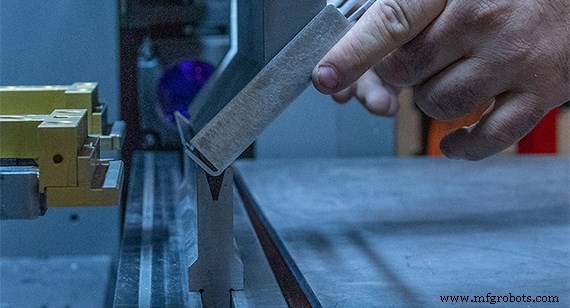
When to Use Bend Reliefs
A bend relief prevents tears from occurring where there is a transition between bends or between a bend and a flat surface. They are a great way to ensure a clean looking part that is free from deformation, burrs, and sharp points where the bend edges terminate. This is doubly important if your part is subject to vibration or flexion as the tears and cracks created by unrelieved bends will tend to propagate rapidly. Using round reliefs instead of reliefs with square corners will also help to reduce tear and crack propagation. Ultimately, well-designed bend reliefs create a part that is stronger, more stable, and attractive.
Bend Relief Advantages
Adding a bend relief:
- prevents tearing and deformation of your part caused by a press brake. No tears means the part that’s safer to hold, easier to manufacture, more durable, and will yield a better looking, customer-friendly part when manufacturing is complete
- separates bent and unbent elements of your part. Isolating the bent portion of your part makes it more durable and attractive
- ensures forming accuracy. Bend reliefs give the press brake operator some wiggle room with tool placement. Erring on the side of caution by using a wide bend relief will go far to make the press brake operator’s job easier, safer, and more accurate. This can translate to cost savings, particularly when you move to higher volume production, as forming setup and run time will be reduced.
How Do I Add a Bend Relief in Designs?
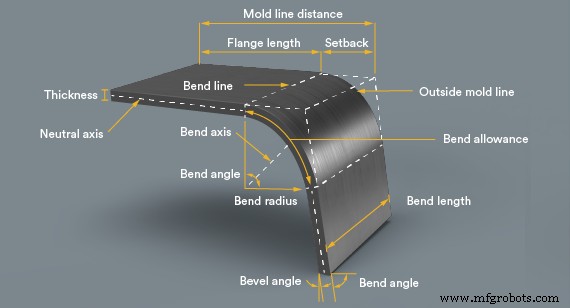
We often see designs come to us that don’t include bend relief. To ensure that we can successfully create your part, we add relief to your design. If you want to save time and money, it’s easy for you to add it yourself. Just add a cutout of at least 0.030 in. (0.762mm) wide and at least 0.015 in. (0.381mm) beyond the end of the bend radius on either side of the area of your part that you want bent. Check out the illustration for some guidance. With a 90-degree bend, the equation for your bend relief should be: Material Thickness + Bend Radius = Bend Relief, or, 0.10 in (2.54mm) + 0.030 in. (0.762mm) = 0.13 in. (3.302mm).
This tiny adjustment to your CAD model can mean the difference between failed and successful part fabrication.
Industrial Technology
- Master Sheet Metal Design: Proven Tips & Tricks for Faster, Cost‑Effective Production
- Brazing Explained: Join Metal Parts Safely and Effectively
- Cut Costs on Custom Sheet Metal Enclosures, Parts & Panels – Expert Tips & Proven Strategies
- How Grain Size and Orientation Affect Sheet Metal Performance
- Galvanization Explained: How Zinc Coatings Extend the Life of Metal Parts
- Sheet Metal Explained: Uses, Materials, and Fabrication Techniques
- Mastering Tube Bending: When and How to Use Bent Tubing for Optimal Performance
- Revolutionize Sheet Metal Bending with Robotics: Boost Efficiency & Safety
- Mastering Sheet Metal Notches & Tabs: Design Tips for Precision Parts
- Choosing the Right Bond: Welding vs. Riveting for Sheet Metal Assemblies