



Essential Guide to Milling Cutter Types for Precision Machining
Today we will learn about types of milling cutters used in mechanical industries. Milling machine is a versatile machine on which we can perform most of machining operations. It is used to machine various shapes and size. Milling cutters are used to perform these operations. There are various types of cutter which are responsible for proper machining on milling machine. A small description of all of them are given below.
Types of Milling Cutters:
1.End mill:
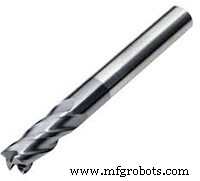 It has both side teeth so it can be very successfully used in drilling operation. The word “end mill” is generally use to refer flat bottom cutters. The basic difference between drill bit and end mill cutter is that the drill bit can cut only in axial direction but this cutter can cut in all directions. This cutter has one or more flutes and mostly used in end milling operation. It is made by High speed steel or harder material. This cutters mainly available in two types. The first one is known as center cutting in which the cutter has cutting edges on both the side and the other one is non center cutting edge in which the cutting edge is only in one side.
2.Roughing end mill:
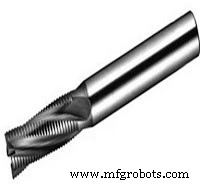 Roughing end mills are also knows as “rippa” cutters. This cutters gives superlative performance in hardest operating condition. As the name implies it is used to remove large amount of material. This kind of cutter utilizes a wavy tooth from. These cutters forms very small chips which results rough surface finish.
Some features of Rough End Mill Cutter are
- Optimum performance
- Super Quality
- Anti-corrosive
- High straight
3.Ball nose cutters:
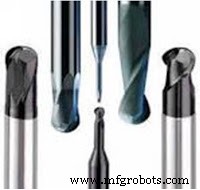 Ball Nose Cutter is manufactured from qualitative carbide rods. As the name implies this cutter has ball like shape at its nose which make it able to cut three dimensional shapes very effectively.
- Sturdy nature
- Low maintenance
- Rust resistance
- Longer life service
- Easy to use
4.Slab mill:
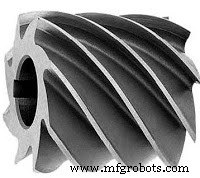 This type of cutter is best in quality and can be bought from market with sharp edges. Moreover to this, these milling cutters are light in weight and can be used safely for longer years. This cutter is used to remove large material from a slab or machining a large surface. It can be used with both horizontal and vertical or universal milling machine.
- Available in different sizes.
- Hassle free installation.
- Sharp edges.
5.Side & face cutter:
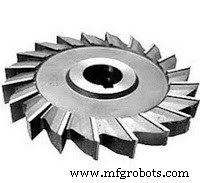 Side or face cutters are manly used to cut slot. This cutter has teeth both its side and circumference. It is available in varying diameters and widths depend on application.
6.Hob cutter:
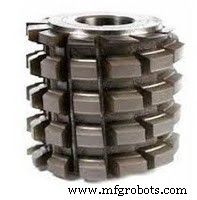 Hob is machine process of gear cutting. A cross section of the cutter tooth will generate the require shape on the work-piece. Hob cutter is specialist milling machine which is widely use in automobile industry. It is manufactured from prime grade material which insure high durability and functionality. These are manufactured with quality control process.
7.Face mill:
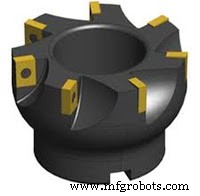 As the name implies, this tool is used to perform facing operation on any work piece. Facing is an operation in which large surface area machined to create large flat area. This tool has large diameter which is used to perform a facing operation. This device is manufactured by top quality component which ensure its high tensile strength robustness and maximum durability. Mostly 45 degree lead angle cutters are used for this purpose.
There are some feature of this cutter:
- Dimensional accuracy
- Corrosion Resistant
- High strength
- Robust Construction
- Abrasion Resistant
8.Fly cutter:
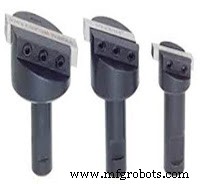 It is a cutting tool set transversely and revolving with the arbor of a lathe and acting upon work fed into its circular path.A fly cutter is composed of a body into which one or two tool bits are inserted. As the entire unit rotates, the tool bits take broad, shallow facing cuts. Face mills are more ideal in various respects , but tend to be expensive, whereas fly cutters are very inexpensive.
9. Woodruff cutter:
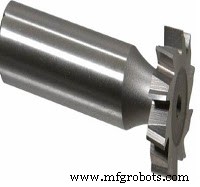 Woodruff cutters are used to make the seat. It is slightly hollow ground on the sides for relief and the teeth are not side cutting. The teeth come in both straight and staggered varieties. These qualitative cutters are widely use in order to make key seats in shaft of various shapes and sizes.
Here are some feature about Woodruff Cutter:
- High performance
- Long service life
- Ease of use
10. Hollow mill:
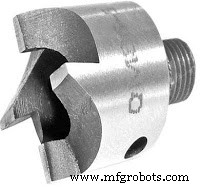 Hollow milling cutters, more often called simply hollow mills, are essentially “inside-out end mills”. They are shaped like a piece of pipe, with their cutting edges on the inside surface. They are used on turret lathes and screw machines as an alternative to turning with a box tool, or on milling machines or drill presses to finish a cylindrical boss.
This is all about types of milling cutters. If you have any query regarding this article ask by commenting. If you like this article, don’t forget to share it on social networks. Subscribe our website for more informative articles. Thanks for reading it.
Manufacturing process
- Laser Engraving Explained: Cutting, Concave, and Convex Techniques
- Milling Machines: Types, Functions, and Applications in CNC Manufacturing
- Mastering CNC Milling: A Comprehensive Guide for Precision Machining
- Explore 15 Essential Milling Machine Types for Precision Metalwork
- Discover the Key Types of Milling Machines for Metal Machining
- Comprehensive Guide to Milling Cutters: Types & Applications
- Thread Milling Cutters: Superior Performance and Versatility
- Understanding the Four Fundamental Welding Positions
- Types of Milling Machines: Choosing the Right Tool for Your Project
- Exploring the Diverse Range of CNC Machines: Types, Functions & Applications