



Electrical Discharge Machining (EDM): How It Works & Why It Matters
What is Electrical Discharge Machining (EDM)?
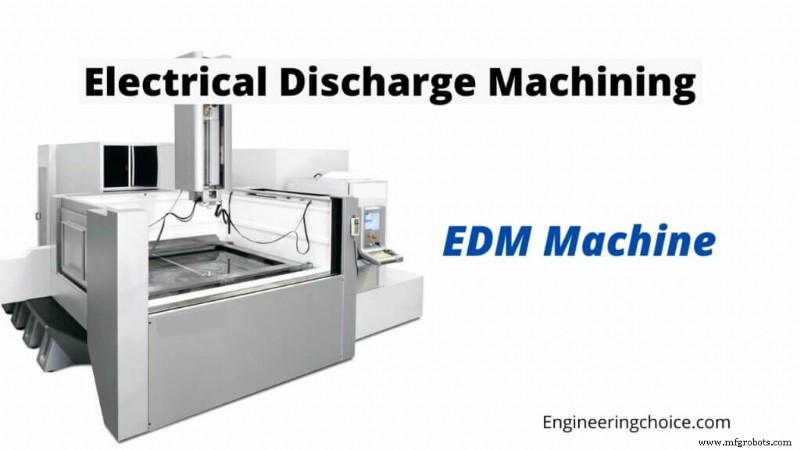
Electrical discharge machining (EDM) is a non-traditional machining process based on removing material from a part by means of a series of repeated electrical discharges between tools, called electrodes, and the part being machined in the presence of a dielectric fluid.
Electrical discharge machining (EDM), also known as spark machining, spark eroding, die sinking, wire burning, or wire erosion, is a metal fabrication process whereby a desired shape is obtained by using electrical discharges (sparks).
Material is removed from the workpiece by a series of rapidly recurring current discharges between two electrodes, separated by a dielectric liquid and subject to an electric voltage.
One of the electrodes is called the tool-electrode, or simply the tool or electrode, while the other is called the workpiece-electrode, or workpiece. The process depends upon the tool and workpiece not making physical contact.
When the voltage between the two electrodes is increased, the intensity of the electric field in the volume between the electrodes becomes greater, causing a dielectric breakdown of the liquid, and produces an electric arc.
As a result, the material is removed from the electrodes. Once the current stops (or is stopped, depending on the type of generator), the new liquid dielectric is conveyed into the inter-electrode volume, enabling the solid particles (debris) to be carried away and the insulating properties of the dielectric to be restored.
Adding new liquid dielectric in the inter-electrode volume is commonly referred to as flushing. After a current flow, the voltage between the electrodes is restored to what it was before the breakdown so that a new liquid dielectric breakdown can occur to repeat the cycle.
Working of EDM Machine
Electrical Discharge Machining (EDM) is a controlled metal-removal process that is used to remove metal by means of electric spark erosion. In this process, an electric spark is used as the cutting tool to cut (erode) the workpiece to produce the finished part to the desired shape.
The metal-removal process is performed by applying a pulsating (ON/OFF) electrical charge of high-frequency current through the electrode to the workpiece. This removes (erodes) very tiny pieces of metal from the workpiece at a controlled rate.
EDM Process
EDM spark erosion is the same as having an electrical short that burns a small hole in a piece of metal it contacts. With the EDM process, both the workpiece material and the electrode material must be conductors of electricity.
The EDM process can be used in two different ways:
- A preshaped or formed electrode (tool), usually made from graphite or copper, is shaped to the form of the cavity it is to reproduce. The formed electrode is fed vertically down and the reverse shape of the electrode is eroded (burned) into the solid workpiece.
- A continuous-travelling vertical-wire electrode, the diameter of a small needle or less, is controlled by the computer to follow a programmed path to erode or cut a narrow slot through the workpiece to produce the required shape.
Types of EDM Machines
1. Wire or “Cheese Cutter” EDM
Wire EDM machine uses a wire electrode and CNC movement to produce the desired shape or contour. This technique removes the conductive material using spark erosion, which is the primary principle of the EDM process.
The wire travels from a spool through precision wire guides controlled in motion by the CNC. Flushed with dielectric (deionized water) to both cool the thin wire and remove the eroded particles a wire EDM can be thought of as a very precise and accurate bandsaw.
2. Drill or Hole Popper EDM
This EDM machine is used to make small holes in a metal piece. The machine utilizes a conductive tube as an electrode and a seamless flow of dialect fluid through and around that electrode to flush out the vaporized metals.
The machine’s ability to drill accurate and precise holes, even on hard and exotic material, remains one of the forward-looking development fabrication industries.
3. RAM or Sinker EDM
Being the oldest form of EDM machining, RAM EDM consists of a specially shaped electrode that is plunged into a workpiece to create sophisticated cuts and blind shape cavities.
As the name suggests, in Sinker EDM machines, both the workpiece and electrodes are dipped in the dielectric fluid (lightweight and viscosity oils) and through the correct powered generator for the desired results to be achieved.
EDM is Used in Manufacturing
With its ability to create precise and unique shapes, EDM has been used by many industries in their manufacturing processes. Here are the most common types of applications for EDM.
- Die Making: Dies are tools used to cut or shape materials into a solid product. EDM is used to create these dies, despite the size or commonness of the shape needed.
- Mold Making: Molds are containers that transform liquid or substance into the shape of the container. A mold’s dimension and depth are achieved with use of EDM.
- Small Hole Drilling: Without EDM, drilling small holes would be difficult. EDM’s ability to create small shapes accurately makes it ideal for drilling the exact size of holes needed.
- Prototype production: The EDM process is most widely used by the mold-making, tool, and die industries, but is becoming a common method of making prototype and production parts, especially in the aerospace, automobile and electronics industries in which production quantities are relatively low.
Advantages of EDM Machine
- Ability to machine complex shapes that would otherwise be difficult to produce with conventional cutting tools.
- Machining of extremely hard material to very close tolerances.
- Very small work pieces can be machined where conventional cutting tools may damage the part from excess cutting tool pressure.
- There is no direct contact between tool and work piece. Therefore, delicate sections and weak materials can be machined without perceivable distortion.
- A good surface finish can be obtained; a very good surface may be obtained by redundant finishing paths.
- Very fine holes can be attained.
- Tapered holes may be produced.
- Pipe or container internal contours and internal corners down to R .001″.
Disadvantages of EDM Machine
- Difficulty finding expert machinists.
- The slow rate of material removal.
- Potential fire hazard associated with use of combustible oil-based dielectrics.
- The additional time and cost used for creating electrodes for ram/sinker EDM.
- Reproducing sharp corners on the workpiece is difficult due to electrode wear.
- Specific power consumption is very high.
- Power consumption is high.
- “Overcut” is formed.
- Excessive tool wear occurs during machining.
- Electrically non-conductive materials can be machined only with specific set-up of the process.
Manufacturing process
- Electrical Discharge Machining (EDM): Precision, Contactless Metal Cutting
- When to Bring Electrical Discharge Machining In-House: A Strategic Decision Guide
- Electrical Discharge Machining (EDM): The Ultimate Guide to Precision Metal Fabrication
- Electrical Discharge Machining (EDM): How It Works and Why It Matters
- Electrical Discharge Machining (EDM): Fundamentals & Key Manufacturing Uses
- Electrical Discharge Machining (EDM): A Revolutionary Technique Beyond CNC
- Understanding EDM Machining: A Comprehensive Guide to Wire EDM
- Electrical Discharge Machining (EDM): CNC-Integrated Principles, Operation, Benefits, and Drawbacks
- How EDM Technology Drives Precise Machining: A Detailed Analysis
- Electrical Discharge Machining (EDM): How It Works & Its Industrial Applications