



Mastering CNC Tool Holders: Your Comprehensive Guide
CNC tool holders are the component between the machine tool spindle and the cutting bit. The main function of a tool holder is to clamp the cutting bit as precisely and firmly as possible. It ensures a minimal tool runout and maximal precision of the machining results. Runout refers to the off-center deflection of the tool when rotating. In this article, you will learn the tool holder's construction, types, and how to choose the most suitable one.
Construction
CNC tool holders consist of three main parts: a cone, a collar (or flange), and a collet pocket. The cone is the part that connects directly to the spindle. The collar is between the cone and the sleeve pocket. It is where a tool changer gets hold of when changing the tooling. The sleeve pocket is where the cutting tool is clamped.
Types
Using the right tool holder is important for your project since it affects the machining results profoundly. Each type of tooling works best with a specific type. Below are the common types for today's machine tools.
Collet Chuck
Collet chucks are the most common because they provide a lot of value. They are relatively inexpensive compared to other types of holders and available in various sizes. The sleeve design allows it to accommodate a variety of tools. Generally speaking, they provide a good clamping force in most operations.
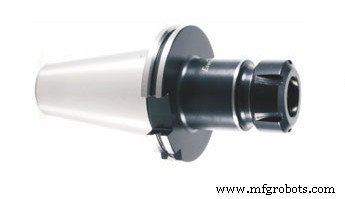
Collet Holder, Evermore Machine Co.
The most popular styles of bushings are ER, TG, and DA. DA bushings are the cheapest of the three and provide acceptable runout when performing light-duty operations, but can cause problems when performing tight-tolerance operations such as reaming. As a result, DA collets should be avoided in such applications.
End Mill Holder
End mill holders are suitable for high-performance milling applications such as roughing HSS (high-speed steel). They cost less than all other tool holder types and have better grip protection than collets. They are easy to balance and are available in very short lengths for optimum spindle rigidity.
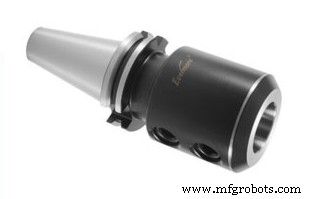
End Mill Holder, Evermore Machine Co.
Tap Holder
Tap holders separate the tapping tool and the spindle with a spring. There are three common subtypes of tap holders, including the fixed (rigid), floating, and additional (cartridge-style) tap holders, with the tension-compression floating holder being used the most. The tension-compression float eliminates the axial force exerted against the tap.
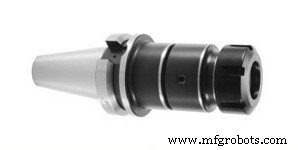
Tap Holder, Evermore Machine Co.
Shrink Fit Holder
Shrink holders use heating and cooling to apply a clamping force to the cutting tool. This clamping mechanism is suitable for high-speed machining. The inside diameter of the shrink holder is slightly smaller than the diameter of the cutting tool, which offers a firm hold and can significantly extend the service life.
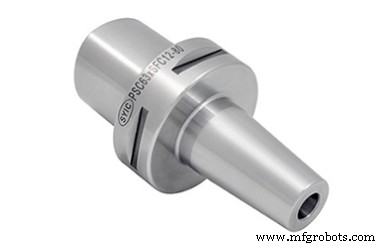
Shrink Fit Holder, SYIC
The mechanism is so simple that it improves the tool change time, which makes the overall machining process more efficient.
How to Choose the Right Tool Holder?
Tool shape, spindles, and machining operations are all factors when choosing the right tool holder type for your project. Each type of CNC tool holder has differences in lifespan and reliability. An important aspect to consider when choosing one is the time it lasts because it directly affects the performance and condition of the tooling. Besides the functionality of the device, the cost is another important factor. For small shops, choosing a holder that fits as many machine tools in the shop as possible is a good way to cut the cost.
Manufacturing process
- CNC Prototyping Guide: Precision, Speed, and Cost‑Effective Production
- CNC Milling Essentials: A Professional Operator’s Quick Reference Guide
- Master CNC Aluminum Prototyping: A Practical Quick Guide
- Comprehensive Guide to CNC Tool Holder Types
- Mobile CNC Tool Holder Carts: Boosting Mobility and Efficiency
- Efficient CNC Tool Holder Rack: Optimize Tool Storage & Automation
- Mastering 5-Axis CNC Tool Grinders: A Comprehensive Guide
- Understanding CNC Lathe Axes: A Quick Overview
- Master Swiss-Type CNC Lathes: Precision & Performance Guide
- Essential Guide to CNC Machine Oil Skimmers: Boost Performance & Reduce Contamination