



How Industrial Maintenance Has Evolved: From Reactive to Predictive

Automation, big data, staffing trends, and cultural shifts are reshaping industrial maintenance.
Artificial intelligence, sensor technology, and budget constraints are now industry standards, phasing out age‑old reactive practices. But why did maintenance shift from reactive to proactive, and what future trends lie ahead?
What is Industrial Maintenance?
Industrial maintenance refers to the systematic upkeep performed by technicians and mechanics to optimize machinery uptime, ensuring business objectives are met. Across sectors, it encompasses troubleshooting, repairs, and component replacements to enhance asset performance.
The History of Industrial Maintenance
Manufacturing and maintenance have evolved dramatically since the industrial revolution, yet the most profound changes unfolded over the past five decades.
Before World War II, machines were large, rugged, and slow‑moving, with basic controls. Production demands were modest, so downtime was seldom critical. When outages did occur, they were addressed, but the equipment was generally reliable—many machines built in that era still run today.
Postwar, the industry rebuilt itself in a fiercely competitive environment, demanding higher output. Machines were pushed harder, leading to more frequent failures and higher repair costs. This pressure spurred the development of preventive maintenance, marking a pivotal shift in industry standards.
Since the 1980s, plants and systems have grown increasingly complex. The intolerance for downtime, rising maintenance expenses, and a new focus on reliability and safety have driven the adoption of condition monitoring, just‑in‑time manufacturing, quality standards, expert systems, and reliability‑centered maintenance. Understanding risk and failure mechanisms became essential.
Maintenance Programs of Today
Each year, Advanced Technology Services surveys more than 200 manufacturing facilities to capture current maintenance practices. This year’s findings illustrate what a typical modern maintenance program looks like:
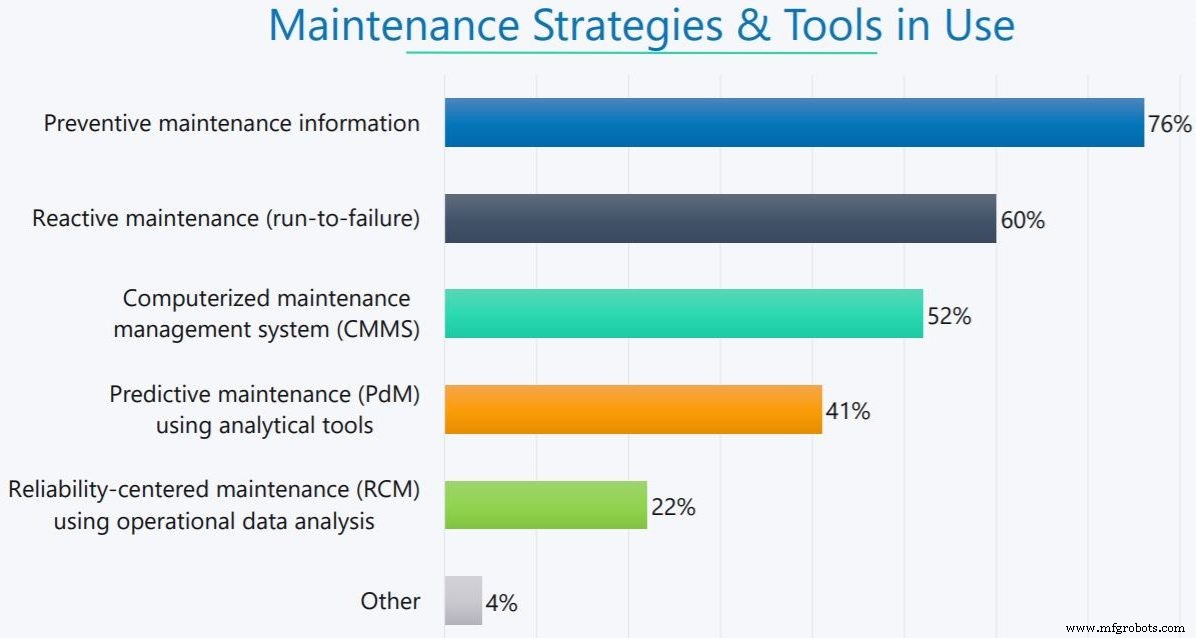
Maintenance strategies: 76% of facilities follow a preventive maintenance approach; 60% rely on run‑to‑failure; 52% use a computerized maintenance management system (CMMS).
Scheduled maintenance: 48% of facilities allocate up to 10% of their annual operating budget to maintenance; 39% devote more than 10%. The average facility spends 20 hours each week on scheduled tasks.
Key focus areas: Production equipment, rotating machinery (motors, power transmission), and fluid power systems (air, hydraulic) receive the most attention. Internal electrical distribution and material handling also receive significant support.
Unscheduled downtime: Aging equipment (34%) remains the leading cause, followed by mechanical failure (20%) and operator error (11%). More than 46% of facilities plan to reduce downtime by upgrading equipment and refining maintenance strategies.
Training: Maintenance teams are primarily trained in basic mechanical (77%) and electrical (70%) skills, with safety training at 71%. Additional training includes lubrication (51%) and specialized components such as motors, gearboxes, and bearings (50%).
Technology adoption: The most common tools are CMMS (50%), in‑house spreadsheets/schedules (47%), and paper records of maintenance rounds (46%).
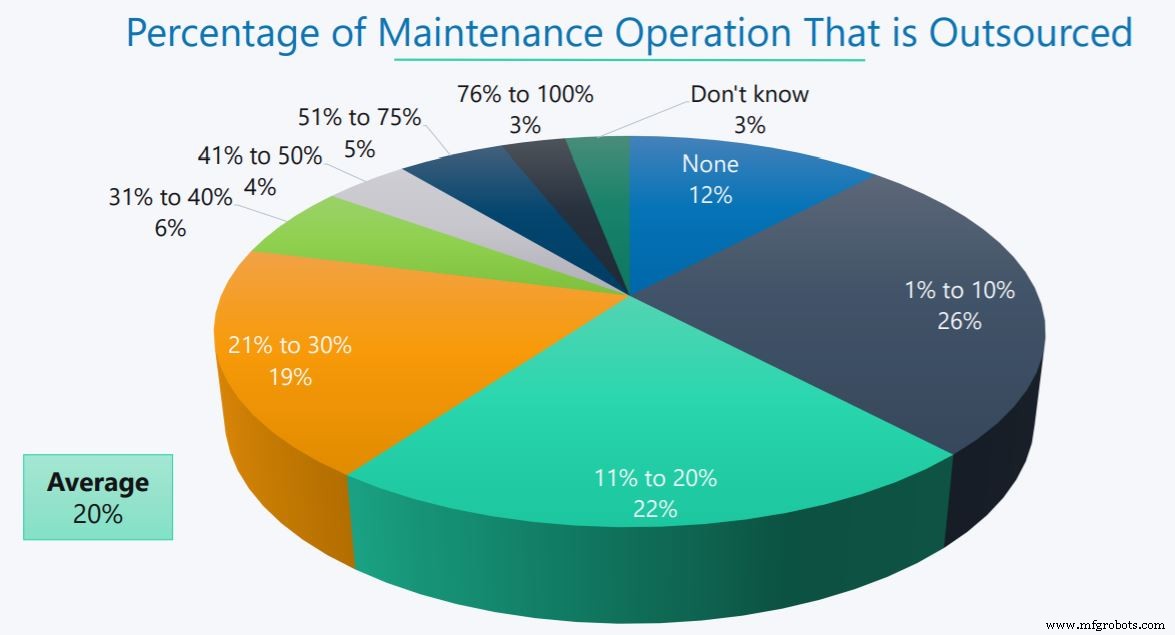
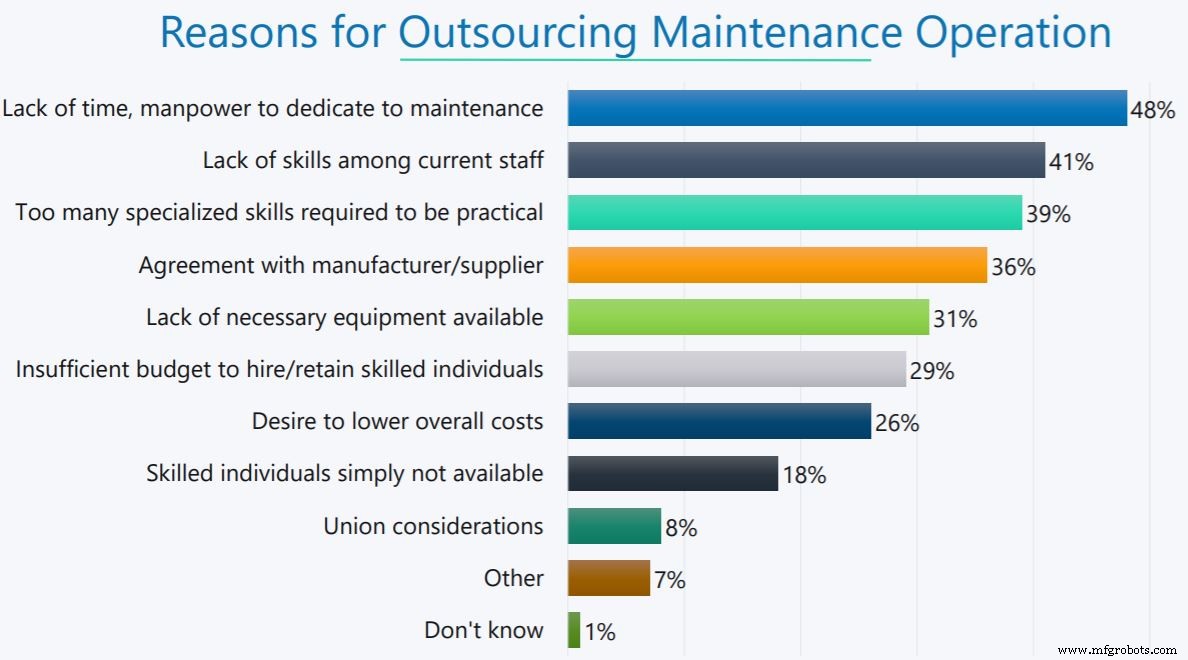
Outsourcing: On average, facilities outsource 20% of their industrial maintenance work, driven mainly by skill gaps and time constraints.
What the Future Looks Like
Future maintenance systems will integrate business and technical platforms, leveraging data for smarter decision‑making. They will safeguard against personnel turnover, preserve institutional knowledge, and empower leaders with actionable insights. Extensive sensor networks will generate vast data streams, presenting new data‑management challenges. Addressing these will require highly skilled personnel to operate, maintain, and analyze these systems—underscoring the continued importance of talent development.
Throughout its history, maintenance has remained the discipline that ensures assets reach their designed availability and performance levels to meet evolving business objectives. As those objectives shift, understanding the drivers behind change is key to shaping the maintenance industry’s future.
To download the 2020 State of Industrial Maintenance report, click here.
Equipment Maintenance and Repair
- Industrial Maintenance Staffing Solutions for Peak Efficiency
- Maximize Plant Uptime with ATS’s Expert Third‑Party Maintenance Solutions
- Industrial Maintenance Mechanics: Enhancing Facility Performance & Profitability
- The Evolution of Maintenance Practice: From Reactive Fixes to Proactive, Risk‑Based Strategies
- Mandatory Routine Maintenance: Boosting Equipment Safety and Longevity
- 5 Essential Industrial Maintenance Tips to Cut Downtime Costs
- Industrial Equipment Service & Maintenance: Comprehensive Guide
- Maximize Safety and ROI: The Essential Guide to Preventive Maintenance for Industrial Equipment
- How Regular Equipment Inspections Cut Maintenance Costs & Prevent Downtime
- Professional Facility & Industrial Maintenance Services