



Elevate Automated Welding: Proven Strategies for Peak Performance & Reliability
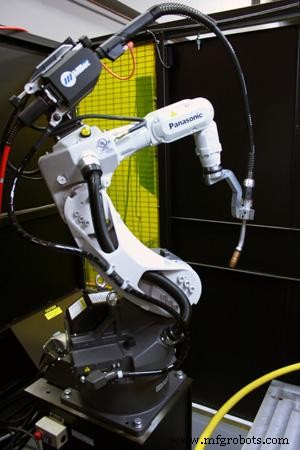 When you invest in automation, the objective is clear: unlock higher productivity and superior quality that set your welding operation apart and drive profitability. Achieving that vision requires more than a robot; it demands consistent, repeatable parts, streamlined workflow, skilled operators, and the right consumables.
Partnering with a reputable robotic integrator is the first step, but selecting the correct MIG gun, contact tips, nozzles, liners, and retaining heads is equally critical. These consumables often receive less attention, yet they directly influence downtime, operating costs, and overall weld quality. The following guidance highlights how to optimize each component for maximum performance.
Extensions and Connections
The contact‑tip‑to‑nozzle distance varies with each application, yet it consistently affects weld quality. Complex joints or tooling typically call for an extended relationship, providing deeper reach and better alignment. However, a longer distance also exposes the tip to increased spatter and heat, shortening its lifespan. Anti‑spatter compounds can mitigate this, but regular inspection remains essential. Proactive tip replacement before wear becomes critical is the best defense against costly downtime.
Heavy‑duty or extended‑duty chrome‑zirconium tips offer superior durability. While their conductivity is marginally lower than copper, the difference is negligible for most applications, and the extended life can offset the higher upfront cost. Look for the machined groove at the base of the thread – a hallmark of chrome‑zirconium construction.
Secure connections between contact tips, retaining heads (or diffusers), and nozzles are vital. A tight fit ensures reliable electrical conductivity and reduces heat loss, translating into consistent welds and longer consumable life. Consumables engineered to thread together and mate securely further enhance longevity.
Wires and Contact Tip Selection
Wire choice directly impacts tip performance. Large drums (500–1,000 lb) are common in automated systems to reduce changeover, but they often lack the cast or helix of smaller spools. This can cause the wire to feed straight through the tip, limiting electrical contact and creating burnback when the wire arcs back into the tip. Undersizing the tip relative to the wire—e.g., a 0.040‑inch tip for a 0.045‑inch wire—can help maintain a stable arc. Verify with a trusted integrator or distributor, especially when using metal‑cored wires where undersizing is not always possible.
Consider wire coatings too. Non‑copper‑coated solid wires wear tips and liners faster than copper‑coated variants, which act as lubricants and improve feedability. Though copper‑coated wires are pricier upfront, the extended consumable life and reduced downtime often justify the investment.
Welding Modes
Automated systems frequently operate at higher amperages and longer duty cycles than semi‑automatic setups. The transfer mode—continuous, spray, or pulsed—also influences consumable wear. Pulsed MIG, for instance, subjects tips to intense heat spikes, accelerating erosion and shortening replacement intervals.
Monitor tip usage closely in such programs. Replace consumables before performance degrades to avoid conductivity loss, burnback, or excessive spatter. Use routine production pauses for tip changes to keep the arc running uninterrupted. For high‑heat applications, heavy‑duty chrome‑zirconium tips remain the best choice.
Selecting and Maintaining the Right Nozzle
Nozzle choice is dictated largely by tooling geometry. Bottleneck, straight, or tapered nozzles offer narrower profiles, granting better access to tight or complex joints. Yet, the more tapered a nozzle, the thinner it is, limiting its capacity for high amperage or prolonged duty cycles. If your process runs at ≥300 amps or sustained arc‑on time, a heavy‑duty nozzle with thicker walls and robust insulators is advisable.
Copper nozzles or those with high‑temperature fiberglass insulators can enhance performance, but the nozzle must still provide adequate shielding gas coverage and not unduly shorten consumable life. Work with your integrator or distributor to match the nozzle to your tip and process requirements.
Maintain nozzles with a dedicated cleaning station or reamer. These units remove spatter, clear debris from the retaining head, and can apply a water‑ or oil‑based anti‑spatter coating. Position the station near the robot for quick access and program the robot to clean during part‑loading or tool‑transfer cycles, ensuring minimal interruption.
Other Considerations
Choose consumables that are well‑machined and feature smooth, round surfaces. Such designs resist spatter buildup and extend life. Even when operating near tooling limits, opt for the heaviest‑duty consumables that still fit, as they typically last longer.
Pay close attention to retaining head selection and liner installation. The retaining head must match the nozzle and tip, providing a secure fit for optimal conductivity. Trim and install liners per the manufacturer’s guidelines, using a liner gauge to confirm the correct length. Incorrect liner length can lead to wire‑feeding issues and costly downtime.
Ultimately, maintaining consumables in peak condition frees you to focus on reaping the benefits of automation—higher throughput, consistent quality, and improved ROI—rather than troubleshooting.
For deeper insights, visit www.tregaskiss.com.
Equipment Maintenance and Repair
- Catalyst Paper Enhances Mill Performance with Ivara Reliability Initiative
- Benchmarking for Reliability & Performance Enhancement
- Boost Productivity: 4 Proven Ways to Maximize Robotic Welding Performance
- Maximize Efficiency: Proven Strategies to Boost Fluid System Performance
- Automated Resistance Welding: Revolutionizing Metal Joining
- Automated Resistance Welding Explained: Tools, Uses, and Advantages
- How Welding Robots Revolutionize Automotive Parts Production
- Maximizing Productivity with Expert Robotic Welding Fixture Design
- Enhance Spot Welding Efficiency with Servo-Driven Guns
- Precision Aluminum Welding with Fanuc Robots for Automotive Excellence