



Revealing the Real Cost of Wrench Time: Why It Often Falls Below Expectations
Wrench time— the portion of a maintenance shift spent on actual repair work—often surprises managers with its low percentage. Understanding the hidden delays that inflate this figure can unlock significant productivity gains.
Typical Wrench Time Benchmarks
Industry data shows a range of 25 % to 35 % wrench time for most maintenance teams. Even at the high end, a 35 % rate is hard to believe without examining the hidden costs.
Case Study: A 10‑Hour Shift Breakdown
Consider an average technician’s day at a power plant (see Figure 1):
- 10‑hour shift = 600 minutes
- Morning set‑up: 30 min (check‑in, coffee, brief)
- Supervisor instructions: 45 min (repeated clarifications)
- Tool checkout: 30 min
- Parts retrieval: 30 min
- Travel: 45 min
- Breaks: 90 min (four 15‑min breaks + 15‑min recovery)
- Lunch: 30 min
- Post‑shift prep: 90 min (shower, gear change)
Total non‑wrench time = 390 min. Remaining time for actual work = 210 min, which is 35 % of the shift. The rest—65 %—is delay time.
Even with a “best‑effort” scenario, the technician’s schedule shows how small, repeated interruptions accumulate into a substantial productivity loss.
Implications for Maintenance Planning
These figures illustrate that wrench time is often lower than managers anticipate, not because teams are exceptionally efficient, but because the real cost of delays is frequently overlooked. Effective planning and scheduling can reduce those hidden delays, raising the wrench‑time ratio and improving overall reliability.
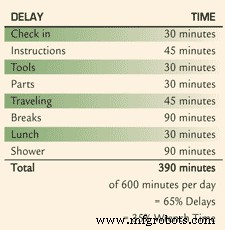
Figure 1. Is this really an “extreme” scenario of delays?
Doc Palmer, author of the Maintenance Planning and Scheduling Handbook and a CMRP with nearly 25 years in the field, emphasizes that systematic planning can uncover and eliminate these inefficiencies.
Equipment Maintenance and Repair
- Why Wrench Time Studies Are Outdated: A Modern Maintenance Perspective
- Wrench Time: Definition, Importance, and Measurement
- Industry Experts Respond to 'Let’s Kill Wrench Time' – A Deep Dive into Maintenance Metrics
- Mastering Electrical Measurement: Choosing the Right Clamp Meter
- Mastering Planned Maintenance Percentage (PMP): Measurement, Benchmarking, and Improvement Strategies
- Mastering PM Compliance: Key Metrics, Formulas, and Strategies to Boost Maintenance Performance
- Mastering MTBF: The Ultimate Guide to Mean Time Between Failures
- System Availability: Why It Matters, How to Measure, and Boost Your Production
- Understanding Scheduled Maintenance Critical Percent (SMCP): Prioritize Tasks for Peak Reliability
- Mastering Mean Time to Repair (MTTR): Measure, Benchmark, and Optimize Your Maintenance