



Cut Maintenance Costs with Predictive Maintenance Insights
Looking to boost profits while slashing maintenance costs?
Advanced tools such as vibration analysis, shaft alignment, oil analysis, thermal imaging, motor circuit testing, and more provide a powerful arsenal for daily defect detection and elimination.
Many facilities stop after identifying, scheduling, and repairing bearing or gearbox defects. A truly optimized reliability program digs deeper, hunting the root causes that spawn these problems and preventing recurring failures.
Finding root causes can seem daunting, but often the underlying issues are surprisingly straightforward. Addressing them early reduces future repairs, drives down maintenance spend, and lifts overall profitability.
Vibration analysis identifies the forcing function behind harmful vibrations and the resulting defects. Relying solely on vibration data can obscure the true fault, leading to unnecessary or incorrect maintenance and repeated repairs—ultimately inflating costs and eroding margins.
Looseness is among the most common yet simplest-to-correct problems. Left unchecked, it creates routine defects that trap maintenance teams in a costly cycle.
Mechanical looseness falls into two categories:
- Structural
- Rotating element (component looseness)
Structural looseness can act as a vibration amplifier. As looseness develops, the system’s stiffness changes, shifting resonance frequencies and overlapping with other defect signals. This amplifies defect amplitudes, accelerating failure and incurring avoidable damage.
Typical sources include base mounting issues, bearing caps, casings, supports, or broken welds—conditions that vibration patterns alone may miss.
Phase data is a powerful, often underutilized tool for pinpointing such defects. Understanding phase relationships—whether two events are in sync or out of sync—enables precise fault localization.
When two nearby measurement points should produce similar phase values, a discrepancy indicates out‑of‑phase motion and possible looseness.
Moving a sensor vertically to horizontally (or vice‑versa) should produce a ~90‑degree phase shift. Within the same radial direction, phase values should remain roughly equal; deviations up to ±30 degrees are acceptable.
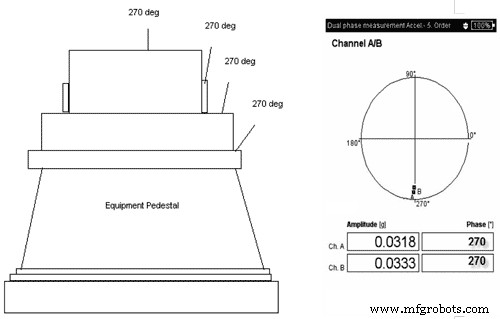
Figure 1. Equipment with No Structural Looseness
Phase should be measured across all bolted or welded joints. A sudden, erratic phase shift—often between 90° and 180°—signals a loose component.
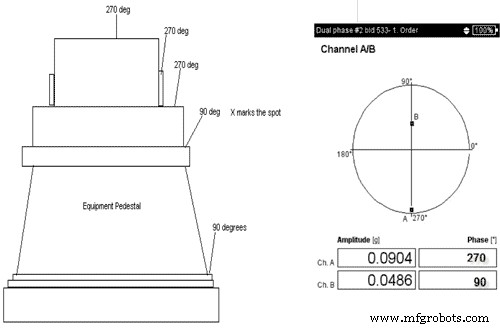
Figure 2. Equipment with Structural Looseness
Loose mounting feet exhibit a phase shift from the foot to the foundation and a higher phase difference compared to other feet, typically exceeding 90°.
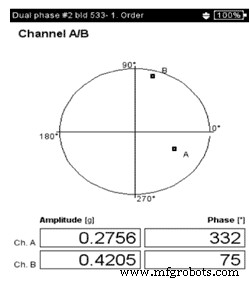
Figure 3.
Collecting relative phase measurements along a routine route adds a valuable trend dimension. Over time, these data reveal subtle changes in equipment condition without needing a tachometer.
Such routine data are especially beneficial for machines that have suffered costly repairs or collateral damage from looseness. Early detection can prevent repeat failures and preserve structural integrity.
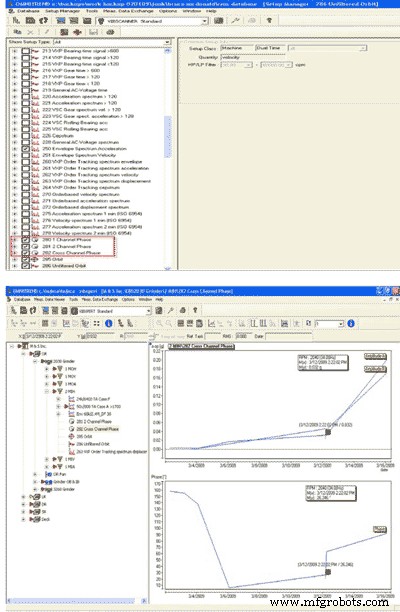
Figure 4.
Preparation is key: clean measurement locations, create a simple schematic to mark sensor points, and record results methodically. A clear outline—like the one below—simplifies analysis.

Figure 5. Sample Phase Outline
Basic phase data is easy to capture yet rich in insight. It uncovers root‑cause conditions that trigger equipment defects, allowing you to eliminate them and reduce routine failures such as bearing issues. The result? Lower maintenance costs and higher profits.
To achieve sustained cost reductions and profit growth, ensure your maintenance team fully leverages available technologies. Underutilization or neglect of these tools only drives up expenses.
About the author: Trent Phillips is the Condition Monitoring Manager at Ludeca Inc., a leading provider of shaft alignment, vibration analysis, and balancing equipment. Contact him at 305‑591‑8935 or Trent.Phillips@ludeca.com. For more information, visit www.ludeca.com.
Equipment Maintenance and Repair
- 5 Proven Strategies to Slash Energy Use Through Smart Maintenance
- Proven Strategies to Cut Maintenance Costs Without Cutting Staff
- Amazon Lookout for Equipment: Revolutionizing Predictive Maintenance
- Choosing the Right Maintenance Strategy: Preventive vs. Predictive
- 8 Proven Strategies to Slash Maintenance Management Costs
- Optimizing Plant Operations: Predictive Maintenance for Rotating Equipment
- 5 Proven Strategies to Slash Equipment Maintenance Costs
- 5 Proven Strategies to Cut Maintenance Costs Effectively
- Effective Strategies to Cut Equipment Costs for Small Construction and Manufacturing Businesses
- Reduce Hydraulic Downtime Costs: Proven Strategies to Minimize Direct and Indirect Losses