



SaaS Maintenance Software vs. On‑Premises B2B Solutions: Which Is Right for Your Business?
Why SaaS Maintenance Software Is Becoming Essential
Software as a Service, or SaaS, refers to applications hosted on remote servers and accessed via the web. Leading examples are Google Workspace, iCloud, and Salesforce CRM. Rather than purchasing a perpetual license—say $300 for a single copy of Microsoft Office—you subscribe to the software on a monthly or annual basis, such as $20 per month for an online office suite. This subscription model is what defines SaaS, and over recent years it has rapidly captured market share from conventional, on‑premises software.
In North America, businesses cite ease and speed of deployment as the leading reasons for adopting SaaS, followed closely by reduced total cost of ownership (TCO), according to Gartner.
In this article, we examine why SaaS is so effective—both as a technology and a business model that benefits all stakeholders—and we outline the trade‑offs associated with transitioning to a SaaS solution.
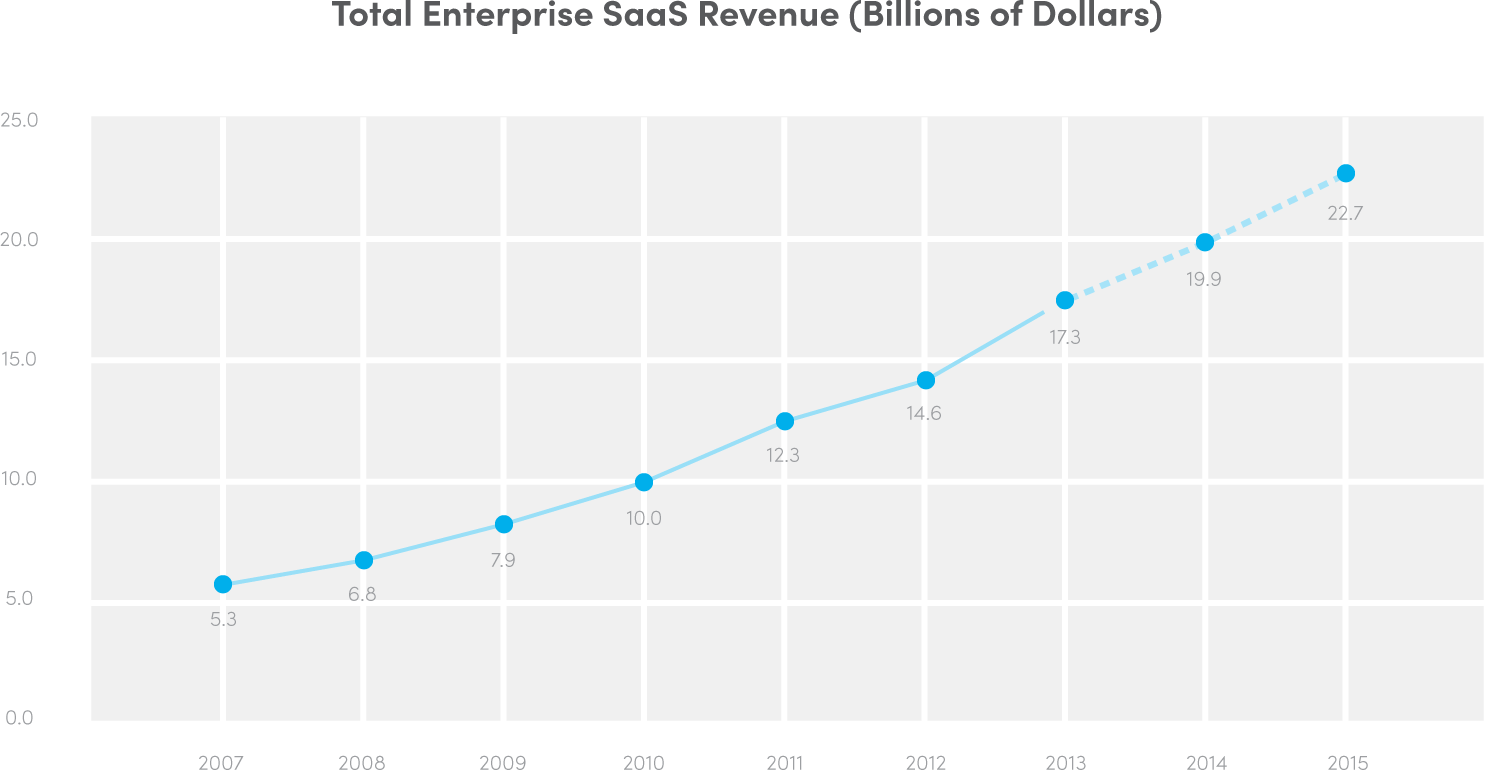
Total Enterprise SaaS Revenue (Billions of Dollars)
Four Pain Points Driving the Cloud Migration
- Insufficient resources to build and maintain a dedicated IT infrastructure.
- High upfront software licensing fees.
- Limited IT staffing and expertise.
- Insufficient technical knowledge to fully leverage IT systems.
Additional Drivers Accelerating SaaS Adoption
- Lower‑cost, higher‑speed internet connectivity and proliferation of mobile devices.
- Customer dissatisfaction with the traditional software purchasing cycle—licensing, support, and upgrades.
- Greater control over vendor relationships, making it easier to cancel contracts and switch packages.
- Rapid deployment and reduced reliance on internal IT teams.
- Simplified, predictable pricing structures.
Benefits of SaaS Compared to Traditional On‑Premises Models
SaaS’s rapid growth—especially in maintenance software—is driven by its consumer‑friendly nature. It’s simple to trial, purchase, install, and upgrade, and it eliminates the need for a dedicated IT department to manage the solution. Below are the key reasons why SaaS delivers superior value:
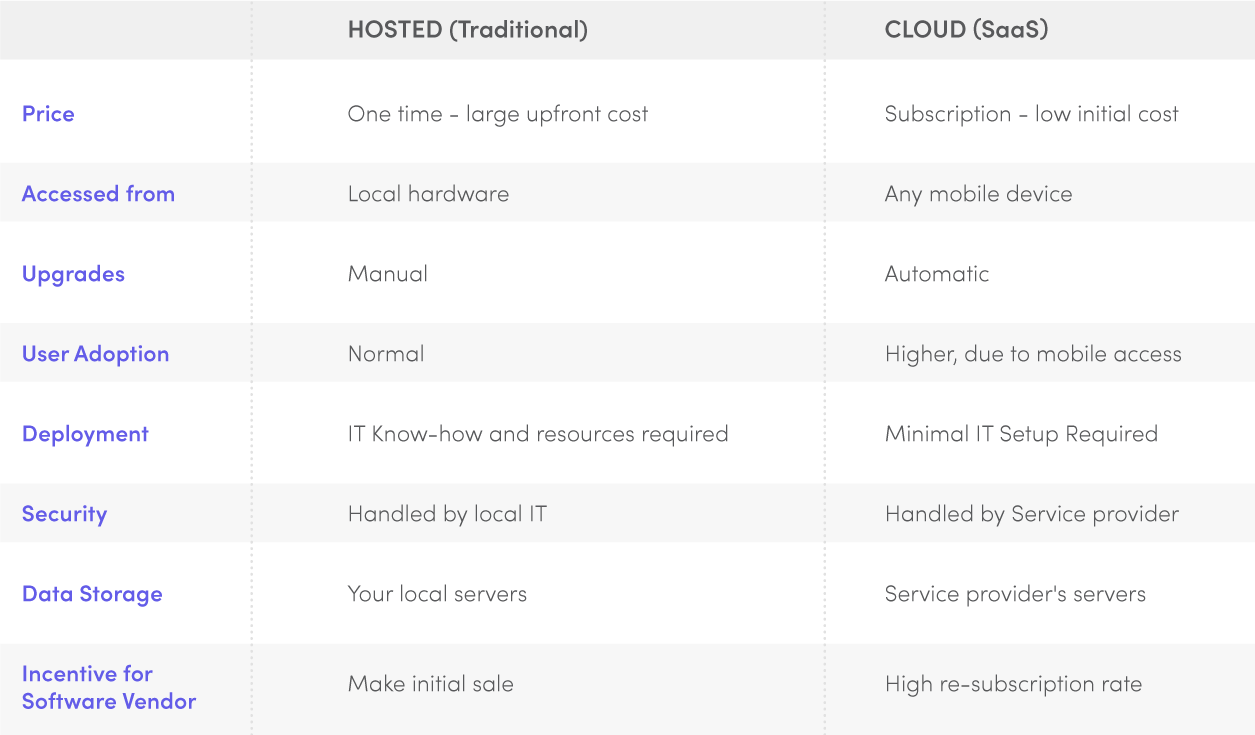
Lower Total Cost of Ownership (TCO) – The subscription model reduces upfront capital expenditures, and vendors are incentivized to deliver high‑quality products with robust support to minimize churn and maximize customer lifetime value. McKinsey estimates that SaaS TCO can be up to 40 % lower than on‑premise alternatives.
Low Barriers to Entry – No network or firewall configuration is required, and subscription pricing makes it easy for customers to start—and exit—without significant friction.
Automatic Upgrades – SaaS providers handle upgrades automatically, ensuring users always run the latest version without reconfiguring or reinstalling.
Universal Accessibility – Applications are available from any device with internet access, whether on the road, at home, or while traveling.
Risks and Considerations When Adopting SaaS
Adopting SaaS involves evaluating several risks that might make it unsuitable for certain organizations.
- Third‑party data handling—confidential data is stored and managed by the SaaS provider, which can be advantageous or disadvantageous depending on security requirements.
- Challenges around custom integration and tailoring to existing systems.
- Limited control over data, processes, and upgrade schedules.
- Reliance on a stable internet connection for most SaaS solutions, though some can operate offline.
Fiix is a comprehensive SaaS platform that addresses many of these common risks. Discover how Fiix safeguards data security, supports custom integrations, and ensures reliable uptime.
SaaS vs. On‑Premises B2B Software
Equipment Maintenance and Repair
- Why Investing in CMMS Transforms Maintenance Operations
- Maintenance Software vs Spreadsheets: Why CMMS Outperforms Manual Tracking
- Maximizing Asset Reliability with Advanced Maintenance Work Order Software
- Why a SaaS CMMS is the Smart Choice for Modern Maintenance Management
- Maximizing Efficiency: How Preventive Maintenance Software Drives Success in Manufacturing
- Unlocking Efficiency: The Proven Advantages of Preventive Maintenance Software
- Preventive Maintenance Software: Boost Asset Longevity & Reduce Downtime
- Unlocking Business Value: The Key Benefits of Predictive Maintenance Software
- Predictive Maintenance Software: A Comprehensive Guide for Smart Asset Management
- Top 5 Must-Have Features for Preventive Maintenance Software