



CNC Sign Engraving & ADA Braille Production: Precision & Compliance
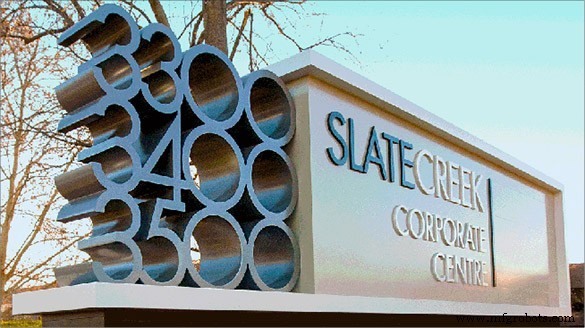
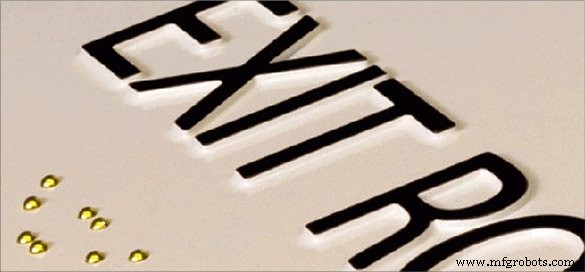
But not everything they do at Ellis & Ellis is so big. Take for example the Braille required for way-finding signs and architectural signage. This is intricate work often done on smaller signs that must be ADA compliant for elements like position and tactile height. Braille can be produced using a variety of different processes. For example, Photopolymer Braille uses UV light and a chemical process to remove negative space material. In contrast, Route-in-Place with Raster Braille is a process where small acrylic beads are mechanically pressed into predrilled holes.
Sign Engraving with ADA Compliant Braille
Having tried both of these processes, Ellis & Ellis experienced significant obstacles as follows:
Photopolymer Braille: First and foremost, the Braille was not completely round and was, therefore, subject to ADA liability. They also found the necessary raw materials to be expensive. Ellis & Ellis Director of Manufacturing, Bill Rogers, explained, “The excessive costs of the materials were compounded by costs associated with the human labor required for processing and finishing.”
Route-in-Place with Raster Braille: Similar to Photopolymer Braille, Ellis & Ellis found that additional human labor was required for finishing in the Raster Braille process because of the excessive glue that remains after tactile copy is placed and engraved. Bill Rogers said, “Additionally, the alcohol, solvents and cleaning products would cause crazing to occur on the acrylic beads which often shattered them.” Plus, they found this process to be limited in terms of surface finish possibilities.
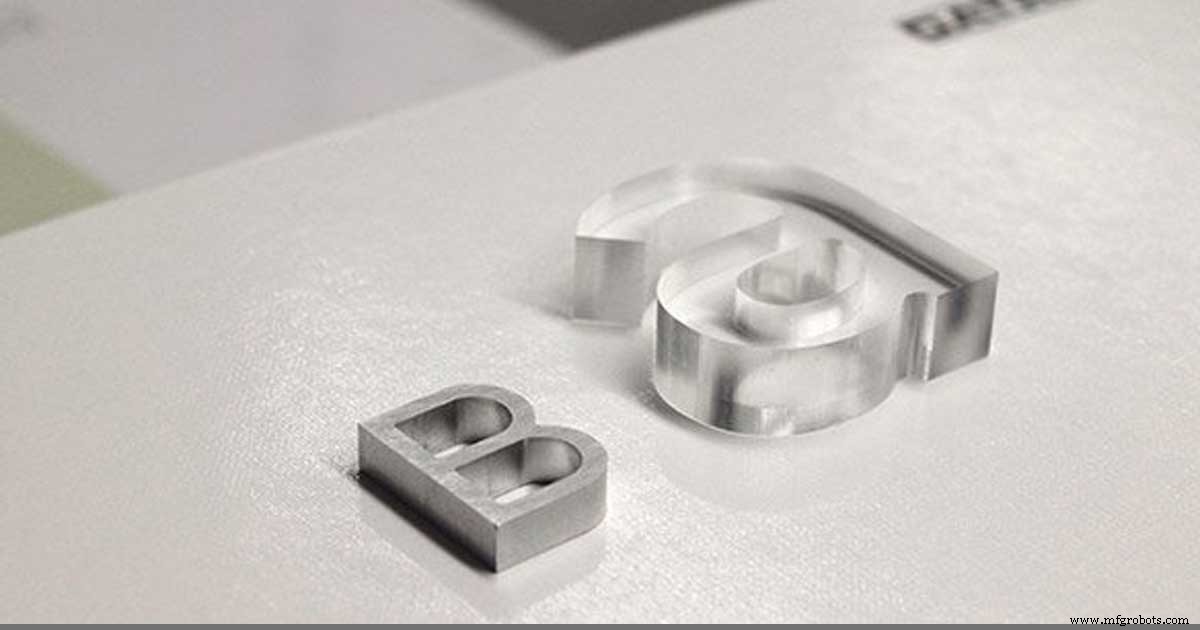
Eventually, Ellis & Ellis decided to research other processes and equipment to produce the intricate ADA compliant Braille they needed to manufacture these way-finding signs. Ultimately, they decided on a DATRON M8 high-speed machining center after demonstrations proved that the machine was not only capable of producing spot-on Braille, but could also perform many other functions – thereby adding flexibility to their shop floor. (See aluminum and acrylic letters at bottom of Blog).
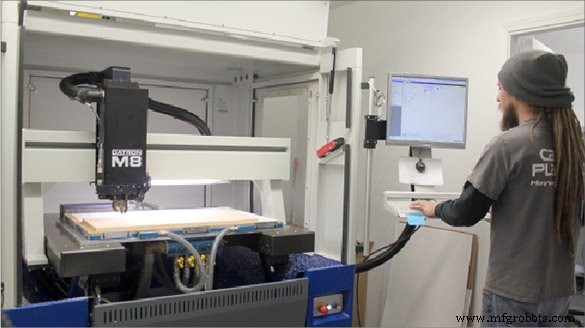
Plus, there were other factors involved in their decision. Rogers said, “Well clearly floor space in California has a premium cost associated with it and the DATRON’s footprint fit nicely into the small enclosed space that we designated for this process.” He added, “With the small footprint, it’s amazing that this machine provides such a large work envelope.”
Sign Engraving CNC Machine for Batch Machining
In fact, the DATRON M8 (as well as the newer M8Cube) has a 40” x 32” machining table made of solid polymer concrete that provides exceptional rigidity delivering the accuracy that Ellis & Ellis needs. The large work envelope is not diminished by the 15-station automatic tool changer located at the back of the table. This covered pneumatic unit includes a tool-length sensor which allows Ellis & Ellis to monitor tool life as a means of maintaining a high level of quality. In many cases, the signs that they manufacture are produced in batches and the tool length sensor helps in allowing them to run these parts unattended. Here’s how it works. Within the machine’s control software is a macro program that can be set up to run a tool check after executing a number of lines of code. For instance, a tool check macro can initiate a check after every 500 lines of code. This is known as an “if/then” statement, in other words, “Measure this tool; if the length is shorter than the listed parameter, then change the tool.” As a result, if a tool becomes dull in the middle of running a batch of signs, it is replaced automatically even if the machine operator is not present. This helps to maintain quality and minimize waste.
However, running batches of signs, whether unattended or with the operator present, requires the ability to accommodate and fixture sheet material from which the individual signs are milled. So, Ellis & Ellis was pleased to find that DATRON manufactures their own vacuum table workholding. In the case of their M8 machine, the vacuum chuck is affectionately known as a QuadraMate due to its four independently activated 12” x 18” segments – which can also be simultaneously activated providing a full 24” x 36” of workholding.
Bill Rogers said, “The vacuum table combined with the machine’s integrated probe makes it so easy to set up a job – it’s faster and takes out the element of human error.”
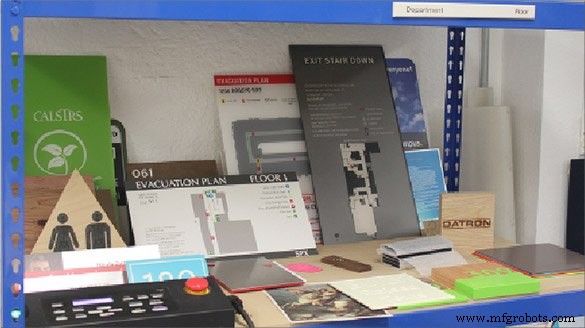
That’s because once the operator sets the material on the table, even if it is not situated perfectly straight, the probe takes measurements that compensate for that. In fact, even if there are irregularities in the material such as surface variance, the measurements are fed into the control software and the program is adjusted accordingly. Since Ellis & Ellis performs so much alphanumeric engraving and milling to produce their signs, this guarantees an even depth of those characters even if the material topography is not consistent. According to Rogers, “All of this equates to more efficiency, higher quality, less waste and ultimately cost reduction.”
The machining center itself is not the only area where DATRON has helped Ellis & Ellis add efficiency to their operation — and Bill Rogers says that they have become quite a proponent of DATRON solid carbide cutting tools. “We saw the exceptional performance of DATRON tools being used with the DATRON machine in terms of cut quality and tool life, so we decided that we’d give them a try on some of our larger machines.” Those larger machines include MultiCam CNC Routers, and as they anticipated, the DATRON tools did, in fact, improve the performance of those larger machines. Bill said, “In terms of tool life, we’re looking at an improvement of about 3 to 1 which is a big cost saving over time.”
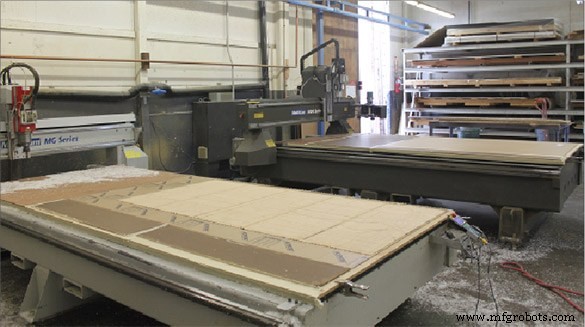
In addition to using DATRON tooling with the MultiCams, they also decided to try DATRON’s coolant with these routers and that too helped to impact cutting quality.
Bill Rogers said, “Staying competitive means trying new things, new technology, and always looking for ways be more efficient.”
To that end, Bill and his team are frequent visitors at the DATRON Technology Center in Livermore, CA. According to Rogers, “DATRON has informal events like TechDay at their facility where we can go see advancements in the technology. I can always count on their guys to get us the answers we need. It’s a great partnership.”
CNC Machine
- Avoiding Common Pitfalls When Purchasing Used CNC Machines
- Highly Flexible CNC Automation Lines for Advanced Manufacturing
- Why the 1325 CNC Engraving Machine Is So Popular Among Woodworkers
- 1325 Multi-Head 8-Spindle CNC Router with Custom Rotary Device
- CNC Gun Engraving: 3 Proven Marking Methods to Meet ATF Standards
- Precision Foam Cutting Using CNC Milling Machines: A Proven Solution
- Mastering Halftone Engraving on CNC Machines
- CNC Machining & Engraving: Expert Overview of Centers, Milling & Precision Machines
- Comprehensive Guide to CNC G‑Codes & M‑Codes – Downloadable PDF Included
- Explore Endless Possibilities: What a CNC Machine Can Build