



Coordinate Measuring Machines (CMMs): Enhancing Precision & Reliability in Manufacturing
When it comes to manufacturing use-end parts and functional prototypes, it’s extremely important that the physical dimensions and geometric characteristics of the object match that of the 3D model. Even if a measurement is just slightly off, it can jeopardize the entire production process and set you back to square one. That’s why 3ERP offers quality assurance through our Coordinate Measuring Machine (CMM). Although this measurement device is widely known outside of manufacturing circles, it’s plays a critical role in the product development workflow.
Let’s learn more about how a CMM machine works, along with the benefits and limitations of using this measurement process.
What is a CMM Machine?
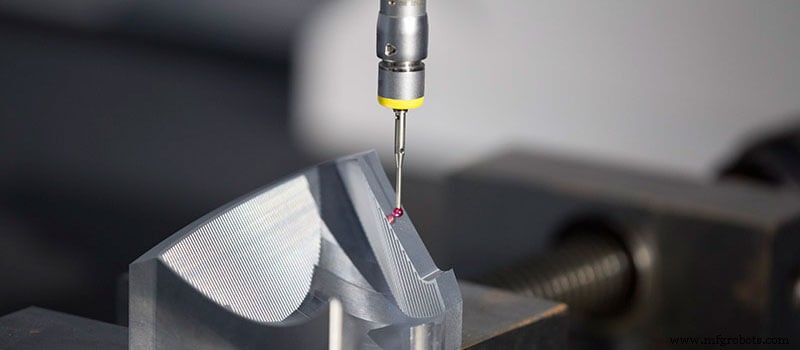
To put it simply, a CMM machine is a device that is used to measure the physical geometrical characteristics of an object. This process utilizes a probe that is mounted to the third moving axis of the CMM machine, which is used to define the measurements of the part in question. A CMM machine is also used to test and verify a part or assembly to ensure that it matches the intended design.
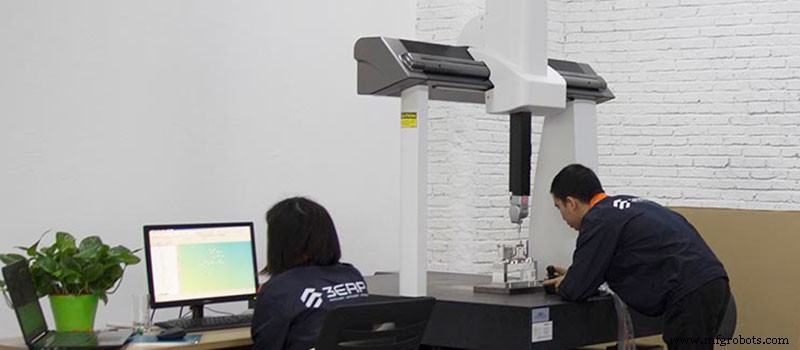
The process begins by placing the part or assembly on the CMM machine base, which is where the measurement will take place. The base plate is made from a dense material that provides stability and rigidness, ensuring that the measurement is not disrupted by external forces.
Mounted above the plate of a CMM machine is a movable gantry, which suspends a vertical column that is equipped with the measuring probe. The CMM machine is able to direct the probe along the X, Y and Z-axis, digitally replicating every facet of the manufactured part. When the probe strikes the object, the stylus generates an electrical pulse that is mapped out by computer. Depending on the size of the part, this process is sometimes repeated to gather thousands of points.
So, how does a CMM machine successfully analyze manufactured parts after measuring them? Once the probe is used to capture the X, Y and Z coordinates of the part or assembly, the information is ten analyzed for the construction of features. It can also be programmed to automatically measure identical parts in a repeatable manner.
What are the Benefits to Using a CMM Machine Service Provider?
Some of the advantages of using a CMM machine to measure your part might seem clear by now, but there’s a whole range of reasons why this process should be integrated into your production workflow. Here are the primary benefits that a CMM machines can provide:
- Save time and money – Once the production of a functional prototype or part is completed, the success of this outcome is fully dependant on the accuracy and precision of the part. As rapid manufacturing techniques are becoming capable of producing more complex objects, measurement technologies like CMM machines are extremely important. Other measurement techniques require parts to be taken to a lab or removed from the production floor. CMM machines offers a quicker and more reliable path to measuring your part, ultimately reducing production costs and time.
- Quality assurance is guaranteed – Although there are various tools that can digitally measure and analyze your part, very few offer the reliability that a CMM machine does. A CMM machine inspection provides unbeatable services like dimensional analysis, CAD comparison, tool certifications and reverse engineers to verify every aspect of your design with confidence.
- Versatile with multiple probes and techniques – While complex parts and assemblies may seem difficult to measure, CMM machines are compatible with an array of probes and tools that can be adapted to accurately capture the dimensions of the design.
Are There Limitations to CMM Machine Inspection?
While a CMM machine can certainly play a crucial role in the manufacturing process, there are a few drawbacks that should be considered before employing a service provider to use this method. Here are some factors that need to be evaluated before using a CMM machine:
- Probe must touch object – The probe used on a CMM machine is required to make physical contact with an object in order to conduct a measurement. While this might not be an issue for prototypes and tough parts, this process could potentially damage delicate surfaces. Thankfully, due to our extensive line of plastic and metal materials, 3ERP manages to reduce this risk.
- Soft parts could lead to defects- If you need to produce a part for soft materials, such as rubbers or elastomers, the probe may cause the surface to cave in when it touches the object, causing defects in the digital analysis.
- The right probe must be selected – There are different types of probes that can be used with a CMM machine depending on the part that will be measured. Each stylus offers different abilities when it comes to measuring various design features and dimensions. Luckily, 3ERP’s expert team can help ensure that your part receives the right setup when placed within a CMM machine.
Should You Use CMM Machine Inspection In Your Production Process?
Ensuring that the manufactured part is identical to the digital design is the final stretch of the manufacturing race, and any potential flaws or defects can cause your product to fall flat before you reach the finish line. That’s why 3ERP offers more than just rapid prototyping and manufacturing services. We also provide expert analysis and quality assurance checks for our client’s parts, using a CMM machine to acquire the most accurate measurements possible. To learn more about how 3ERP’s CMM machines can be used to bolster your production process, contact us today.
CNC Machine
- CNC Milling Explained: Process, Benefits, and Industrial Applications
- Process Cooling Explained: Benefits, Methods, and Industrial Applications
- How Blockchain is Revolutionizing Industrial Manufacturing: A Comprehensive Guide
- Mastering Plastic Moulding: A Comprehensive Guide
- Master the Drill Press: Complete Guide to Drilling Machines
- Comprehensive Guide to Milling Machines: Functions, Operations, and Applications
- The Complete Guide to Planer Machines: Function, Uses, and Benefits
- The Complete Guide to Shaping Machines: Features, Uses, and Benefits
- Comprehensive Guide to CNC Machines: Features, Benefits, and Applications
- The Ultimate Guide to Machine Presses: Types, Functions & Operators