



Process Cooling Explained: Benefits, Methods, and Industrial Applications
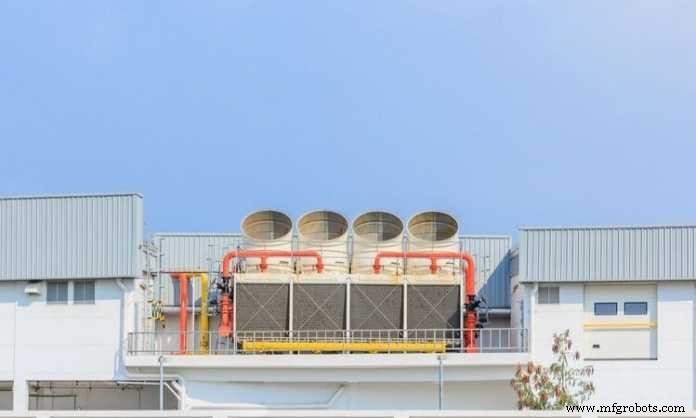
Even the most state of the art industrial systems give off high levels of heat at certain points. This can be troublesome as the materials and equipment can become damaged when they overheat. Rather than removing the entire system there are other ways of dealing with this problem. This is where process cooling comes in.
What is process cooling and how does it work?
The process works by removing any unnecessary and unwanted heat that is produced in industry in order to keep everything running smoothly. If the equipment used in the manufacturing process of a product becomes overheated then it could potentially damage that equipment, and then the product itself.
In these cases process cooling is used to cool the equipment in order to protect it and the product, as well as maintaining the required operational temperatures for whatever the industrial process is. In a number of industries, process cooling is the difference between a damaged product and an excellent finished product.
What industries use process cooling?
Some of the industries that require process cooling include:
- Dairy – This includes products such as milk, ice cream, cheese and yoghurt. They all require cooling in order to prevent undesirable textures and the growth of unwanted bacteria. Process cooling is also used in the production of these products to keep them and the equipment used to make them cool.
- Chemicals – Some examples include white-out, rubbing alcohol, glass cleaner, battery acid, and antifreeze. The production of these, and most other chemicals, requires extreme care. During their production a constant temperature must be maintained at all times. Temperatures either side of the ideal can damage the chemicals and make them hazardous.
- Plastic – This material is everywhere, we are completely surrounded by it. From toys, to office supplies, and furniture, they all contain a type of plastic. Effective cooling during the extrusion and molding processes is the difference between producing a perfectly finished product and an expensive mishap. Achieving and maintaining the ideal temperature is vital in producing a high quality plastic.
- Fermented beverages – Any beer or wine drinker out there has process cooling to thank for creating these tasty beverages. The fermentation process requires temperatures to the carefully controlled at all times. For beer the perfect temperature is between 68 – 72 Fahrenheit. Temperatures above and beyond this will slow or even stop the fermentation process altogether.
- Printed materials – Despite the digital age, there are still many printed materials being produced. These include items such as magazines, packaging, posters, books, newspapers, and brochures. As part of the printing process heat is created as a result of friction within the system. To avoid a slowing down of this process or a damaging the products, cooling is required.
- Metal items – An essential process in the construction of most metal items is welding. Whether it is a building, a kitchen appliance, or a car, the chances are it has been welded. Because welding uses such extreme temperatures, an effective process cooling solution is vital. If welding equipment is not properly cooled it is more likely to become damaged and produces an inferior finish.
- Jewelry – Most pieces of jewelry are made via the use of electrical discharge machinery. They work by using electrical discharges to shape the materials that are being cut. It is a highly accurate process that is used on hard materials. The water used in the process heats up very quickly and so requires a robust process cooling solution to maintain the optimal temperature.
- Lasers – These carry binary code through fiber optic cable to provide you with the Internet. Similar technology is also used in laser eye surgery and entertainment. Blu-Ray and DVD players use lasers to read information from disks. Using lasers creates extreme temperatures, which require cooling in order to stabilize equipment for optimal performance. Cooling also helps to prevent overheating and extend the lifespan of equipment, including the accuracy of the laser.
What process cooling solutions are available?
There are a number of pieces of equipment that can be used for process cooling to either refrigerate, extract heat, and / or maintain temperatures during industrial processes. Within certain industries heat exchangers are used to remove any unwanted heat, whereas other industries use large refrigeration systems, such as north slope chillers.
There are a variety of chillers that all work at different temperatures with various flow rates and fluids, which allow for greater versatility and efficiency in process cooling solutions. For robust operations some chillers work at temperatures below 0 Fahrenheit. Fluid channel blankets can be added to an industrial chilling system to allow for targeted and total cooling across a container.
Types of chillers
The two main categories of chiller include vapor absorption and vapor compression. A vapor absorption chiller works by using heat to move a refrigerant around a system, whereas a vapor compression chiller uses mechanical compressor to force a refrigerant around a system. The most commonly used of these are vapor compression chillers.
There are two types of vapor compression chillers. These are water chillers and air chillers. Each type includes the same components and even their mechanics are similar. The main difference between the two is how they eject heat.
- Water chillers – These work by pumping water through a condenser and then dispensing it via a cooling tower. This process is much more efficient than the one used in air chillers and so uses less energy. This is primarily because water has such a high heat capacity. Their life span is much longer than those of air cooled chillers.
- Air chillers – These work by forcing air across the tube of the condenser, which are exposed. Although they require more energy than water chillers, they are ideal for stationary cooling. They are also really easy to install and can be put on the outside of a building so that no extra space is required. However, they are prone to recirculation issues and blockages.
Both water chillers and air chillers are categorized further based on the type of compressor technology that they use. These include screw driven, reciprocating, centrifugal, and scroll compressor.
Industrial Technology
- Mastering Laser Cutting: Precision, Power, and Practical Guidance
- AM Loop Antenna Guide: Boost Signal Quality and Reduce Noise
- RK3399 Review: Key Features, Performance, and Why It Beats Raspberry Pi
- Mastering MFD Capacitors: Key Insights & Applications
- Mastering STL Files: A Complete Guide for 3D Printing
- Hot Stamping 101: The Complete Guide to Elegant Metal Foil Design
- The Comprehensive Guide to Metal Rolling Processes
- The Complete Guide to Plywood: Properties, Uses, and Selection Tips
- Understanding the Automobile Cooling Fan: Design, Function, and Maintenance
- Mastering Form Milling: Your Complete Guide to Precision CNC Metalworking