



Precision Machine Shops: Expert Sawing for Modern Materials
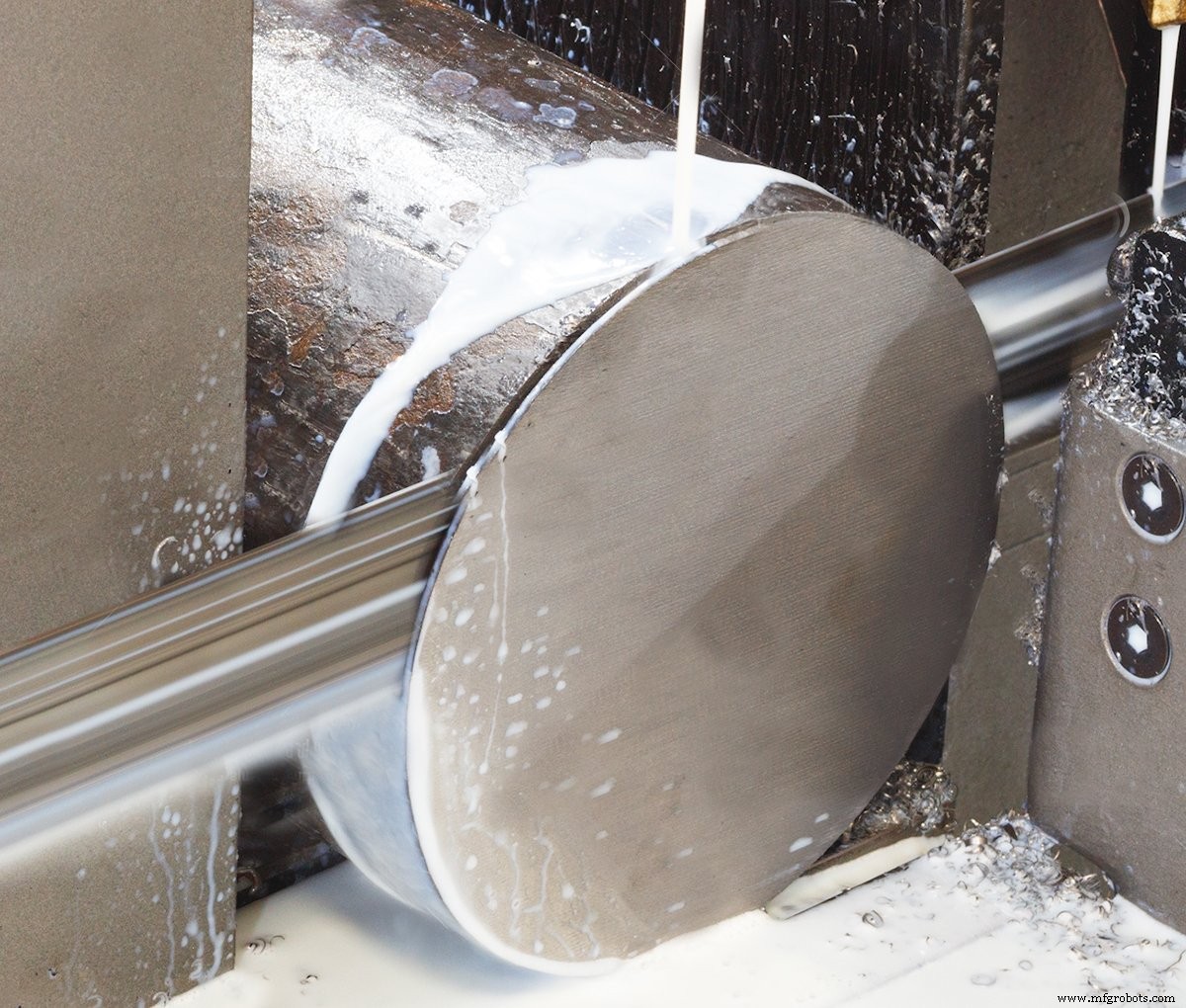
Sawing is one of the oldest cutting techniques in use today, and innovations have allowed the process to keep up with advances in material, tolerances and product complexity. By definition, sawing is cutting a narrow slit in a workpiece by moving a toothed or abrasive cutting tool against the surface. Sawing is often used to remove large sections of material without particular concern for tolerances, but modern CNC sawing machines can be used for finishing work as well.
Sawing Terms
Before diving into the details of sawing and sawing equipment, it's important to be familiar with a few key terms.
- Rake: Angle of the saw teeth compared to the cutting surface
- Set: Degree to which saw teeth are bent sideways away from the blade
- Gullet: Valley between tooth points
- Gage: Width of the saw blade
- Pitch: Distance between tops of two adjacent teeth
- Kerf: Channel created by the saw in a workpiece, or the measure of its width
Types of Sawing
At its most basic, sawing can be divided into two types: continuous cutting and reciprocating cutting. The reciprocating method involves saws that move back and forth and remove material on every stroke, or in many cases only on the forward or reverse stroke. Reciprocating sawing is widely used in woodcutting as well as CNC machining, and can be performed with hand tools or advanced CNC equipment.
Continuous cutting takes place when the saw moves continuously in one direction, constantly removing chips from the workpiece. Continuous cutting takes on different forms depending on the tools in use. For example, bandsawing employs a thin, flexible sawblade that runs in a continuous loop. Cold sawing involves a circular, toothed sawblade.
Continuous cutting also makes unique sawing types like friction cutting and abrasive cutting possible. In friction cutting, the high speeds of circular saws or bandsaws generate enough heat at a localized point on the workpiece to melt and carry away metal without chip formation. Blades for friction sawing often have no teeth. Abrasive cutting can be performed with a bandsaw or a circular saw, using a blade coated in an abrasive substance. The process then works similarly to grinding, where small chips are cut by the abrasive edges and carried out of the kerf by the rotation of the blade.
Sawing techniques can be further divided based on the desired result. Cutoff sawing is performed in order to remove large pieces of material when tolerances are of little concern. For cutoff machining, sawing is often the most efficient method because the kerf is so thin and so few chips are generated during cutting. Contour sawing, at the opposite end of the spectrum, can achieve shapes similar to milling. In contour sawing, the workpiece turns against a bandsaw to create complex shapes.
Tools Used for Sawing
 Like drilling and other versatile machining processes, sawing has its counterparts in household maintenance. Most tool kits contain a hacksaw, which is a type of hand saw that be used to cut wood, plastic and even metal. CNC machines for reciprocating sawing are also often called hacksaws, since they are essentially automated, heavy-duty versions of handheld hacksaws. Other sawing machines take on different forms and are used for varying purposes, as described below.
Reciprocating Saw Machines:
- Manual hacksaws: the classic toolbox saw, with a handle and a thin blade held in a rectangular frame.
- Power hacksaws: mechanically reciprocate a sawblade, similar to a manual hacksaw but much more rapidly and with greater force. Cutting usually only takes place on forward stroke.
Continuous Saw Machines:
- Bandsaws: can be horizontal, vertical or combination. Blades are formed from thin strips of metal that can be broken and re-welded to perform work on internal surfaces. Horizontal bandsaws are often used as replacements for power hacksaws, but bandsaws can offer greater efficiency. Vertical bandsaws can be used for contour cutting, as described below.
- Contour saws: a type of bandsaw used for cutting irregular shapes with a high degree of precision.
- Circular saws: traditional circular saws are "cold saws," or toothed disks spinning at high speeds. Other options include friction disks and abrasive disks.
When CNC Machinists Use Sawing
CNC machine shops often start with bar stock when machining a workpiece from start to finish. To get the bar stock down to the approximate size needed to produce the part, they saw a long piece of bar stock into smaller sections. Sawing's advantages all come into play here: the cutting action is quick, energy required is minimal, and very few chips are produced, meaning that little of the bar stock ends up in the scrap bin.
For simple cutoff operations like this, sawing usually uses less energy than other machining processes. Milling, turning and other processes could achieve the same goals, but they would either require highly customized cutting tools or would produce a far greater number of chips and would utilize much more energy. Because saws maintain a narrow kerf and can cut through just about any material given the right setup, they are ideally suited for cutoff operations.
Contour saws are equipped to cut irregular shapes with far greater precision than is needed for standard cutoff sawing. Contour saw machines can also offer comparable tolerances to milling machines, along with excellent repeatability. In many cases, contour sawing is used to cut tool steel in order to make dies for other machining operations.
More from our series "What Precision Machine Shops Do"
- Introduction
- Milling
- Turning
- Boring
- Drilling
- Sawing
- Broaching
Learn more about CNC equipment and techniques from our free ebook, the CNC Machining Process Guide
CNC Machine
- Precision Machine Shops: Mastering Grinding for Superior Metal Finishing
- Precision Broaching Services: Enhancing Accuracy in Machine Shops
- Precision Machine Shop Sawing: Advanced Cutting Techniques for Quality Results
- Precision CNC Drilling: Techniques & Tools for Accurate Hole Making
- Turning: The Core Process of Precision Machine Shops
- Precision Machine Shops: Mastering the Art of Broaching
- Precision Boring: Delivering Accurate, Repeatable Hole Finishing
- Precision Machine Shops: Expert Drilling for High-Quality Manufacturing
- Milling: How Precision Machine Shops Transform Metal into Complex Parts
- Turning: The Key CNC Process for Precision Machine Shops