



Sinker EDM Machines: How They Work, Benefits, and Limitations
Sinker electrical discharge machining (EDM) – also known as ram EDM, conventional EDM, die-sinker EDM, and plunge EDM – is one of the oldest and most widely known types of EDM. It is a unique machining method for making intricate parts with high precision, even in very hard materials.
This article will summarize what a sinker EDM machine is, how it works, and the reasons for using one.
How Does Sinker EDM Work?
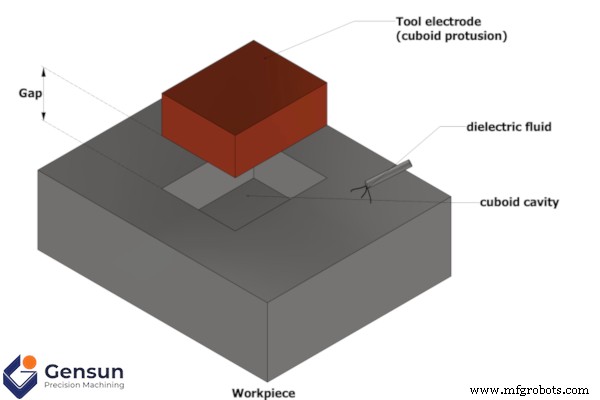
Sinker EDM works using the same principles as other types of electrical discharge machining: an electrical voltage difference between the EDM tooling (the electrode) and the workpiece causes sparks between the two. High thermal energy created from these sparks melts or vaporizes bits of the workpiece and the EDM electrode. The debris is then washed away by the dielectric fluid.
Like other types of EDM, the sparksoccur thousands of times per second, effectively “cutting” through the workpiece. In this process, the electrode is slowly plunged, or sunk, into the workpiece as it “machines” the work surface to the desired depth. The tooling is then withdrawn and the result is an inverted mirror image of the EDM tooling cut into the workpiece.
In most cases, sinker EDM uses an electrode made of graphite and a hydrocarbon oil like kerosene as the dielectric fluid. While other options are available for specific projects, graphite electrodes and hydrocarbon oil offer a good balance of tooling durability, surface finish, and cost.
Sinker EDM: Benefits & Limitations
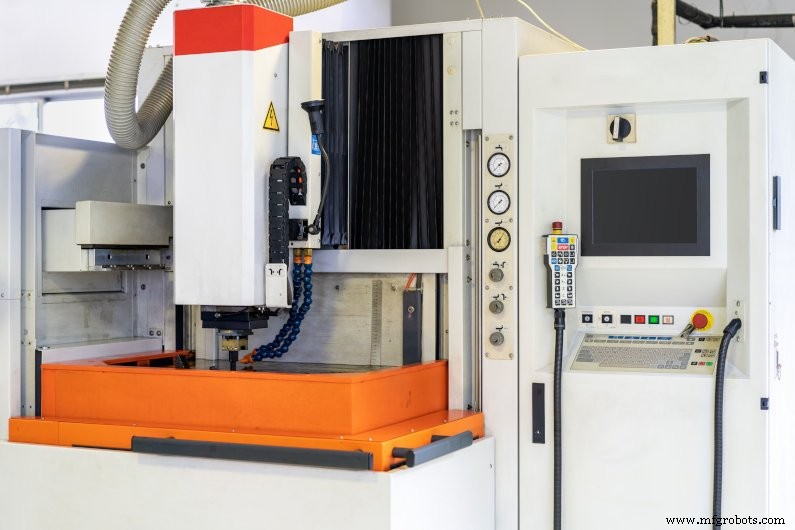
- As with any manufacturing process, sinker EDM has a mix of capabilities and limitations that make it better suited for some applications. The biggest benefits of using this process are that it is:
- Ideal for making very fine and intricate details without the need to penetrate the full thickness of the metal.
- Capable of very high-quality surface finishes, especially if using a second finishing pass.
- Well-suited to machining hard materials, like tool steels, tungsten, and advanced nickel-based alloys, even when applied to angled surfaces.
- A fully CNC process that requires minimal supervision.
On the other hand, the main limitations of sinker EDM are that it:
- Is only compatible with conductive materials, and does not work well with heterogeneous materials.
- Is a slower machining process than other types of EDM, and may be slower than alternative machining methods.
- Requires a new custom electrode for each unique cut, as well as replacement of the electrode after it deteriorates.
- Is often more costly than other machining operations, especially when it comes to electrode production and consumption.
Aside from a few subtle differences, sinker EDM has very similar benefits and shortcomings with wire EDM. The biggest distinction between them is that wire EDM can only complete full-thickness cuts starting from an edge or a pre-made hole. Sinker EDM however, can plunge the tooling electrode to any depth desired on any face of the workpiece. Wire EDM can be cheaper and faster for a wide range of linear cuts, but it is not suitable for creating blind features or surfaces with curvature in 3-dimensions. This is where this process excels!
Is This Manufacturing Process Right For You?
While other machining processes can often cut and shape materials faster or at a lower cost, sinker EDM remains an important specialty process. This is great for machining materials with high hardness values or complex details that would be challenging or even impossible to get with other processes.
This makes it ideal for producing long-lasting dies and molds, complex features like internal splines on motor shafts, and tiny details like ultra-thin cooling fins. If you want to learn more about the capabilities of electrical discharge machining and find out if it’s the right machining method for your next project, check out Gensun’s EDM services page.
CNC Machine
- Why Aluminum is the Go-To Material for CNC Machining: Benefits, Uses, and Alternatives
- Sinker EDM vs Wire EDM: Key Differences & Applications Explained
- CMM Machines Explained: Components, Applications, and Benefits for Precision Manufacturing
- CNC Machining: Benefits and Constraints for Precision Manufacturing
- Wire EDM Explained: How It Works & Why It Matters
- Coordinate Measuring Machines (CMMs): Purpose, Functionality, and Industrial Applications
- Understanding 5‑Axis CNC Machines: Function, Benefits, and How They Operate
- Sinker EDM vs. Wire EDM: Key Differences and Applications
- Understanding Boring and Milling Machines: How They Work and Their Applications
- CNC Machining Explained: How Computers Shape Precision Parts